
If your threads are only mildly damaged, thread chasing is your best option because it restores the original profile and finish without removing much material. Tapping, on the other hand, is faster and better for severely stripped or worn threads, as it cuts new ones or cleans them up quickly. Choosing the right method depends on the damage level and your precision needs. Keep exploring to discover how to select the best approach for your repair.

Get business pricing on garage and car supplies
- Business-only prices and quantity discounts
- Tax-exempt purchasing
- Multiple users, one account, clear invoices
Key Takeaways
- Thread chasing restores existing threads without material removal, ideal for mildly damaged or worn threads.
- Tapping creates new threads or repairs heavily damaged, stripped threads quickly and efficiently.
- Use thread chasing for delicate, precise restoration; tap for faster repairs on severely damaged threads.
- Proper tool choice and technique are essential to prevent further damage and ensure accurate thread repair.
- Select thread chasing or tapping based on damage extent, thread condition, and required precision.
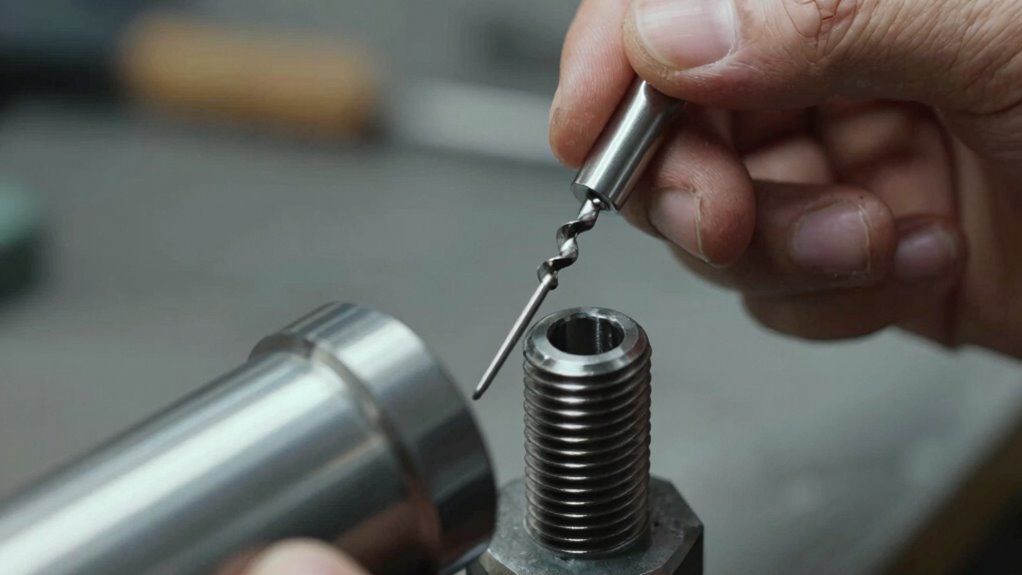
When it comes to creating internal or external threads on metal parts, understanding the difference between thread chasing and tapping is essential. Both methods serve to repair or produce threads, but they do so differently, and choosing the right one depends on the specific situation. Thread chasing techniques involve carefully restoring existing threads to their original dimensions and finish, often using a specialized thread file or a chase set. It’s a delicate process that requires precision and a good understanding of the thread’s original profile. Tapping tools comparison shows that taps are designed to cut new threads or clean up damaged ones quickly, making them ideal for a range of applications. They come in various types—such as hand taps, machine taps, and spiral-flute taps—each suited for different materials and thread sizes.
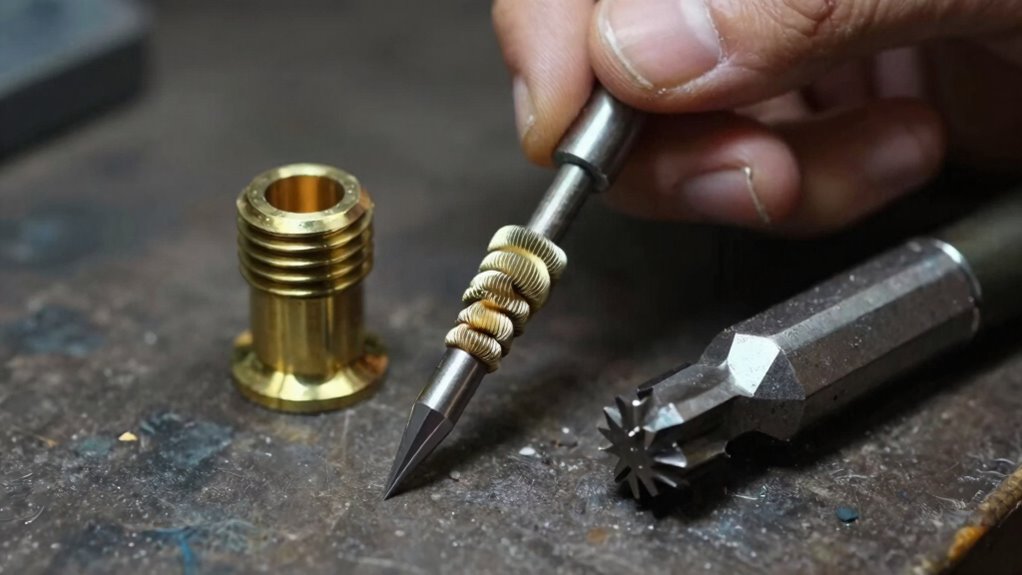
If you’re dealing with mildly damaged or slightly worn threads, thread chasing might be your best approach. It allows you to meticulously restore the thread profile without removing too much material, maintaining the integrity of the part. Thread chasing techniques generally involve using a thread file or a chasing die, which you turn along the existing thread. This process can be time-consuming but yields a clean, precise finish that closely matches the original thread geometry. It’s especially useful when you want to preserve the thread’s original pitch and diameter, ensuring proper engagement with a mating part. Additionally, understanding the differences in thread repair methods can help you choose the most effective approach for your specific repair needs. Knowing the thread profile and how it influences the repair process can be crucial for achieving the best results. Exploring thread dimensions and their tolerances can also guide you in selecting the appropriate repair method.
On the other hand, if the threads are significantly damaged or stripped, tapping is usually the quicker, more effective solution. Tapping tools comparison shows that taps cut new threads into the existing hole or restore damaged ones by removing material to form a fresh, clean thread. Hand taps are manually turned with a tap wrench, while machine taps are used with power tools for efficiency. Tapping can be faster, but it requires careful alignment to prevent cross-threading or breaking the tool. In cases where the damage is extensive, you might also consider using a larger tap size or a thread repair kit, which can help you restore threads without replacing the entire part.
As an affiliate, we earn on qualifying purchases.
Frequently Asked Questions
Can Damage to Threads Be Repaired Without Specialized Tools?
Yes, you can often repair damaged threads without specialized tools through simple thread restoration techniques. For minor damage, using a thread file or a matching screw can help realign and clean the threads. Make certain tool compatibility with the existing threads to avoid further damage. However, for significant damage, professional tools like taps or thread inserts might be necessary for a reliable fix. Always assess the damage before choosing your approach.
Which Method Is More Cost-Effective for Small Repairs?
For small repairs, tapping is more cost-effective because it requires fewer tools and less time, making it ideal for minor damage. Tapping maintains thread strength well enough for most applications and offers a straightforward, budget-friendly solution. Thread chasing, while effective for restoring precision, involves more specialized tools and may be overkill for simple fixes. Overall, tapping provides a better cost comparison for small, less critical repairs.
How Long Does Each Repair Method Typically Last?
You’ll find that tapping usually offers longer thread longevity and repair durability, often lasting years with proper maintenance. In contrast, thread chasing provides a quick fix but may not hold up as well over time, especially under heavy use. While both methods can restore damaged threads, tapping’s more permanent solution makes it ideal for critical or high-stress applications, ensuring your repair stands the test of time.
Are There Safety Concerns When Using Thread Chasing or Tapping?
Yes, there are safety concerns when using thread chasing or tapping. You should prioritize thread safety by wearing protective gear and ensuring proper tool compatibility to prevent accidents. Always use the right size and type of tap or chase to avoid damaging the threads or causing tool slips. Proper handling minimizes risks like cuts, broken tools, or damaged workpieces, keeping you safe while achieving effective repairs.
Can These Techniques Be Used on All Materials?
Like a master key opening a treasure chest, your choice of thread repair depends on material compatibility and surface treatment. While tapping works well on softer metals, it risks damage on brittle or coated surfaces. Thread chasing, with gentler tools, suits delicate or finished materials better, preserving surface integrity. Always assess the material’s nature, ensuring the technique aligns to prevent further damage and achieve a durable, precise repair.
As an affiliate, we earn on qualifying purchases.
Conclusion
Choosing between thread chasing and tapping is like picking the right brush for a masterpiece—each has its purpose. When you understand the damage and your material, you’ll make the right call, ensuring your threads are strong and precise. Think of it as mending a broken link in a chain—each repair restores strength and trust. With the right technique, you’ll keep your projects running smoothly, just like a well-oiled machine.
As an affiliate, we earn on qualifying purchases.
As an affiliate, we earn on qualifying purchases.
Halloween Picks
halloween
As an affiliate, we earn on qualifying purchases.