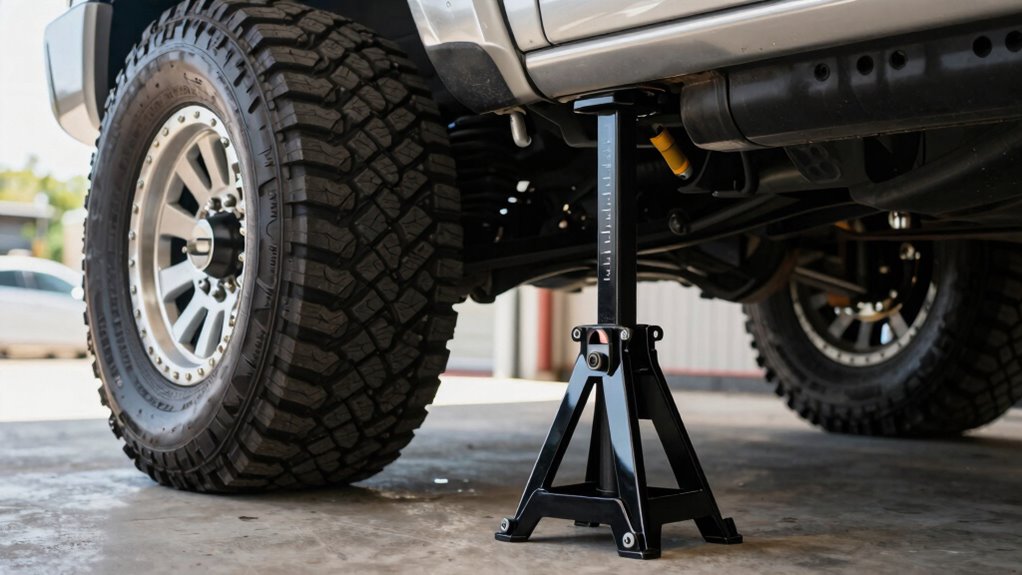

When supporting a lifted truck with jack stands, guarantee they’re rated for the vehicle’s weight and placed on solid, level surfaces. Adjust the stands carefully to match the lift height, positioning them under solid, reinforced lifting points near the frame. Use stands with wider bases for extra stability and double-check their secure positioning before crawling underneath. Proper height and placement are key for safety—continue to explore more tips to keep your work risk-free.

Get business pricing on garage and car supplies
- Business-only prices and quantity discounts
- Tax-exempt purchasing
- Multiple users, one account, clear invoices
Key Takeaways
- Use adjustable jack stands to set precise height compatible with the lifted truck’s clearance.
- Position stands on solid, flat surfaces at reinforced lifting points near the truck’s frame.
- Ensure stands have sufficient weight capacity for the lifted truck’s weight.
- Distribute weight evenly across all stands to prevent shifting or tipping.
- Double-check stability and security before working underneath the vehicle.
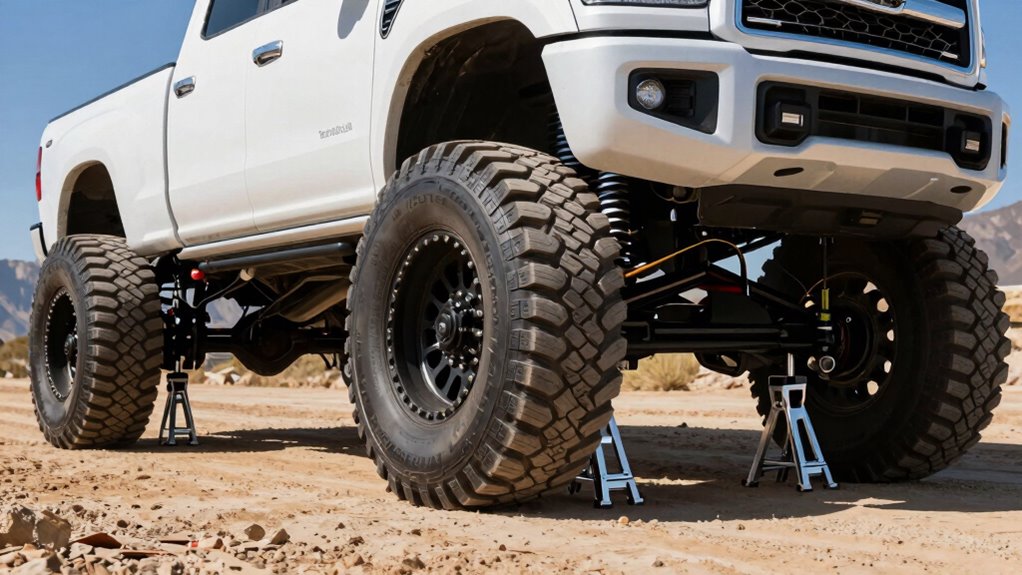
When working on lifted trucks, understanding proper jack stand height rules is essential for safety and efficiency. Lifted trucks present unique challenges because the higher the vehicle, the more critical it becomes to select the right jack stands and set them correctly. Your first priority should always be safety precautions. Always inspect your jack stands before use, ensuring they’re in good condition, free of rust, and rated for the weight of your vehicle. Never rely on a hydraulic jack alone to hold a lifted truck; always use quality jack stands designed for the task. Proper height adjustment is crucial, as incorrect positioning can cause instability or accidents. Ensuring your jack stands are rated for the weight of your vehicle is fundamental for safe lifting. Choosing the right jack stand types is vital for working on lifted trucks. There are several types available, including tripod, adjustable, and heavy-duty stands. For lifted trucks, adjustable jack stands are typically ideal because they allow you to set the stand to the exact height needed. When selecting a stand, always check the weight rating, making sure it exceeds the weight of your truck. For lifted trucks, which are often heavier, using stands with a higher weight capacity is essential for safety. Some stands are designed with a wider base for added stability, which is especially important when working at elevated heights. Using the correct stand type helps prevent slipping or tipping, which could result in injury or damage to your vehicle. Once you’ve chosen the appropriate jack stand type, setting the correct height is the next step. When your truck is lifted, you need to position the stands under solid lifting points—usually reinforced areas near the frame or designated jacking points. Make sure the stands are on a flat, stable surface, and always double-check their stability before crawling underneath. The stands should be adjusted so that the vehicle’s weight is evenly distributed across them. Never rely on a single stand or set stands at uneven heights, as this can cause the vehicle to shift or fall. When adjusting the height, do so slowly and carefully, ensuring the vehicle remains stable throughout the process. It’s also important to use proper lifting techniques to avoid accidents or injury when working on lifted vehicles. Additionally, understanding safety standards for vehicle lifting equipment can help prevent potential hazards. Regularly reviewing lifting guidelines can also enhance safety and ensure compliance with best practices. Staying updated on lifting safety practices is vital for maintaining a secure working environment. Once in place, give the vehicle a gentle push to confirm it’s secure before proceeding with any work.
Products Worth Considering

Milwaukee M18 FUEL 18V Lithium-Ion Brushless Cordless 1 in. Impact Wrench Extended Reach D-Handle Kit with Two 12.0 Ah Batteries

VIOFO A229 Plus 2K Front and Rear Dash Cam with Dual STARVIS 2 Sensors and HDR

NOCO Boost GB50 1500A UltraSafe Jump Starter, 12V Lithium Battery Booster
As an affiliate, we earn on qualifying purchases.
Frequently Asked Questions
How Do I Ensure Stability When Using Jack Stands on Lifted Trucks?
To guarantee stability when using jack stands on lifted trucks, choose stands made of durable material like steel for strength and stability. Always verify the weight capacity to match or exceed your truck’s weight, preventing collapse. Position the stands on flat, solid ground, and place them under sturdy frame points or axles. Double-check their stability before working underneath, and never rely on a single stand.
Are There Specific Jack Stand Types Recommended for Lifted Trucks?
For lifted trucks, you should use heavy-duty jack stands made from durable materials like steel, which provide stability and strength. Look for stands with a high weight capacity—at least 2 tons—to safely support your vehicle’s weight. These types guarantee proper support and prevent accidents. Always choose stands specifically rated for lifted trucks, and verify their maximum height to match your lift requirements for safe, secure lifting.
Can I Use the Same Jack Stands for Different Lift Heights?
Think of jack stands as the sturdy legs of a table—they need to be just right for each height. You can’t always use the same jack stands for different lift heights because of compatibility and safety. Adjustable support stands are your best bet, letting you customize the height safely. Always guarantee your jack stands are rated for your truck’s weight and lift height to avoid accidents and keep your work secure.
What Safety Precautions Should I Take During Vehicle Lifting?
During vehicle lifting, always guarantee your tire pressure is properly adjusted to prevent accidents, and double-check brake safety to secure the vehicle. Use quality jack stands rated for your truck’s weight and lift height, and never rely solely on a hydraulic jack. Keep the area clear of unnecessary tools or debris, wear safety gloves and glasses, and work on a flat, stable surface to minimize risks.
How Often Should I Inspect Jack Stands for Wear and Damage?
You should inspect your jack stands for wear and tear before every use, as if you’re giving them a health check-up. Regular jack stand maintenance helps prevent accidents and keeps them in top shape. Check for cracks, rust, or bent components at least once a month, especially if you lift heavy or frequently. By staying vigilant, you guarantee your safety and your truck’s stability during maintenance.
Conclusion
In the end, following the jack stand height rules for lifted trucks is like tuning a fine instrument—you want everything just right for safety and stability. When you choose the proper height, you’ll guarantee your truck stays steady, much like a mountain standing tall against the wind. So, take your time, double-check your measurements, and remember: safety isn’t just a rule, it’s the foundation of every successful lift.