
TL;DR

Get business pricing on garage and car supplies
- Business-only prices and quantity discounts
- Tax-exempt purchasing
- Multiple users, one account, clear invoices
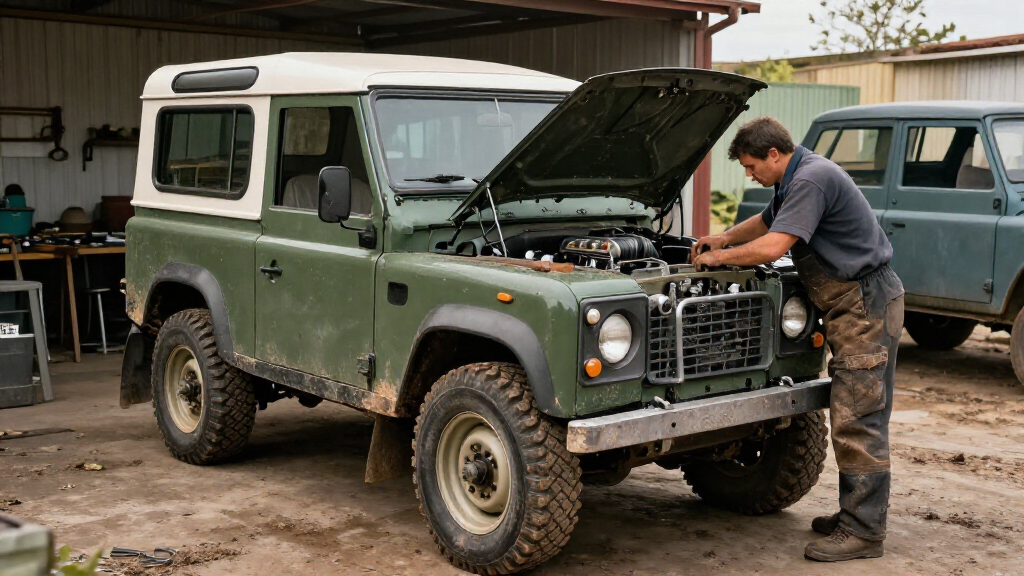
Peter Grieve has fitted a twin-turbocharged, 18-liter Rolls-Royce Meteorite V8 to a 1956 Series I Land Rover. The engine is reported to make 1,080 horsepower, but the featured dyno session ran at about half power and ended after a cooling-system problem.
Peter Grieve has installed a twin-turbocharged 18-liter Rolls-Royce Meteorite V8 in a 1956 Land Rover Series I, then taken the unusual build to a dynamometer for testing. The engine is reported to produce 1,080 horsepower, but the session shown by Practical Performance Car ended after a cooling-system problem, with the engine running at roughly half power.
The Meteorite was developed for the Mighty Antar tank transporter, which entered service in the early 1950s, according to The Drive’s report on the build. The V8 was derived from Rolls-Royce’s 27-liter Meteor V12 tank engine. Practical Performance Car presenter Will says the two engines shared many parts, with the Meteorite using a version of the design with four fewer cylinders.
Fitting the engine into a classic Land Rover required changes. Grieve engineered a new camshaft drive system because the usual assembly at the back of the larger engine would not fit the vehicle. The build also has electronic fuel injection and twin turbochargers concealed in the front wings. The Drive reports that the setup is intended to reach 1,080 horsepower at 15 pounds of boost.
In the video, Grieve adjusts fuel pressure and changes exhaust plugs after the engine runs unevenly. A subsequent dyno attempt is cut short when the cooling system struggles: the report says a large radiator mounted in the Land Rover’s bed was not keeping the engine cool. The footage therefore shows a test interrupted by a mechanical issue, not a completed full-power run or confirmation of the engine’s reported maximum output.
A Tank Engine in a 1956 Land Rover
The project brings together two very different parts of British vehicle history: the early Land Rover Series I, built for practical work, and a large Rolls-Royce engine designed for a heavy military transporter. Its scale and reported power sharply contrast with the roughly 50-horsepower four-cylinder engines offered in new Series I Land Rovers, as described in the source report.
For readers interested in engineering and classic vehicles, the build also shows the practical compromises behind an extreme engine swap. The custom camshaft drive and added cooling hardware are not just details of presentation; the interrupted dyno session illustrates that packaging a powerful engine is only part of the work. The vehicle’s reported road drivability comes from The Drive’s account, while the footage provided does not establish how it performs in ordinary road use.
Products Worth Considering

Milwaukee M18 FUEL 1/2-Inch High Torque Impact Wrench with Friction Ring Kit

Milwaukee M12 Fuel 1/4 Hex Impact Driver Kit

Chemical Guys TORQX Random Orbital Polisher Kit, 9-Piece
As an affiliate, we earn on qualifying purchases.
From Antar Transporter to Series I
The Series I Land Rover entered production after the Second World War. The Drive says typical examples were originally fitted with 1.6- or 2.0-liter four-cylinder engines producing around 50 horsepower. Grieve’s 1956 vehicle retains the classic Land Rover identity but replaces that scale of powertrain with an engine almost nine times the size of the larger original option.
The Rolls-Royce Meteorite’s military origins help explain its unusual fit in the project: it is a V8 related to the Meteor V12, itself descended from the Merlin aircraft-engine design. The source material identifies the Mighty Antar as the engine’s intended application and says the transporter remained in service into the 1980s. The report does not give a full build history or specify when Grieve began the conversion.
“The Meteorite used the very same parts as the Meteor; it was mostly identical, just with four fewer cylinders.”
— Practical Performance Car presenter Will, as quoted in The Drive’s report
Power and Cooling Still Untested
The available footage does not show a completed dyno run at the engine’s reported 1,080-horsepower rating. The Drive says the V8 was running at about half power during the session and at 15 pounds of boost when describing its intended output. It does not specify the exact power measured on the dyno, the test conditions, or whether the figure has been independently verified.
It is also unclear whether Grieve has since resolved the cooling-system issue, completed further testing, or made changes to the setup. The source describes the Land Rover as road-drivable, but supplies no details about its road testing, registration, or reliability. No later result is included in the material provided.
Further Testing Must Show Results
The immediate next step is to resolve the cooling problem and return the vehicle to the dyno, if Grieve continues testing. A later run could establish how much power the engine produces under measured conditions and whether the cooling system can manage sustained operation. Those outcomes are not shown in the available report.
The Drive also expressed hope that the remaining issues would be addressed and that the Land Rover might later be seen at a drag strip. That is a possibility, not a confirmed plan. Until further footage or results are published, the build’s reported output should be distinguished from what the interrupted test actually demonstrated.
Key Questions
What engine is fitted to Peter Grieve’s Land Rover?
It has a twin-turbocharged 18-liter Rolls-Royce Meteorite V8, an engine originally intended for the Mighty Antar tank transporter.
How much power is the engine reported to make?
The Drive reports an intended output of 1,080 horsepower at 15 pounds of boost. The video described in the report does not show a completed dyno run confirming that figure.
Why did the dyno session stop?
The test was interrupted by a cooling-system problem. The report says the engine was not being cooled effectively, despite a large radiator mounted in the vehicle’s bed.
Was the Land Rover’s original engine this large?
No. The Drive says typical Series I Land Rovers came with 1.6- or 2.0-liter four-cylinder engines producing around 50 horsepower.
Has the Land Rover completed a full-power test?
That is not established by the source material. The described dyno session ran at roughly half power and ended after the cooling issue; no later test result is provided.
Source: thedrive.com