
When choosing between crimping and soldering, you need to take into account durability and environmental factors. Crimping offers stronger resistance to corrosion, vibration, and thermal expansion, making it ideal for long-term, rugged use. Soldering creates reliable electrical bonds but is more prone to cracks from thermal cycling and moisture. If you want a connection that withstands tough conditions, crimping is often better. To understand the detailed advantages and tradeoffs, keep exploring how each method performs in various settings.

Get business pricing on garage and car supplies
- Business-only prices and quantity discounts
- Tax-exempt purchasing
- Multiple users, one account, clear invoices
Key Takeaways
- Crimped connections offer better resistance to corrosion, vibration, and thermal cycling, enhancing long-term durability.
- Solder joints are more prone to micro-cracks from thermal stress, risking electrical failure over time.
- Crimping provides a mechanical bond that tolerates material expansion and contraction better than soldering.
- Proper process control and material selection are crucial for the reliability of both crimped and soldered connections.
- Environmental stresses impact solder joints more if not properly made, while crimped connections are inherently more resilient.
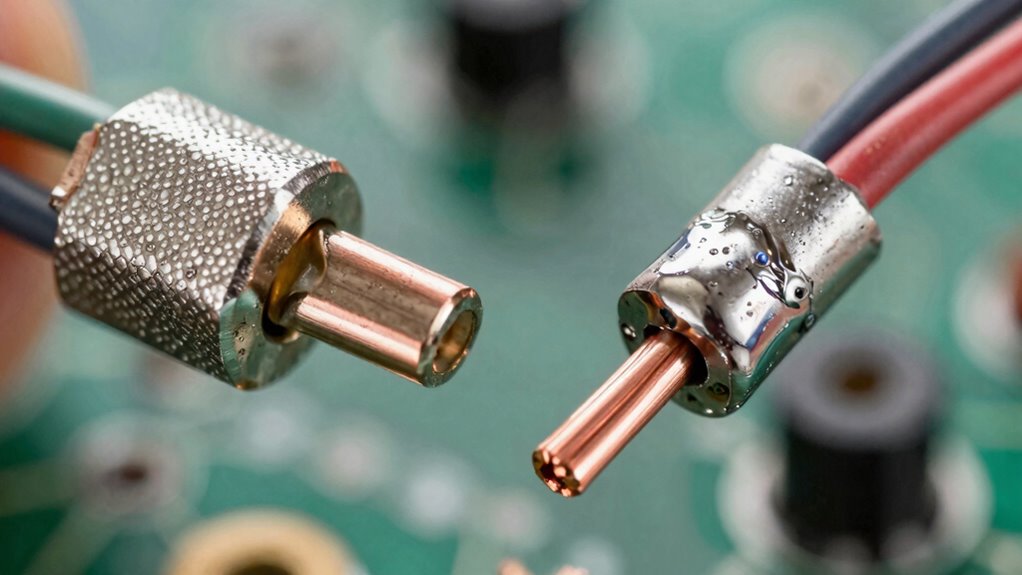
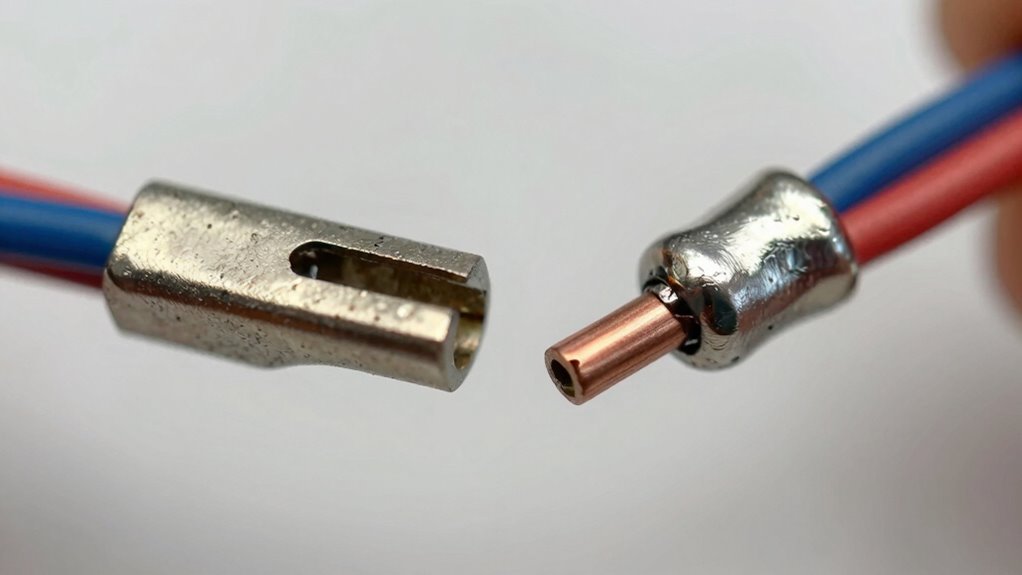
When choosing between crimping and soldering for electrical connections, understanding their reliability tradeoffs can make a significant difference in your project’s durability. Both methods have distinct strengths and weaknesses, especially when it comes to material durability and how they handle thermal expansion. Crimping involves compressing a metal connector onto a wire, creating a mechanical bond that’s often quick and reliable. Soldering, on the other hand, uses a molten metal alloy to fuse the wire and connector together, forming a chemical and physical connection. Your choice should consider how each method responds to environmental stresses and long-term wear.
Material durability plays an essential role in choosing either technique. Crimped connections tend to be more resilient over time because they rely on a solid mechanical grip, which resists corrosion and vibration. They’re less susceptible to the effects of thermal cycling because the metal-to-metal contact doesn’t involve a melting process that can weaken over time. Conversely, soldered joints can be more vulnerable if the solder fails or cracks, particularly if the solder isn’t of high quality or if the joint isn’t properly made. Over extended periods, solder joints might develop micro-cracks due to repeated thermal cycling, which can compromise electrical integrity. Proper material selection and process control are key to mitigating these issues, but in environments with significant temperature swings, a crimped connection usually offers superior resilience. Additionally, understanding electrical conductivity is crucial for selecting the most appropriate connection method based on application requirements. Furthermore, inspection and testing are vital to ensure long-term reliability of either connection type.
Thermal expansion is another critical factor influencing reliability. When temperatures fluctuate, materials expand and contract. Crimped connections generally handle these shifts better because the mechanical connection can accommodate slight movements without losing contact. Solder joints, however, are more prone to stress from thermal expansion because the solder material has different expansion properties than the wire or connector. This mismatch can cause cracks or fractures in the solder, especially if the joint isn’t properly designed or if the solder isn’t suitable for the temperature range. Proper material selection and process control are key to mitigating these issues, but in environments with significant temperature swings, a crimped connection usually offers superior resilience.
As an affiliate, we earn on qualifying purchases.
Frequently Asked Questions
How Do Environmental Factors Affect Crimp and Solder Connections?
Environmental factors like moisture, temperature, and vibration impact your connections profoundly. Corrosion resistance becomes vital in humid or salty environments, as it can degrade solder joints faster, reducing reliability. Vibration durability is essential in dynamic settings; crimped connections often handle vibrations better, maintaining their integrity longer. By understanding these factors, you can choose the right method to guarantee your connections stay secure and functional in challenging conditions.
What Tools Are Best for Achieving Reliable Crimps?
Think of your tools as your trusty sidekicks in the quest for reliable crimps. To achieve lasting, solid connections, use a quality crimping tool designed for your connector types. Make certain you follow proper insulation techniques, like using the right terminal and applying the correct pressure. A good crimping tool ensures consistent, reliable results, preventing future failures. Remember, a well-made crimp is like a handshake—firm and dependable.
Can Solder Joints Be Repaired Easily in the Field?
Yes, solder joints can be repaired easily in the field, which is helpful during remote troubleshooting. However, they may not offer the same long-term durability as crimped connections, especially in harsh environments. When fixing solder joints, you should guarantee proper heat application and clean the area thoroughly. This way, you improve the reliability temporarily, but for lasting results, consider re-soldering or replacing the connection if possible.
What Are the Cost Differences Between Crimping and Soldering?
You’ll find that crimping is generally more cost-effective than soldering because it requires less specialized equipment and training, which boosts installation speed. Crimped connections tend to offer better connectivity durability over time, especially in harsh environments, reducing the need for repairs. Soldering might have higher upfront costs due to equipment and skill requirements, but it can provide a more permanent connection in specific applications.
How Does Wire Gauge Influence Connection Choice?
You might think thicker wire always needs soldering, but wire gauge actually influences your connection choice considerably. With larger gauges, crimping ensures secure, reliable wire compatibility without damaging insulation, especially for high-current applications. Thinner wires are easier to solder, offering a solid connection but requiring careful insulation considerations. Ultimately, selecting between crimping and soldering depends on wire gauge, insulation type, and the environment, guaranteeing a safe, durable connection.
soldering iron kit for electronics
As an affiliate, we earn on qualifying purchases.
As an affiliate, we earn on qualifying purchases.
Conclusion
Ultimately, whether you choose crimp or solder depends on your project’s needs, but don’t forget—reliability isn’t just about tradition or a quick fix. Think of it like choosing between a trusty steed and a shiny spaceship; both have merits, but the right choice guarantees longevity and performance. So, weigh your options carefully, and remember, even in the age of digital wonders, a well-made connection can be your secret weapon against future gremlins.
crimp vs solder electrical connection tools
As an affiliate, we earn on qualifying purchases.
As an affiliate, we earn on qualifying purchases.
As an affiliate, we earn on qualifying purchases.
Halloween Picks
halloween
As an affiliate, we earn on qualifying purchases.