
TL;DR

Get business pricing on garage and car supplies
- Business-only prices and quantity discounts
- Tax-exempt purchasing
- Multiple users, one account, clear invoices
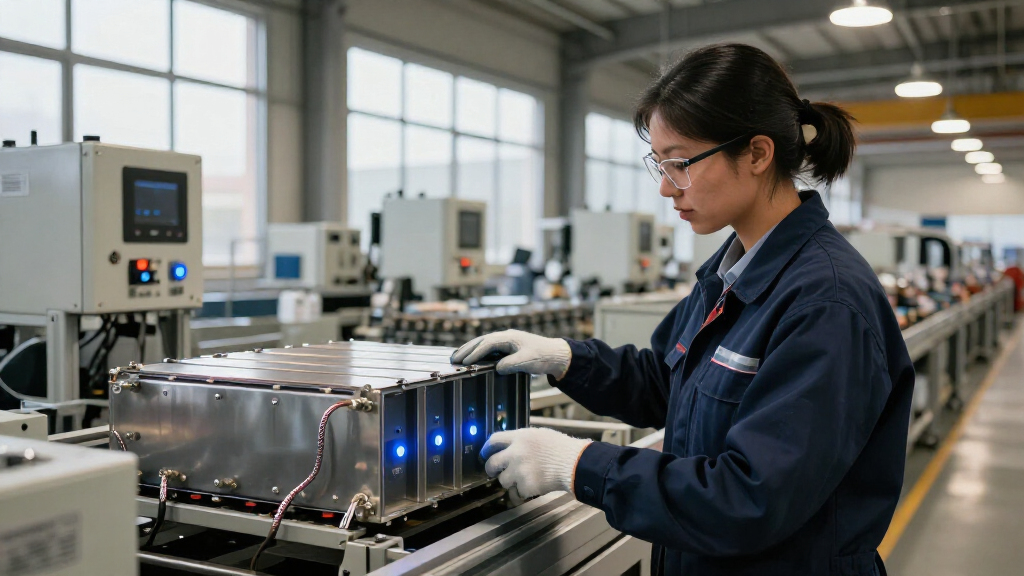
The U.S. Department of Energy has released a three-part plan to build a more integrated domestic battery supply chain, with a target of linking mining, refining and manufacturing by 2030. The blueprint also sets out goals for battery technology and deployment, but it does not specify funding, project timelines or how it will reverse recent cancellations and cutbacks.
The U.S. Department of Energy has released a three-part plan to build a domestic battery supply chain by 2030, targeting dependence on overseas suppliers, particularly China, for materials and components. The plan also calls for developing new battery technologies and moving them from laboratories into commercial use, a strategy that could support electric vehicles as well as grid storage and other markets.
The DOE says the supply chain needs to connect mining, refining, engineered materials, cells and finished products in the United States. Although domestic cell and pack production has grown in recent years, the department says upstream materials and components—including anodes, cathodes, electrolytes and separators—remain heavily dependent on imports, with much of that production concentrated in China.
The plan’s first part prioritizes investment in extraction, recycling, refining and equipment manufacturing. Its second part focuses on developing and commercializing batteries suited to different uses, with the DOE describing goals that include lower costs, longer life and reduced reliance on critical minerals in selected market segments. The third part is to help move technologies from research into products, a stage often described as crossing the “valley of death.”
The department’s stated goals include establishing a continuous domestic value chain by 2030 and achieving technology and manufacturing leadership by 2035. The source report does not identify specific projects, funding allocations or binding requirements tied to those targets.
A Supply Chain Beyond EVs
The strategy addresses a vulnerability that reaches beyond automakers: batteries are also used in electricity storage, consumer electronics and other applications. The DOE cites BloombergNEF estimates that battery demand across sectors will rise from 179 gigawatt-hours in 2025 to 707 GWh in 2035. That is a forecast, not a guarantee, and it covers more than electric vehicles alone.
For EV makers, greater domestic access to materials and components could offer an alternative to relying on imported supply. But the plan’s potential effect will depend on whether investments become operating mines, refineries and factories, and whether battery products can compete on cost and performance. The strategy states ambitions; it does not establish that the United States will meet them or displace Chinese production.
Products Worth Considering

DEWALT 20V MAX 3-Tool Brushless Power Tool Combo Kit with Drill, Impact Driver, Oscillating Tool, 3 Batteries, and Charger (DCK360D3)

DEWALT 20V MAX 5-Tool Cordless Combo Kit with Drill, Impact Driver, Saws, Oscillating Multi-Tool, Batteries, Charger, and Bag (DCK551D1M1)

DEWALT 20V MAX Drill and Impact Driver Combo Kit (DCK277D2)
As an affiliate, we earn on qualifying purchases.
Earlier U.S. Battery Efforts
The DOE blueprint follows earlier federal efforts to expand domestic battery production. The source report says the Biden administration set similar objectives in 2021, with a more detailed emphasis on clean energy, jobs and social equity. The new document instead places greater emphasis on national security, grid needs and power demand, including demand from AI data centers.
The industry has also faced setbacks. Clean-energy think tank E2 reported that, between 2022 and 2026, battery projects worth $42 billion were canceled, closed or downsized in the United States, with more than 85,000 jobs affected, according to the source report. Those figures cover the period and project changes cited by E2; they do not establish how many jobs or projects the new DOE plan will create.
“DOE is prioritizing investments to shift from a discontinuous, import-reliant supply chain to an integrated domestic production system through the upstream (mining), midstream (refining and engineered materials), and downstream (cells, packs, and end products).”
— U.S. Department of Energy
Funding and Delivery Remain Open
The published plan, as described in the source report, does not spell out how much money will be committed, which projects will receive support, or what milestones will measure progress toward the 2030 and 2035 goals. It is also unclear how the administration will address the battery projects that have been canceled, closed or reduced, or how quickly new domestic extraction and processing capacity could come online.
The blueprint does not explicitly center electric vehicles. It refers to transportation among the possible uses for advanced batteries, while also focusing on grid storage, AI data centers and other sectors. The extent to which EV manufacturers will benefit will depend on investment and implementation details that have not been provided in the source material.
Implementation Will Test the Targets
The next test is whether the DOE’s priorities lead to specific investments and projects across mining, recycling, refining, materials production and manufacturing. The source report does not provide a schedule for further announcements or name upcoming decisions.
Progress will be judged against the plan’s targets: an integrated domestic value chain by 2030 and technology and manufacturing leadership by 2035. Until project funding, production timelines and measurable milestones are made public, the strategy remains a federal blueprint rather than evidence that U.S. dependence on battery imports has already fallen.
Key Questions
What did the Energy Department announce?
The DOE released a three-part battery strategy focused on building domestic supply, developing and commercializing battery technologies, and moving research into products.
What is the 2030 target?
The plan calls for a continuous domestic battery value chain by 2030, covering stages such as mining, refining, materials and manufacturing.
Does the plan focus only on electric vehicles?
No. The strategy covers batteries for multiple sectors, including transportation, electricity storage, consumer electronics and other uses. The source report says it does not explicitly mention EVs as its central focus.
How much will the plan cost?
The source report does not state a total cost or provide specific funding allocations for the plan.
Has the United States reduced its reliance on China for batteries?
Not based on the plan’s release alone. The DOE says important materials and components remain import-dependent, and the strategy sets future goals rather than reporting that dependence has already declined.
Source: insideevs.com