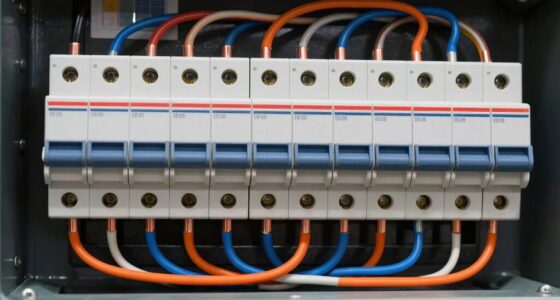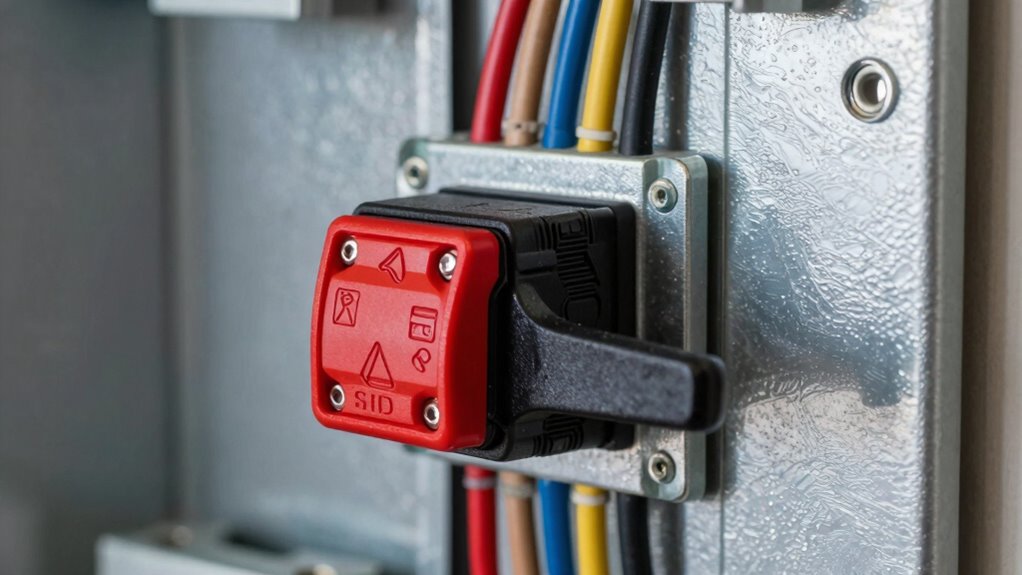

To avoid accidental isolation of your battery, install your manual switch in a secure, easily accessible location, ensuring it’s well-secured to prevent unintended switches. Always connect the wiring correctly, double-check connections, and use insulated tools for safety. Regularly inspect and maintain the switch and terminals to prevent corrosion or damage. Remember, proper installation and maintenance help keep your system safe and reliable. Continue exploring to learn more about setting up your manual battery switch effectively.
Key Takeaways
- Install switches in accessible locations for quick emergency disconnection and routine maintenance.
- Secure the switch to prevent accidental toggling during vehicle operation or storage.
- Use clearly labeled switches to avoid confusion and ensure proper operation.
- Double-check wiring connections and insulation to prevent shorts and electrical faults.
- Follow safety protocols, disconnect negative terminals first, and wear protective gear during setup.
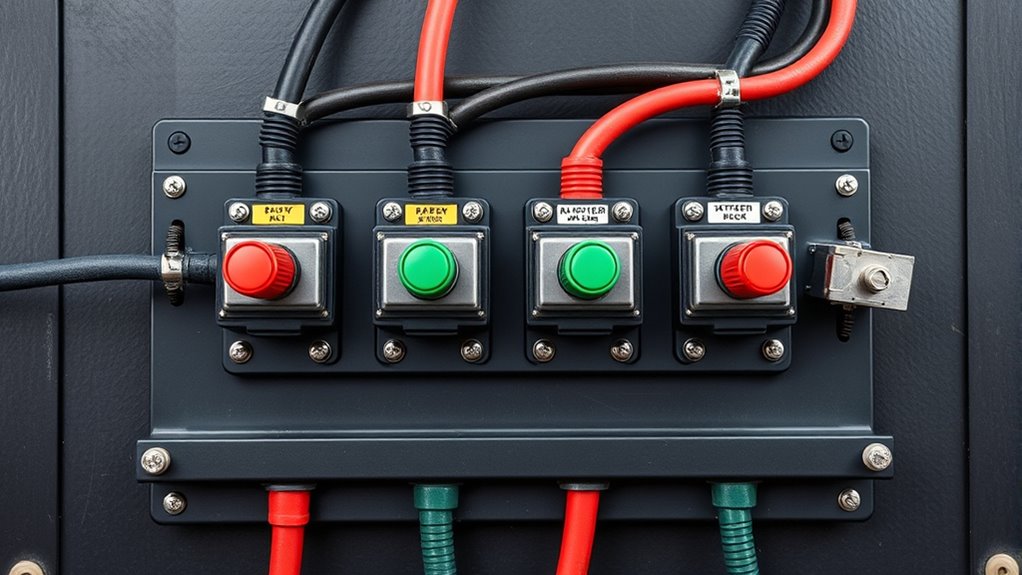
Manual battery switch setups are essential for maintaining control over your vehicle’s or equipment’s power system. When you install a manual switch properly, you can quickly disconnect the battery to prevent electrical issues or theft, especially during maintenance or storage. This setup plays a crucial role in ensuring both safety and reliability, but it also demands careful attention to battery maintenance and electrical safety protocols. Properly maintained batteries are less likely to cause problems, and knowing how to safely operate your manual switch minimizes risks like electrical shorts, sparks, or damage to your equipment.
Properly installed manual battery switches ensure safety, control, and reliable power management for your vehicle or equipment.
When setting up your manual battery switch, you want to make sure it’s easily accessible yet secure. Position it in a location where you can quickly turn it off in an emergency or during routine maintenance, but also where it won’t be bumped or accidentally switched off during normal use. Once installed, always double-check that your wiring is correct and tight, as loose connections can lead to electrical faults or fires. A good practice is to use insulated tools when working around the battery and switch, reducing the chance of accidental shorts that could cause sparks or even explosions. Additionally, understanding the field‑of‑view and imaging‑scale examples available for deep-sky imaging can help you plan your setup for better safety and efficiency.
Battery maintenance is critical to guarantee your setup functions correctly over time. Keep terminals clean and free of corrosion, as corrosion can impede electrical flow and make switching unreliable. Regularly inspect the switch and wiring for wear or damage, replacing any frayed or cracked components promptly. If your vehicle or equipment sits unused for extended periods, disconnecting the battery with your manual switch can prevent battery drain and extend its lifespan. This simple step is an effective way to maintain battery health and avoid unexpected failures when you need your equipment most.
Electrical safety should always be your top priority when working with batteries and switches. Before installation or maintenance, disconnect the negative terminal to eliminate the risk of short circuits. When operating the manual switch, ensure your hands are dry and that you’re wearing appropriate protective gear like gloves and safety glasses. Never bypass or modify the switch’s wiring; stick to the manufacturer’s instructions to prevent electrical hazards. Additionally, keep a fire extinguisher nearby and work in a well-ventilated area, especially when dealing with lead-acid batteries, which can emit hazardous gases.

YONHAN Battery Charger 20A 12V/24V LiFePO4 Lead Acid Fully Automatic Battery Maintainer, Car Battery Trickle Charger Automotive w/Repair, Winter Mode, for AGM, STD, Gel, Deep Cycle Batteries
[20A Suitable for LiFePO4 Lead-acid Battery Charger] 12V 20 Amp, 24V 10Amp 7-stage quick battery charger, Designed to...
As an affiliate, we earn on qualifying purchases.
Frequently Asked Questions
Can Manual Battery Switches Be Used on All Vehicle Types?
Manual battery switches are not suitable for all vehicle types, as vehicle compatibility varies. You should consider installation considerations, such as size, electrical requirements, and access points, to guarantee proper fit and safety. Always check your vehicle’s specifications and consult a professional if needed. Using the right switch for your vehicle helps prevent accidental disconnection, ensuring reliable power management and safety during maintenance or emergencies.
What Maintenance Is Required for Manual Battery Switches?
You might think maintenance is complicated, but it’s pretty straightforward. Regularly perform switch inspection to ensure all connections are tight and corrosion-free. Battery switch maintenance includes cleaning terminals, checking for wear, and testing the switch’s operation. Doing this keeps your system safe and reliable. Remember, a quick inspection every few months can prevent unexpected failures and extend the lifespan of your manual battery switch, giving you peace of mind on the road.
Are There Legal Restrictions on Installing Manual Battery Switches?
You need to check local battery switch regulations because legal compliance varies by location. Some areas may have specific rules about installing manual battery switches, especially on boats or vehicles, to ensure safety and prevent accidental disconnection. Always consult relevant codes and authorities to confirm you meet all legal requirements. Doing so helps you avoid fines and guarantees your setup is safe and compliant with current battery switch regulations.
How Do Manual Switches Compare to Automatic Isolators?
Ever wondered how manual switches stack up against automatic isolators? Manual battery switches often offer superior durability and straightforward control, making them reliable for critical systems. They require careful switch installation tips to ascertain safety and prevent accidental disconnection. While automatic isolators can switch seamlessly during faults, manual switches give you ultimate control, but you must remember to operate them correctly. Which option aligns best with your safety needs and system setup?
What Signs Indicate a Manual Battery Switch Needs Replacement?
You should replace your manual battery switch if you notice corrosion issues around the terminals or switch body, as this can compromise performance. Also, verify the switch remains compatible with your system; if it no longer fits or functions properly, replacement is necessary. Regular inspection helps catch these signs early, preventing potential failures and maintaining safe, reliable battery isolation.

OPTIMA® Batteries Digital 400+ 12 Volt Battery Maintainer and Charger for AGM, Lithium, Automotive, Marine and Powersport Batteries
Digital battery type selector: OPTIMA AGM, OPTIMA Li, Auto/Marine, Power Sport Lead Acid batteries
As an affiliate, we earn on qualifying purchases.
Conclusion
By following proper manual battery switch setups, you guarantee your safety and prevent accidental isolation. Remember, taking a few simple steps now can save you from costly or dangerous situations later. So, why risk it when a straightforward setup offers peace of mind? Stay vigilant, double-check your connections, and keep safety at the forefront. After all, isn’t it worth making sure you’re protected every time you work on your system?

GUTA Trailer Tire Pressure Monitoring System, RV TPMS with 10 Sensors, 6 Alert Modes, Signal Booster, Power Saving Display, Long Sensing Distance, for 3 Trailers (T1/T2/T3), for Camper, Motor Homes
[Real Time Monitoring & High Fuel Economy]: GUTA TPMS has a large screen for displaying up to 10...
As an affiliate, we earn on qualifying purchases.

Tymate TM3 RV Tire Pressure Monitoring System, Tire Pressure Monitor with Solar Charge, TPMS with 4 Sensors(Max to 10) & 6 Alarm Modes, 2024 Updated w/Color LCD Display, 0-87PSI for RV/Trailer/Truck
[Explore Five Alarm Modes and Effortless Setup for Alarm Thresholds]: The Tymate Tire Pressure Monitoring System TM3 features...
As an affiliate, we earn on qualifying purchases.