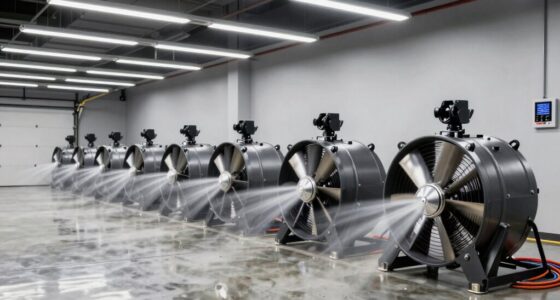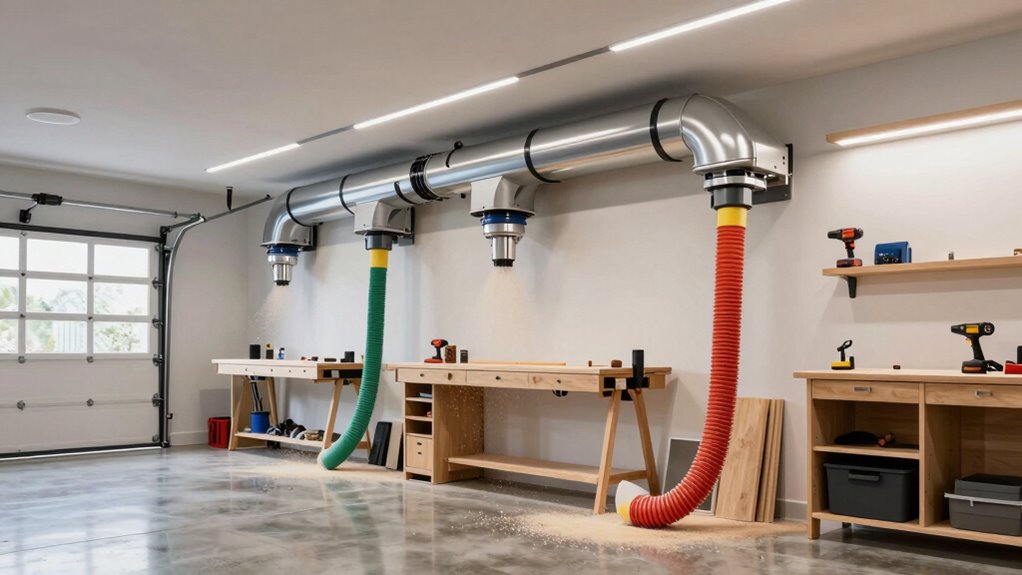

Choosing the right dust collection system for a home garage can significantly improve air quality and cleanup efficiency. The best overall pick, the WEN DC1300, offers high airflow and a large capacity suitable for serious woodworking. For those prioritizing affordability, the WEN 5.7-Amp Dust Collector provides reliable performance at a lower price point. If air filtration and air quality are your main concerns, the Abestorm 1080 CFM Intake Air Filtration System stands out for its remote control and quiet operation. Each option involves tradeoffs between power, capacity, noise, and price, so continue reading to see how these factors come into play across the top models.

Get business pricing on garage and car supplies
- Business-only prices and quantity discounts
- Tax-exempt purchasing
- Multiple users, one account, clear invoices
Complete the kit


Key Takeaways
- The highest airflow, like in the WEN DC1300, is key for handling larger workshops and heavy dust loads.
- Capacity matters less for smaller garages but becomes critical with frequent or large woodworking projects.
- Air filtration units like the Abestorm systems excel at improving air quality but may require more space and installation considerations.
- Powerful systems often come with increased noise levels, so noise reduction features are worth considering.
- Budget models can work well for light use, but investing in higher capacity or filtration improves long-term air quality and cleanup.
| WEN Woodworking Dust Collector with 5.7-Amp Motor and 12-Gallon Bag |  | Best Compact and Portable Dust Collector | Motor Power: 5.7 amps | Impeller Size: 6 inches | Air Flow: 660 CFM | VIEW ON AMAZON | See Our Full Breakdown |
| WEN Woodworking Dust Collector with 7.4-Amp Motor and 15-Gallon Bag |  | Best Power for Larger Workshops | Motor Power: 7.4 amps | Impeller Size: 9 inches | Air Flow: 600 CFM | VIEW ON AMAZON | See Our Full Breakdown |
| Abestorm 1080 CFM Intake Air Filtration System with Remote Control |  | Best for Clean Air Management in Larger Spaces | Airflow: 780-1080 CFM | Intake Design: 270° three-sided | Filters: 3 MERV-11 | VIEW ON AMAZON | See Our Full Breakdown |
| Abestorm 270 Degree Intake Air Filtration System with Ionizer and Remote Control |  | Best for Enhanced Dust Particle Capture and Quiet Operation | Airflow: 580-780 CFM | Filtration: 3 MERV-11 filters | Dimensions: 18.35 x 18.35 x 8.82 inches | VIEW ON AMAZON | See Our Full Breakdown |
| VEVOR Dust Collector, 1100 CFM, 2.5 Micron Vortex Cone, 1.5HP, 35-Gallon Dust Collector with Filter and Collection Bags |  | Best for Heavy-Duty Dust and Debris Collection | Airflow: 1100 CFM | Filtration: 2.5 microns | Motor Power: 1.5 HP | VIEW ON AMAZON | See Our Full Breakdown |
| WEN DC1300 1,300 CFM 14-Amp Woodworking Dust Collector with 50-Gallon Bag and Mobile Base |  | Best for Large Workshops Needing Heavy-Duty Dust Management | Airflow: 1300 CFM | Motor Power: 14 Amps | Collection Capacity: 50 gallons | VIEW ON AMAZON | See Our Full Breakdown |
| dust collection system for home garage | Motor Power | Dimensions | Airflow | Collection Capacity |
|---|---|---|---|---|
| WEN Woodworking Dust Collector | 5.7 amps | 34.25 x 13 x 14.2 inches | — | — |
| WEN Woodworking Dust Collector | 7.4 amps | 43.3 x 17.7 x 20.1 inches | — | 15 gallons |
| Abestorm 1080 CFM Intake Air F | — | 19.4 x 19.4 x 9.6 inches | 780-1080 CFM | — |
| Abestorm 270 Degree Intake Air | — | 18.35 x 18.35 x 8.82 inches | 580-780 CFM | — |
| VEVOR Dust Collector | 1.5 HP | — | 1100 CFM | 35 gallons |
| WEN DC1300 1,300 CFM 14-Amp Wo | 14 Amps | — | 1300 CFM | 50 gallons |
More Details on Our Top Picks
WEN Woodworking Dust Collector with 5.7-Amp Motor and 12-Gallon Bag
This model stands out for its combination of power and portability, making it ideal for smaller garages or workshops where space is limited. Its 5.7-amp motor delivers solid airflow, comparable to larger units like the VEVOR but in a much smaller footprint. The inclusion of a 12-gallon zippered bag and lockable swivel casters emphasizes mobility and ease of use, especially for DIYers or hobbyists. Compared with the larger WEN DC1300, this option sacrifices some capacity but gains in maneuverability and space efficiency. The main tradeoff is its limited 4-inch dust port, which might restrict compatibility with bigger duct systems or multiple machines. Best suited for small workshops or hobbyists who need a portable, space-saving dust collection solution without the need for large capacity.
Pros:- Compact, lightweight design with handle and casters for easy mobility
- Powerful 5.7-amp motor with 660 CFM airflow
- Includes a large 12-gallon collection bag with 5-micron filtration
Cons:- Limited to 4-inch dust port connections, restricting system expansion
- Less suitable for large workshops or high-volume dust production
Best for: Hobbyists and small garage workshop owners needing a compact, easy-to-move dust collector.
Not ideal for: Large professional workshops or users with extensive dust management needs, due to its smaller capacity and modest airflow.
- Motor Power:5.7 amps
- Impeller Size:6 inches
- Air Flow:660 CFM
- Dust Port:4 inches
- Collection Bag:12 gallons, 5-micron
- Dimensions:34.25 x 13 x 14.2 inches
- Weight:17 pounds
- Features:Lockable swivel casters, optional wall mount
Our verdict“This pick makes the most sense for small-scale workshops or hobbyists prioritizing portability over capacity.”
WEN Woodworking Dust Collector with 7.4-Amp Motor and 15-Gallon Bag
This model is designed for users who need serious airflow, making it better suited to medium-sized workshops than the smaller WEN unit. Its 7.4-amp motor and 9-inch impeller produce up to 600 CFM, comparable to the VEVOR but with slightly less capacity. Its large 15-gallon collection bag and sturdy build support longer operation times, reducing the frequency of emptying. The inclusion of mobility features like swivel casters and wall-mount options makes it versatile for various setups. However, at over 40 pounds, it’s less portable than smaller models, and its size demands more workshop space. This pick is ideal for serious woodworking hobbyists or small professional shops that need reliable airflow and larger capacity.
Pros:- Powerful 7.4-amp motor with high airflow capacity
- Large 15-gallon collection bag reduces downtime
- Mobility features include swivel casters and wall mount options
Cons:- Relatively heavy at over 40 pounds, less easy to move
- Requires ample space for setup and operation
Best for: Workshop owners with moderate dust generation who need a balance of power and capacity.
Not ideal for: Tiny garages or users seeking lightweight, highly portable systems due to its weight and size.
- Motor Power:7.4 amps
- Impeller Size:9 inches
- Air Flow:600 CFM
- Dust Port:4 inches
- Collection Capacity:15 gallons
- Dimensions:43.3 x 17.7 x 20.1 inches
- Weight:41.1 pounds
- Features:Wall mount option, swivel casters
Our verdict“This is the best choice for those needing a powerful, larger-capacity dust collector in a small-to-medium workshop setting.”
Abestorm 1080 CFM Intake Air Filtration System with Remote Control
The Abestorm 1080 CFM system stands out for maintaining excellent air quality with its 270° intake design and high airflow, making it well-suited for larger garages or woodworking areas. Its remote control and quiet operation (<60dBA) make it user-friendly for continuous use during work sessions. Compared to ceiling-mounted systems like the B0DG29W36P, it offers flexible placement and straightforward installation, though it doesn’t replace traditional dust collection systems for chip and debris removal. Its filtration efficiency, with MERV-11 filters, helps reduce airborne dust but requires filter replacements every 4-6 months, adding ongoing maintenance costs. This system is best for those prioritizing air quality and noise management over direct chip collection.
Pros:- High airflow with 780-1080 CFM capacity for large spaces
- Remote control and easy ceiling or wall mounting
- Quiet operation suitable for continuous use
Cons:- Cannot be shipped to California due to regulatory restrictions
- Filters need replacement every 4-6 months, incurring ongoing costs
Best for: Garage owners seeking to improve air quality and dust control in larger, well-ventilated spaces.
Not ideal for: Small workshops or users looking for direct chip removal, as this unit primarily filters airborne dust rather than collecting debris directly.
- Airflow:780-1080 CFM
- Intake Design:270° three-sided
- Filters:3 MERV-11
- Dimensions:19.4 x 19.4 x 9.6 inches
- Coverage Area:up to 1100 sq.ft.
- Control:Remote, touch panel
Our verdict“This system excels for improving air quality in large garages but isn’t designed for direct debris collection from tools.”
Abestorm 270 Degree Intake Air Filtration System with Ionizer and Remote Control
This high-efficiency filtration unit combines a 270° intake with ionizer technology, making it ideal for reducing airborne dust particles in garages and workshops. Its quiet operation (<50dBA) and remote control enhance usability during long work sessions, especially compared to noisier systems like the B0FYS684Z1. Its ability to be ceiling or wall-mounted adds flexibility, though the limited airflow of 580-780 CFM makes it less suitable for capturing large quantities of debris directly. The ionizer charge helps improve dust particle attraction, but ongoing filter replacement costs every 4-6 months could add up for frequent users. This unit is best for maintaining clean air and fine dust control in moderately sized spaces.
Pros:- Quiet (<50dBA) and energy-efficient operation
- Includes ionizer to improve dust particle charge and capture
- Remote control and flexible ceiling/wall mounting
Cons:- Limited airflow compared to larger systems, may not handle heavy debris
- Frequent filter replacements every 4-6 months
Best for: Garage or workshop owners focused on airborne dust reduction and quiet, continuous operation.
Not ideal for: Large workshops or those needing direct chip collection, as airflow is more suited for air quality than debris removal.
- Airflow:580-780 CFM
- Filtration:3 MERV-11 filters
- Dimensions:18.35 x 18.35 x 8.82 inches
- Coverage Area:up to 800 sq.ft.
- Noise Level:<50dBA
- Control:Remote and touch panel
Our verdict“Ideal for improving air quality in medium-sized spaces where quiet operation and dust particle charge are priorities.”
VEVOR Dust Collector, 1100 CFM, 2.5 Micron Vortex Cone, 1.5HP, 35-Gallon Dust Collector with Filter and Collection Bags
The VEVOR 1100 CFM dust collector offers robust airflow and large capacity, making it a strong choice for serious woodworking operations. Its 1.5HP motor and vortex cone design optimize debris capture, while the 35-gallon collection bag minimizes downtime. This unit excels when compared to smaller, less powerful models like the 5.7-amp WEN, providing more capacity and higher airflow for demanding environments. However, its noise level under 90dB and size—requiring a dedicated space—may pose challenges for smaller garages. Setup and maintenance also demand some effort, but the durable construction supports long-term use. This model is best for users who need high-volume dust collection and don’t mind the size and noise.
Pros:- Powerful 1100 CFM airflow for efficient sawdust capture
- Large 35-gallon collection capacity reduces frequent emptying
- Durable construction with vortex cone for optimized debris flow
Cons:- Noise levels may be loud for some users
- Requires significant space for setup and operation
Best for: Professional or hobbyist woodshops requiring high airflow and large capacity for continuous operation.
Not ideal for: Tight garages with limited space or users seeking quieter, small-scale systems.
- Airflow:1100 CFM
- Filtration:2.5 microns
- Motor Power:1.5 HP
- Collection Capacity:35 gallons
- Speed:3400 RPM
- Noise Level:Under 90dB
Our verdict“This is the best choice for high-demand workshops needing maximum airflow and large capacity at the expense of size and noise.”
WEN DC1300 1,300 CFM 14-Amp Woodworking Dust Collector with 50-Gallon Bag and Mobile Base
The WEN DC1300 stands out for its impressive airflow of 1,300 CFM, making it ideal for serious woodworking setups that generate substantial dust. Compared to the smaller WEN 7.4-Amp 15-Gallon model, this unit offers significantly larger capacity and higher power, reducing the frequency of emptying and improving dust collection efficiency. Its 50-gallon bag and dual 4-inch inlets support multiple tools simultaneously, which is a major advantage over smaller models. However, the heavy weight and bulkiness mean it requires ample space and effort to move, and its high motor power results in noticeable noise levels. Despite these tradeoffs, this model is perfect for professionals or serious hobbyists who prioritize power and capacity over portability.
Pros:- High airflow capacity of 1,300 CFM ensures efficient dust removal
- Large 50-gallon bag reduces frequent emptying
- Mobile base with swivel casters facilitates movement around a workshop
- Dual 4-inch inlets allow multiple tools to connect simultaneously
Cons:- Heavy and bulky, making it difficult to store or reposition
- Noisy operation due to powerful 14-amp motor
- Requires considerable space for optimal placement
Best for: Large woodworking shops or serious hobbyists needing high airflow and capacity
Not ideal for: Small garages or DIYers with limited space who prefer quiet, lightweight options
- Airflow:1300 CFM
- Motor Power:14 Amps
- Collection Capacity:50 gallons
- Impeller Speed:3450 RPM
- Inlet Size:4 inches
- Impeller Diameter:10 inches
Our verdict“This dust collector delivers maximum capacity and power for large workshops but demands space and tolerance for noise.”

How We Picked
These products were evaluated based on performance, airflow capacity, build quality, ease of use, maintenance, and value for the price. Priority was given to systems with sufficient CFM (cubic feet per minute) ratings for typical home garage sizes and woodworking setups. We also considered user-friendly features like remote controls, filter quality, and mobility. The ranking reflects a balance between raw power, usability, and affordability, aiming to serve different levels of woodworking activity and space constraints in home garages.Factors to Consider When Choosing Dust Collection System For Home Garages
Choosing the right dust collection system for your home garage involves understanding several key factors. The ideal system should match your workshop size, dust volume, and noise tolerance. Additionally, considering ease of installation and maintenance can save frustration later. Keep in mind that more powerful units tend to be louder and more expensive, so balancing capacity with your environment and budget is crucial. Here are some factors to help guide your decision:Airflow Capacity (CFM)
CFM, or cubic feet per minute, indicates how much air a dust collector can move. Higher CFM ratings mean more effective dust removal, especially important for larger or more active workshops. However, excessively high ratings on small setups can lead to unnecessary noise and higher energy costs. Matching your system’s airflow to your garage size and woodworking tools will ensure optimal performance without excess noise or power consumption.
Capacity and Size
Dust collection units come in various sizes, from small portable models to large, stationary systems with 50-gallon bags or more. Larger capacity units reduce the frequency of emptying, making cleanup less disruptive during long projects. But they also tend to be heavier and more expensive. For smaller garages or occasional use, a compact unit may suffice, while dedicated woodshops benefit from bigger, more robust systems.
Filtration Quality
Effective filtration is essential for maintaining air quality, especially in enclosed garage spaces. Look for systems with high-quality filters, such as HEPA or micron-rated filters, to trap fine dust particles. Some units include ionizers or additional air filtration features that help improve air purity. Remember, filters need regular cleaning or replacement to maintain efficiency, so consider ease of access and filter availability when choosing a model.
Noise Levels
Many powerful dust collectors generate significant noise, which can be disruptive in a home environment. If noise is a concern, look for models with noise-reduction features or lower RPM motors. Portable units tend to be quieter but may lack the power needed for larger tasks. Balancing power and sound levels is key, especially if you plan to work during early mornings or late evenings.
Ease of Use and Maintenance
Features like easy-access filters, simple emptying mechanisms, and mobility options can make a big difference in daily operation. Some units include remote controls or automated shut-offs, reducing effort and increasing safety. Maintenance costs and procedures should also factor into your choice—models with washable or replaceable filters tend to be more economical in the long run. Consider how much space you have for setup and whether mobility features like wheels are beneficial.
Frequently Asked Questions
Can I use a single dust collector for multiple tools in my garage?
Yes, many dust collection systems can be connected to multiple tools via a network of ducts and blast gates. This setup allows you to switch between tools without moving the collector, saving space and reducing clutter. However, ensure the system’s CFM rating is sufficient to handle the combined airflow of all connected tools. Properly designed ductwork and adequate power are essential to maintain effective dust removal across multiple stations.
How often should I replace or clean filters on my dust collection system?
Filter maintenance depends on usage and dust load, but a general rule is to check filters after every few uses and replace or clean them every few months. Using a high-quality, washable filter can extend its lifespan and reduce ongoing costs. Regular maintenance ensures your system runs efficiently and helps maintain good air quality in your garage. Always follow the manufacturer’s recommendations for specific cleaning or replacement intervals.
Is a larger capacity dust collector always better for a home garage?
Not necessarily. While larger capacity units reduce the frequency of emptying and are suitable for heavy-duty woodworking, they also tend to be bulkier, heavier, and more expensive. For small garages with light or occasional use, a compact, lower-capacity system may be sufficient and easier to install or move. The right choice depends on your workshop size, project frequency, and budget.
Do I need a dedicated air filtration system in addition to a dust collector?
It depends on your air quality goals. Most dust collectors focus on removing dust from the workspace but may not remove fine particles or improve overall air purity. An air filtration system with a HEPA filter can significantly reduce airborne dust, allergens, and fumes, especially in enclosed garages. Combining both can create a healthier environment, but it adds to the initial cost and space requirements.
What safety features should I look for in a dust collection system?
Look for models with safety features such as automatic shut-offs, secure filter housings, and grounding options to prevent static buildup. Some units include remote or automatic start/stop functions that help prevent accidental operation. Properly grounded systems reduce static electricity risks, especially in dry environments. Always follow safety guidelines for electrical connections and ensure your garage wiring can support the system’s power requirements.
Conclusion
For most home garage owners with moderate woodworking needs, the WEN DC1300 offers a balanced mix of power, capacity, and affordability, making it the best overall choice. If you’re budget-conscious or have a smaller setup, the WEN 5.7-Amp Dust Collector provides reliable performance without breaking the bank. For those prioritizing air quality and filtration, the Abestorm 1080 CFM Intake Air Filtration System is ideal. Serious hobbyists or professionals with large workshops should consider the WEN DC1300 1,300 CFM with 50-Gallon Bag for maximum capacity. Beginners or those with limited space should look for compact, easy-to-maintain options, while experienced woodworkers should focus on higher CFM and filtration features to keep their workspace clean and safe.
Fall Picks
fall essentials
As an affiliate, we earn on qualifying purchases.