A smart charger uses three main stages to safely recharge your battery: during the bulk stage, it supplies maximum safe current to quickly restore capacity; in the absorption stage, it holds a steady voltage to top off the battery safely; and in the float stage, it maintains a low voltage to keep the battery fully charged without overloading it. Understanding these stages helps protect your battery’s lifespan—if you want to learn more, keep exploring how each stage works.

Get business pricing on garage and car supplies
- Business-only prices and quantity discounts
- Tax-exempt purchasing
- Multiple users, one account, clear invoices
Key Takeaways
- The bulk stage quickly charges the battery to about 70-90% using maximum safe current.
- During absorption, voltage stays constant while current tapers off to safely reach full charge.
- The float stage maintains a low, steady voltage to keep the battery full during inactivity without overcharging.
- Proper management of each stage prevents damage, extends battery life, and ensures safe, efficient charging.
- Regular maintenance like equalization balances cells and reduces sulfation, optimizing overall battery performance.
What Happens During the Bulk Stage

During the bulk stage, the charger supplies the maximum safe current to the battery, operating in a constant-current mode. You’ll notice the battery voltage rises quickly as it accepts a large flow of energy. This stage restores about 70–90% of the battery’s capacity, depending on its type and how discharged it was. The charger keeps delivering this high current until the battery reaches a preset absorption voltage, signaling that it’s nearly full. The duration of this phase varies—some batteries finish quickly, others take longer. For solar MPPT controllers, this is when they extract maximum power from the panels without pushing the voltage beyond safe limits. If the bulk current isn’t enough, it can extend recharge time and increase the risk of sulfation in lead-acid batteries. Proper charging methods are essential for maintaining battery health and longevity.
Why the Bulk Stage Is Important
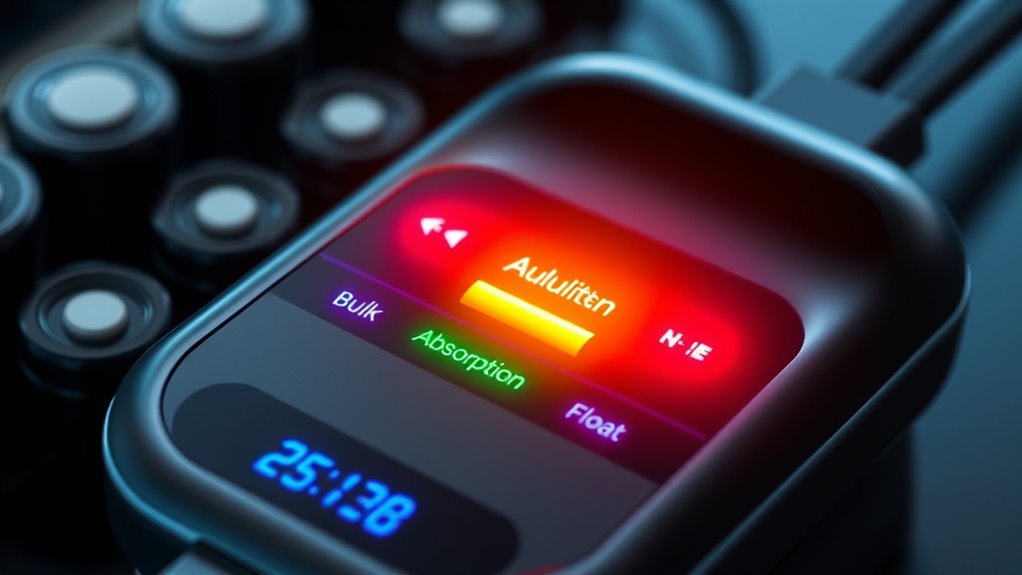
The bulk stage sets the foundation for a complete and healthy battery charge. During this phase, your charger supplies maximum safe current until the battery reaches the absorption voltage. This rapid charging quickly restores a significant portion of the battery’s capacity—typically 70–90%. If the bulk stage doesn’t operate properly or is too short, your battery may stay undercharged, leading to reduced capacity and increased sulfation, which shortens its lifespan. It also prolongs the overall charging time. Ensuring the bulk stage is effective means your battery gets a strong, even foundation for the next stages. Proper bulk charging prevents overheating and gas buildup, keeping your battery safe and ready for use. In short, it’s vital for a fast, reliable, and long-lasting recharge. Efficient charging processes help maintain battery health and performance over time. Additionally, consistent bulk charging reduces the likelihood of battery damage caused by improper current levels. Recognizing the importance of this stage is essential for optimizing battery longevity and ensuring maximum performance. A well-managed bulk stage also minimizes the risk of overheating, which can harm the battery’s internal components and reduce its overall lifespan.
How the Absorption Stage Works
Once the battery reaches the absorption voltage setpoint, the charger switches to a constant-voltage mode, holding that voltage steady while the current naturally decreases. During this stage, your battery is almost fully charged, and the goal is to top it off safely. As the current tapers, you can feel confident that overcharging and gassing are minimized. You’ll notice:
- You’re bringing the battery from around 80–90% to nearly full capacity, ensuring maximum efficiency.
- The charger carefully balances between rapid charging and avoiding damage, protecting your investment.
- Once the current drops below a set cutoff or time runs out, you’re ready to move to the float stage, securing a fully charged battery without risk.
- This process relies on precise temperature control to optimize charging safety and effectiveness.
- Additionally, understanding battery chemistry helps in adjusting the charging stages to suit different types of batteries, ensuring longevity and performance.
- Proper monitoring of charge rates during this stage can also extend the overall lifespan of your battery.
The Goal of the Absorption Phase
The primary goal of the absorption phase is to safely top off the battery to its full capacity without overcharging or causing damage. During this stage, your charger holds a constant voltage, allowing the current to taper naturally as the battery approaches full charge. This controlled process ensures the remaining 10–20% of capacity is added efficiently and safely. The absorption phase prevents overheating, gassing, and sulfation, which can harm the battery over time. It also ensures the electrolyte is fully charged and balanced. The duration of this stage depends on the battery’s chemistry, capacity, and initial charge level. By carefully managing this stage, your charger maximizes battery lifespan, maintains performance, and avoids the risks associated with overcharging.
Understanding the Float Stage

Have you ever wondered how batteries stay fully charged during long periods of inactivity without overcharging? That’s the magic of the float stage. During this phase, your charger lowers the voltage to a safe, steady level, just enough to compensate for self-discharge. It supplies a tiny current that keeps the battery at 98-100% without risking damage.
Here’s why the float stage matters:
- Prevents Overcharging: Maintains full charge without damaging the battery.
- Reduces Water Loss: Especially in flooded batteries, it helps avoid evaporation and corrosion.
- Extends Battery Life: Proper float voltage minimizes sulfation and deterioration over time.
The Purpose of Float Charging

Ever wonder why keeping a battery on a charger doesn’t lead to overcharging or damage? That’s because of float charging. Its purpose is to maintain the battery at a full charge without risking overcharge. Once the battery reaches about 98-100%, the charger switches to float voltage, which is lower than the absorption level. This small, steady current replaces the energy lost due to self-discharge, keeping the battery ready for use. Float charging prevents sulfation and reduces self-discharge, extending battery life. It’s ideal for backup systems, standby power, or vehicles that sit idle for long periods. By carefully controlling voltage and current, float charging guarantees your battery remains healthy, fully charged, and ready whenever you need it—without the risk of damage. Smart charging techniques optimize this process by adapting to the battery’s changing needs over time. Additionally, voltage regulation ensures that the charging process remains safe and effective throughout the battery’s lifespan. Proper charge management is essential to prevent issues like overcharging or undercharging, which can shorten the battery’s overall life. Understanding battery chemistry helps in choosing the right charging method to prolong battery health and performance. Incorporating charge monitoring can further enhance the longevity and safety of your batteries by providing real-time feedback.
When and Why Equalization Is Used

Equalization is typically used when batteries develop stratification, sulfation, or uneven electrolyte distribution that can impair performance and lifespan. You should perform equalization when you notice reduced capacity, faster self-discharge, or inconsistent cell voltages. It’s an intentional overcharge that mixes the electrolyte and breaks down sulfates, restoring battery health. Proper electrolyte management is essential for optimal battery function and longevity, especially in maintaining battery health. Regularly scheduled equalization helps maintain the overall battery infrastructure and prevents issues caused by poor maintenance. Timing is key; only perform equalization as recommended by your manufacturer to avoid damage. Monitoring your batteries’ condition ensures that equalization is used effectively and not unnecessarily. Regularly scheduled equalization keeps your batteries operating at peak efficiency and prolongs their lifespan. Additionally, understanding charge cycles can help determine the best time to perform equalization for maximum benefit.
Safety Features and Practical Tips
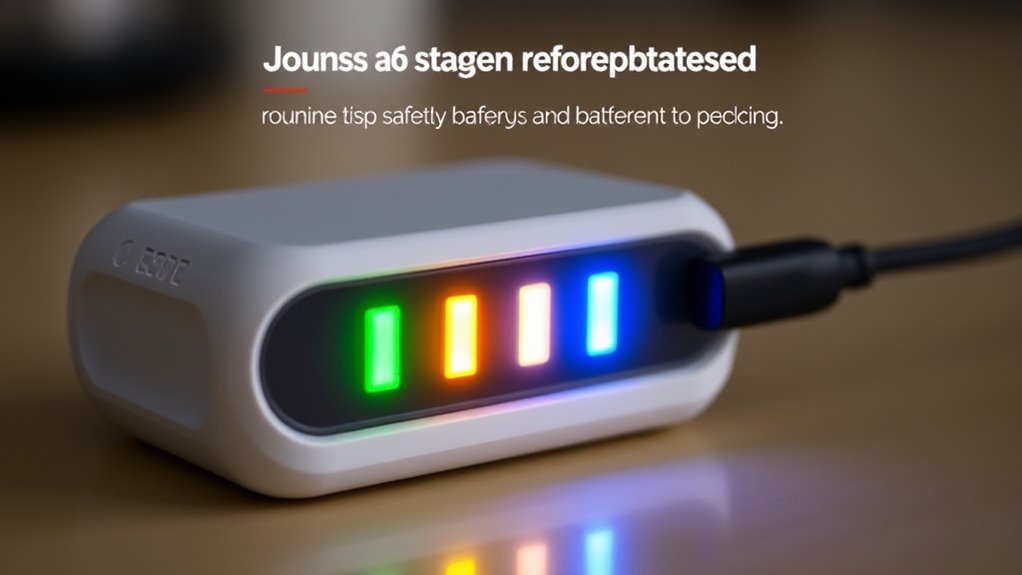
Implementing proper safety features and following practical tips is essential to guarantee your battery charging system operates reliably and safely. Always match your charger’s setpoints—voltage, current, and timers—to your battery’s chemistry and temperature needs. Use chargers with overvoltage, overtemperature, and timer protections to prevent damage. Regularly monitor voltage, current, and temperature levels, especially during bulk and absorption stages. Keep batteries in well-ventilated areas to avoid gas buildup and overheating. Use the following table to understand key safety features:
| Safety Feature | Purpose |
|---|---|
| Overvoltage Protection | Prevents overcharging, extends battery life |
| Temperature Compensation | Maintains ideal voltage based on temperature, which is crucial for safe charging and efficiency |
| Timer Controls | Avoids prolonged overcharge, reduces risks |
| Ventilation Requirements | Ensures gases escape safely, prevents explosions |
Additionally, selecting chargers with temperature compensation ensures optimal charging performance across varying environmental conditions. Proper ventilation around batteries is crucial for safety, especially during high-current charging stages. Incorporating advanced safety features can provide an extra layer of protection and peace of mind. For enhanced safety, consider regular maintenance and inspections to identify potential issues early.
Frequently Asked Questions
How Do Smart Chargers Determine When to Switch Between Stages?
You tell your smart charger to switch stages by monitoring voltage, current, and time. When the battery reaches the absorption voltage and current tapers off, it switches from bulk to absorption. Once the current drops below a set threshold during absorption or a timer expires, it moves to float. The charger continuously checks these parameters to guarantee safe, efficient charging and prevent overcharging or damage.
Can Different Battery Chemistries Share the Same Charging Profile?
Think of battery chemistries as different musical instruments—they each require a unique tuning. You can’t use one universal charging profile for all. Lithium, lead-acid, and AGM batteries have distinct voltage, current, and temperature needs. Sharing profiles risks damage or shortened life. Instead, you should customize or select a charger with profiles tailored to each chemistry, ensuring safe, efficient, and long-lasting performance for every type.
What Are Signs of Improper Charging Stage Transitions?
You’ll notice signs of improper charging stage shifts if your battery shows inconsistent voltage levels, excessive gassing, or overheating. If it takes too long to reach the next stage, or if it switches prematurely, the charger might not be responding correctly. Watch for reduced capacity, swelling, or a rapid drop in voltage after charging. These issues indicate your charger isn’t shifting properly, risking battery damage or reduced lifespan.
How Does Temperature Affect Each Charging Stage?
Imagine you’re charging a battery on a hot summer day. Temperature impacts each stage: higher temps lower the ideal voltage, so your charger should reduce the absorption and float voltages to prevent overcharging and damage. Conversely, in cold conditions, voltages need to be increased slightly. Without temperature compensation, batteries risk overheating, sulfation, or reduced capacity, shortening their lifespan and efficiency during all stages.
Are There Risks of Overcharging During the Float Stage?
Yes, there’s a risk of overcharging during the float stage if the voltage isn’t properly regulated. If the float voltage is set too high or isn’t temperature-compensated, it can cause battery overcharge, leading to water loss, corrosion, or sulfation. To prevent this, verify your charger has accurate, temperature-adjusted setpoints and protective features. Regular monitoring helps catch any issues early, prolonging your battery’s life.
Conclusion
Understanding each stage of your smart charger helps keep your batteries healthy and reliable. From bulk to float, knowing what’s happening ensures you’re not “biting off more than you can chew.” Regularly monitoring and maintaining your charger can extend your batteries’ life and save you money. Remember, a stitch in time saves nine—pay attention to these stages now, and your batteries will thank you for it in the long run.
Fall Picks
fall essentials
As an affiliate, we earn on qualifying purchases.