To prevent gear failures, match your recovery gear’s weight capacity to your vehicle’s weight, ideally choosing gear rated at least 25% above your vehicle’s maximum tow weight. Using under-rated gear can lead to breakage during recovery, risking injury and vehicle damage. Always select high-quality, durable equipment designed for harsh conditions. If you keep these principles in mind, you’ll stay safe and avoid costly failures—discover more tips that can keep you prepared in tough situations.
Key Takeaways
- Match recovery gear ratings to your vehicle’s weight, ideally selecting equipment rated at least 25% above your vehicle’s maximum tow capacity.
- Use high-quality, durable materials like steel or synthetic fibers suited for your terrain and weather conditions.
- Always verify gear ratings through manufacturer specifications and reviews before use.
- Regularly inspect and maintain recovery gear to ensure integrity and safety during emergencies.
- Properly rated and maintained gear minimizes failure risks and enhances recovery safety for all involved.

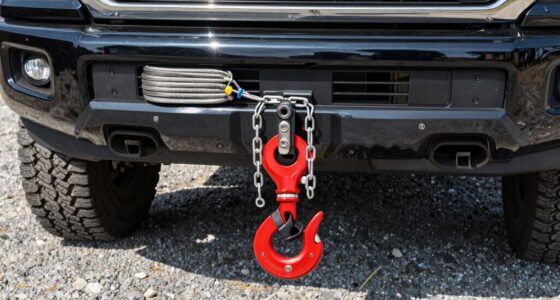
When selecting recovery gear, it’s vital to take into account your vehicle’s weight to make certain you have the appropriate equipment for safe and effective recovery. Your vehicle’s weight directly influences the towing capacity you’ll need to handle difficult situations safely. If your gear isn’t rated properly, you risk failure, which could lead to accidents or damage. To avoid this, always match your recovery gear’s specifications to your vehicle’s weight class. For example, if you have a heavy-duty truck, lightweight straps or weak shackles won’t cut it. Conversely, if you’re driving a smaller SUV, overly heavy-duty gear might be unnecessary and cumbersome. Knowing your vehicle’s towing capacity helps you choose equipment that offers the right balance of strength and flexibility.
Durability is another key factor when selecting recovery gear. The terrain, weather conditions, and frequency of use all demand gear that can withstand harsh environments without breaking down. Cheap, flimsy gear might seem like a budget-friendly option initially, but it often fails when you need it most. Look for high-quality materials like nylon, steel, or synthetic fibers designed specifically for off-road recovery. Gear durability isn’t just about withstanding weight; it’s also about resisting abrasion, UV damage, and corrosion. Reliable gear maintains its integrity over time, ensuring that your recovery efforts are safe and predictable every time. When shopping, pay attention to manufacturer ratings and reviews—these provide insights into how well the gear performs under real-world conditions. Additionally, understanding the proper maintenance of your recovery gear can extend its lifespan and ensure it remains reliable when needed most.
Matching your recovery gear to your vehicle’s weight and ensuring its durability aren’t one-time considerations; they’re ongoing commitments to safety. If your gear is too weak or not suited for your vehicle’s weight, you could end up stranded or worse. Always double-check the rated capacity of each piece, from straps to shackles, and opt for gear that exceeds your vehicle’s maximum tow weight by at least 25%. This extra margin offers a safety buffer, especially in unpredictable off-road situations. Remember, investing in quality gear that fits your vehicle’s weight and is built to last protects you and others on the trail. Properly matched, durable recovery gear keeps you prepared, minimizes risks, and ensures that you’re ready to handle whatever challenges come your way.
Frequently Asked Questions
How Do I Choose the Right Recovery Gear for My Vehicle?
To choose the right recovery gear, consider your vehicle weight and match it with equipment durability. Heavier vehicles need stronger, rated gear to handle the stress during recovery. Always check the load ratings and make certain they surpass your vehicle’s weight for safety. Opt for high-quality, durable equipment that withstands tough conditions. Properly matching gear to your vehicle prevents failures and keeps you safe during recovery operations.
What Are the Signs of Worn or Damaged Recovery Equipment?
You’ll notice worn or damaged recovery equipment through a wear indicator showing excessive wear, or if straps are frayed, cracked, or torn. Check for rust or corrosion on metal parts, and verify straps haven’t stretched or lost their tension. Damaged gear can fail under load, so regularly inspect and replace anything with frayed straps, worn indicators, or visible damage. Staying vigilant keeps your recovery safe and effective.
Can Recovery Gear Be Used for Vehicles Over 10,000 Pounds?
Yes, recovery gear can be used for vehicles over 10,000 pounds if you carefully check the vehicle weight limits and gear compatibility. Always select gear rated for your vehicle’s weight, ensuring it can handle the load safely. Using gear that exceeds your vehicle’s capacity risks failure and accidents. Properly matching recovery gear to your vehicle’s weight guarantees safe and effective recoveries, preventing gear failure and potential injuries.
How Often Should I Inspect and Maintain My Recovery Gear?
You should inspect your recovery gear before every use and perform a thorough maintenance check at least every six months. Proper gear storage in a dry, cool place helps prevent damage and deterioration. Regular inspection frequency guarantees your gear remains reliable and safe, preventing failures during critical moments. Always look for frays, corrosion, or wear, and replace damaged items promptly to keep your recovery kit ready for any situation.
Are There Specific Safety Precautions for Heavy Vehicle Recoveries?
When conducting heavy vehicle recoveries, you should always follow safety protocols and guarantee gear compatibility. Wear protective gear, communicate clearly with your team, and check that all recovery gear matches your vehicle’s weight and specifications. Keep your environment secure, use spotters when needed, and avoid shortcuts. These precautions help prevent accidents, gear failures, and injuries, ensuring a safe and effective recovery every time.
Conclusion
Don’t skip the math when choosing recovery gear. Some might think lightweight gear is enough, but it simply won’t hold if your vehicle’s heavier than expected. Investing in gear rated for your vehicle’s weight guarantees safety and prevents failures. It’s worth the small extra cost for peace of mind and reliable recovery. Remember, better to be prepared than stuck in a tough spot—so always match your gear to your vehicle’s weight.