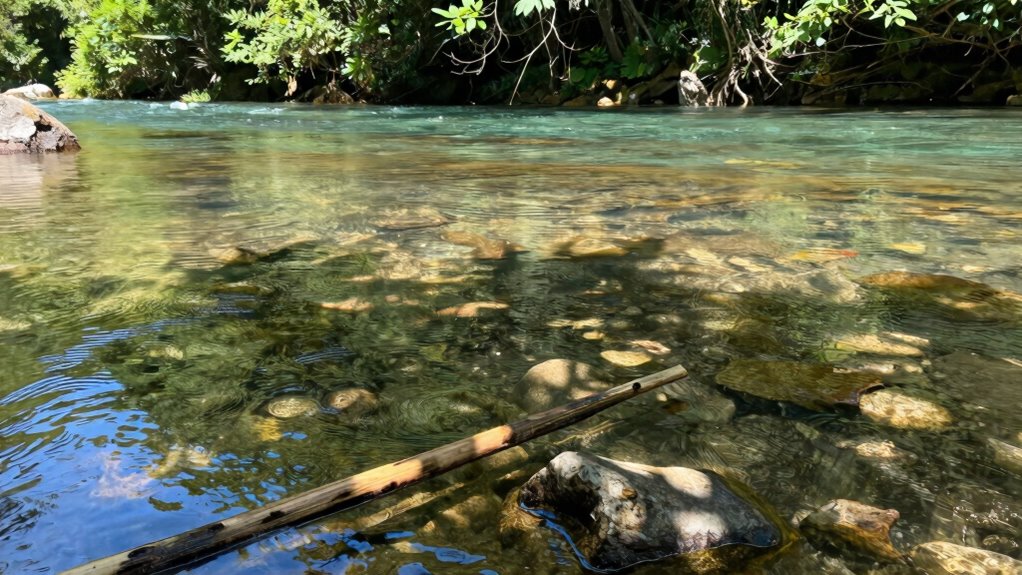

Before driving into a flooded or shallow crossing, you should estimate the water depth carefully. Use visual cues like debris, trash, or floating objects at certain heights to gauge water level. You can also employ a stick or pole, marking the submerged point to measure the depth. Observing water flow and turbulence offers additional clues about safety. For more detailed techniques and safety tips, stay tuned as you’ll discover effective methods to guarantee your safety.

Get business pricing on garage and car supplies
- Business-only prices and quantity discounts
- Tax-exempt purchasing
- Multiple users, one account, clear invoices
Key Takeaways
- Use visual cues like floating debris or submerged objects to estimate water level quickly.
- Employ straight objects such as sticks or poles, marking where water meets, then measure submerged length for depth.
- Observe water flow speed and turbulence to assess potential hazards and shallow areas before driving through.
- Repeatedly monitor water levels by measuring submerged objects to detect rising or falling conditions.
- Avoid driving through water if unsure; opt for alternative routes or seek professional depth measurements when possible.

Have you ever needed to determine how deep a body of water is without specialized equipment? If so, you’re not alone. Whether you’re heading into an unfamiliar river or assessing a flooded area, understanding water depth is vital for safety. Hydrological measurement techniques can help you make better decisions, especially when it comes to flood monitoring and avoiding dangerous situations. While professional tools exist for precise readings, there are simple methods you can try with basic knowledge and common tools to estimate water depth safely.
One straightforward way to gauge water depth is by observing the water’s surface and surroundings. If you notice debris or objects floating at certain heights, you can use these as reference points. For example, if a fallen branch or a piece of trash is partially submerged, you can estimate the water level relative to where it normally rests. This method isn’t highly precise, but it provides a quick visual cue that can inform your decision about whether it’s safe to proceed or avoid the area altogether.
Another practical approach involves using a stick, a long pole, or any straight object that can be submerged into the water. Simply mark the point where the water touches the object, then pull it out and measure the submerged length against the total length. This method relies on simple hydrological measurement principles—by knowing how much of the object is underwater, you can estimate the depth at that spot. Keep in mind that the accuracy depends on the precision of your measurement and the stability of your position. In flood-prone areas, this technique is particularly useful for monitoring water levels over time, helping you recognize rising water that could pose risks. Additionally, observing the flow speed and turbulence of the water can give clues about its depth and safety, as fast-moving water often indicates shallow or dangerous conditions.
Frequently Asked Questions
Can You Estimate Water Depth Without Any Tools?
Yes, you can estimate water depth without tools by observing visual cues and environmental signs. Look for ripples, foam, or debris floating on the surface, which can indicate shallow areas. Also, check the color and clarity—darker water often means deeper. Watch for submerged objects or protruding rocks. These cues help you gauge water depth, but always proceed with caution, as appearances can be deceiving.
How Accurate Are Visual Estimations of Water Depth?
You know what they say—trust your eyes, but don’t bet the farm on it. Visual judgment of water depth can be quite deceiving because depth perception varies with water clarity, light, and your experience. While it can give you a rough idea, it’s not always accurate. Always double-check with a stick or another reliable method before venturing into unknown water depths. Safety should be your top priority.
What Are the Risks of Underestimating Water Depth?
Underestimating water depth can be risky because it leads to unexpected water flow and potential vehicle flooding. Relying solely on visual estimates isn’t enough; hydrological models help predict water flow and depth more accurately. If you misjudge, you might get stuck or cause damage. Always use hydrological data and caution to assess water conditions properly, ensuring your safety before driving through water.
Are There Specific Signs Indicating Dangerous Water Levels?
Yes, there are specific signs indicating dangerous water levels. You should watch for hydrological signs like rapidly rising water, debris or floating objects, and unusual currents. Flood indicators such as water over the road, muddy or murky water, and road damage also signal danger. If you notice these signs, it’s best to avoid driving through the water, as these indicators suggest the water may be deeper and more hazardous than it appears.
Is It Safe to Drive Through Flooded Water?
You shouldn’t drive through flooded water. Your vehicle safety depends on flood awareness, and even shallow water can cause loss of control or engine failure. Never underestimate water’s power—just six inches can stall your car, and two feet can sweep it away. Always assess the situation, turn around if water looks too deep, and avoid risking your safety. Stay cautious and prioritize safety over shortcuts in flood conditions.
Conclusion
Now that you know how to estimate water depth safely, think twice before rushing into that flooded road. One misstep could be more dangerous than it looks. Will your cautious approach save the day, or will that hidden current catch you off guard? Remember, when it comes to water, never take chances. Stay alert, trust your measurements, and keep your journey safe—because sometimes, the real danger lurks just beneath the surface.
Evergreen bestsellers Picks
bestsellers
As an affiliate, we earn on qualifying purchases.