To keep safe with extension cords in your garage, choose the right gauge and length for your needs. Use a 14-gauge cord for distances up to 50 feet and switch to 12-gauge or thicker for longer runs, especially with high-wattage tools. Avoid daisy-chaining cords and regularly inspect for damage to prevent heat buildup, which can cause fires. Proper storage and elevation of cords also reduce hazards. Keep these tips in mind to prevent overheating and electrical issues—there’s more to guarantee safety.

Get garage and car supplies delivered free — and shop member deals
- Fast, free delivery on millions of items
- Access to Prime Big Deal Days deals on October 6–7
- Prime Video, Amazon Music and more included
Key Takeaways
- Choose the correct gauge (12 or 14) for outdoor use to prevent overheating and ensure safety.
- Keep extension cords within recommended lengths (up to 50 feet for 14-gauge) to reduce resistance and heat buildup.
- Avoid daisy-chaining multiple extension cords, which increases resistance and risk of overheating.
- Regularly inspect cords for damage; replace any with melting, fraying, or exposed wires immediately.
- Store cords properly in a loose coil and elevate them off the ground to prevent damage and heat accumulation.
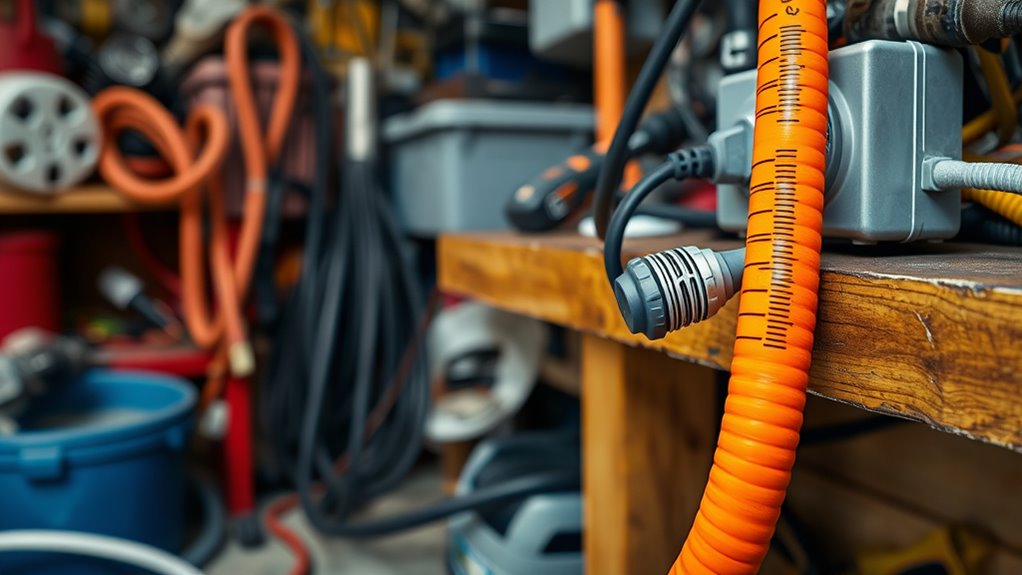
Extension cords are convenient, but they can pose safety risks if not used properly. One important aspect to contemplate is how you store your cords when they’re not in use. Proper cord storage prevents damage that could lead to electrical hazards. When storing extension cords, especially for outdoor use, avoid wrapping them too tightly or twisting them sharply, as this can damage the internal wires. Instead, coil them loosely in a figure-eight pattern and store them in a cool, dry place. If you have an outdoor storage shed or cabinet, make sure it’s protected from moisture and extreme temperatures, as exposure to the elements can degrade the cord’s insulation over time. Keeping cords properly stored not only prolongs their lifespan but also reduces the risk of fraying, cracking, or other damage that could lead to electrical shorts or fires.
Properly coil and store extension cords to prevent damage and ensure safety.
When it comes to outdoor use, always choose cords rated specifically for outdoor conditions. These cords are designed with tougher insulation to withstand moisture, UV rays, and temperature fluctuations. Using indoor cords outdoors can be dangerous because they might not have the durability needed to handle the environment, increasing the chances of damage and safety hazards. Always check the cord’s labeling for outdoor use before plugging it into outdoor equipment or outlets. Also, never run extension cords through standing water or across wet surfaces, as this can cause shock or electrocution. Instead, elevate the cords off the ground using appropriate hooks or stake them securely to prevent tripping hazards and accidental damage.
Another vital factor is understanding gauge and length. The gauge indicates the thickness of the wire inside the cord; a lower gauge number means a thicker wire capable of handling more current. Using a cord with an inadequate gauge for your power needs can lead to overheating, especially when powering high-wattage tools or multiple devices. Similarly, the longer the cord, the higher the resistance, which can cause heat buildup. To prevent this, choose a cord with the right gauge for your length and power requirements. For example, a 14-gauge cord is suitable for outdoor use up to about 50 feet, but if you need a longer cord, opt for a 12-gauge or thicker to guarantee safety.
Heat buildup is a real concern, especially with extended use or heavy loads. When a cord overheats, it can melt insulation or cause fires. Always avoid daisy-chaining multiple extension cords, as this increases resistance and heat. Regularly inspect cords for signs of wear, such as melting, fraying, or exposed wires, and replace damaged cords immediately. Never cover cords with rugs or furniture, as this traps heat and prevents proper cooling. Proper cord maintenance and storage practices are essential for safe outdoor and garage use. Maintaining good cord storage practices, selecting the right gauge and length, and paying attention to heat buildup will help you use extension cords safely and effectively, whether inside your garage or for outdoor projects.
Frequently Asked Questions
How Often Should I Replace My Extension Cords for Safety?
You should replace your extension cords immediately if you notice damaged cord insulation, fraying, or exposed wires. Regularly check for wear, and avoid storing cords improperly, which can cause damage over time. Even if they seem fine, replace cords every few years to ensure safety. Proper cord storage helps prevent damage, and always inspect cords before use to avoid potential hazards from compromised insulation.
Can I Connect Multiple Extension Cords for More Length?
You can’t just connect endless extension cords for longer reach—doing so risks a heat meltdown! Instead, use proper extension cord connectors designed for safety, or better yet, a heavy-duty power strip with built-in safety features. Twisting cords together creates a fire hazard and compromises power strip safety. Always prioritize quality over quantity, and remember, multiple cords stacked can turn your garage into a dangerous fire zone!
Are There Specific Extension Cord Types for Outdoor Garage Use?
Yes, for outdoor garage use, you should choose outdoor-rated, weather-resistant extension cords. These cords are specially designed to withstand moisture, temperature changes, and rough conditions, ensuring safety and durability. Look for cords labeled for outdoor use with thick insulation and a grounded plug. Using the right type prevents electrical hazards, protects your equipment, and keeps your garage workspace safe, even during harsh weather conditions.
What Are Signs of an Overheating Extension Cord?
You’ll know your extension cord’s overheating when its cord insulation feels hot to the touch or starts melting. Watch for a burning smell or visible discoloration, like the cord’s trying to melt down. Sparks or electrical arcing are dangerous signs of internal damage. If you see these, unplug it immediately. Overheating cords are a ticking time bomb, risking fire and damage, so always stay alert and replace damaged cords promptly.
Is It Safe to Run Extension Cords Through Walls or Ceilings?
Running extension cords through walls or ceilings isn’t safe because it risks damaging the cable insulation and creates a fire hazard. Wall penetration can expose wires to nails, screws, or moisture, which can cause shorts or shocks. If you must run cords through walls, use permanent wiring installed by a qualified electrician. Always prioritize safety, and avoid improvising with extension cords for wall or ceiling access.
Conclusion
Think of your extension cord as a lifeline for your garage projects. If you choose the right gauge, keep it short, and avoid heat buildup, you’ll guarantee it flows like a safe, steady stream rather than a dangerous wildfire waiting to happen. Treat your cords with care, and they’ll serve you reliably—protecting you and your tools from harm. A little attention now keeps unexpected fires and damage from sparking down the line, so stay safe and plugged in wisely.
Halloween Picks
halloween
As an affiliate, we earn on qualifying purchases.