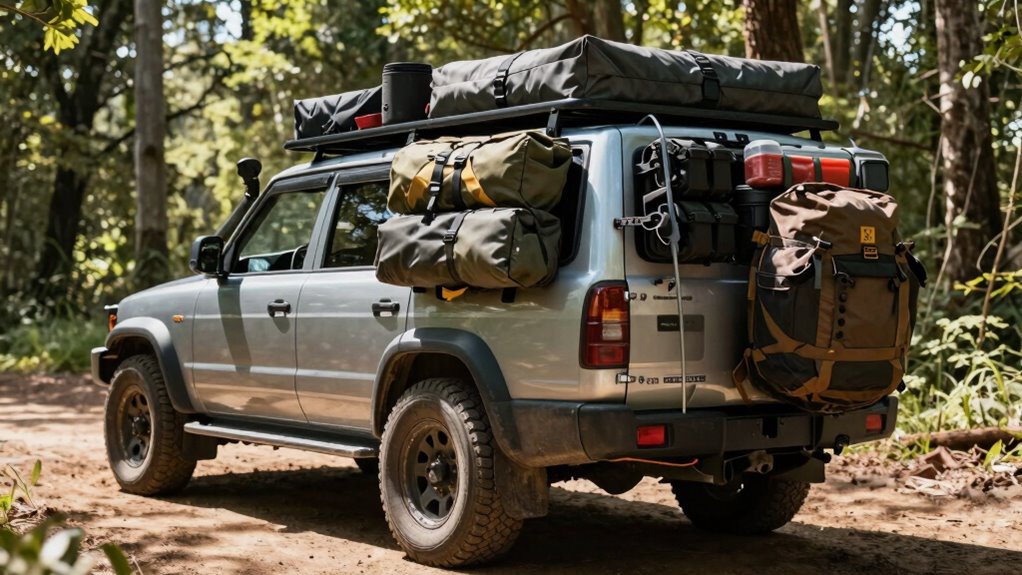

When calculating payload for overlanding, it’s easy to overlook certain weights like gear, passengers, and trailer load, which can quickly add up beyond your vehicle’s rated capacity. Make sure you include all items, including fluids, accessories, and even spare parts. Overlooking these factors could lead to overloading, risking safety, vehicle strain, and performance. Keep a detailed tally to stay within safe limits—if you continue exploring, you’ll discover key tips to help manage every ounce.
Key Takeaways
- Always include the weight of passengers, gear, and accessories in your payload calculations, not just trailer weight.
- Verify your vehicle’s Gross Vehicle Weight Rating (GVWR) and Payload Capacity to prevent overloading.
- Distribute cargo evenly to maintain vehicle balance and avoid uneven strain on suspension components.
- Remember to account for tongue weight of trailers, typically 10-15% of total trailer weight.
- Use load-planning tools and manufacturer resources to accurately assess safe payload limits before heading out.
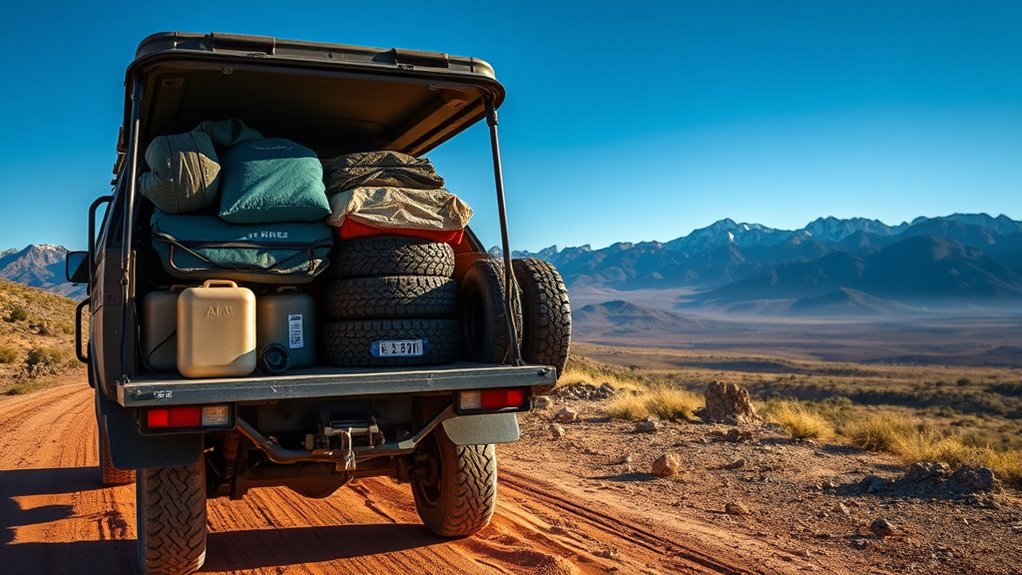
Ever wonder how to guarantee your overlanding setup stays safe and efficient? The key lies in understanding your vehicle’s payload math—specifically, how much weight it can handle without risking safety or performance. One essential aspect of this is knowing your towing capacity, which determines how much trailer or gear you can pull safely. Overloading beyond this limit can strain your vehicle’s engine, brakes, and suspension, leading to potential failures or accidents. But equally important is cargo distribution; how you pack and balance your gear inside and on top of your vehicle makes a significant difference in overall safety and handling. Properly distributing weight ensures your vehicle remains stable, prevents tire wear, and maintains prime control on uneven terrain. Referencing your vehicle’s load‑planning tools can help you accurately assess what your setup can handle before hitting the trail.
When planning your overlanding adventure, start by checking your vehicle’s towing capacity. This number isn’t just about trailers; it also impacts how much weight your vehicle’s suspension and chassis can handle when loaded down with gear. Overloading your vehicle can lead to sluggish acceleration, compromised braking, and increased wear on key components. To avoid this, always stay well within the manufacturer’s recommended towing capacity, factoring in the weight of your trailer, gear, and passengers. Overestimating can be tempting, but it’s a risky mistake that could jeopardize your safety.
Cargo distribution plays a pivotal role in keeping your setup balanced and your vehicle stable. Imagine your vehicle as a scale—if most of the weight is concentrated in the rear or on one side, it can cause sway, poor handling, or even tip-overs on rough terrain. To prevent this, distribute weight evenly from front to back and side to side. Place heavier items low and close to the center of the vehicle to lower the center of gravity, which enhances stability. When loading your roof rack or cargo carriers, keep the load centered and secure to avoid shifting during transit. Remember, a well-balanced load minimizes strain on your suspension and steering, making your overlanding experience safer and more enjoyable.
overlanding payload weight calculator
As an affiliate, we earn on qualifying purchases.
As an affiliate, we earn on qualifying purchases.
Frequently Asked Questions
How Do I Accurately Measure My Vehicle’s Payload Capacity?
To accurately measure your vehicle’s payload capacity, start by checking your owner’s manual or door sticker for the gross vehicle weight rating (GVWR). Subtract the curb weight from the GVWR to find your payload limit. Keep in mind the towing capacity and plan cargo distribution carefully to avoid overloading. Properly balancing weight ensures safety and ideal performance during your overlanding adventures.
What Are the Legal Limits for Overlanding Vehicle Weights?
Like a noble knight guarding his castle, you need to know your vehicle’s legal limits before overlanding. Typically, these limits are set by your vehicle’s Gross Vehicle Weight Rating (GVWR), often found on the door frame or in the owner’s manual. Off-road regulations may vary by region, and exceeding weight limits can affect your vehicle insurance and legality. Always stay within these limits to ensure safe, compliant adventures.
How Does Payload Affect Vehicle Handling and Safety?
Payload directly impacts your vehicle’s handling and safety. When overloaded, your tire pressure drops, risking blowouts or poor traction. Suspension tuning becomes vital, as excess weight can cause instability and uneven wear. You should regularly check tire pressure and adjust suspension settings to maintain ideal contact with the road, ensuring safe, confident handling regardless of payload size. Properly managing payload keeps your vehicle stable and reduces the risk of accidents.
What Tools Can Help Me Track Payload Changes Over Time?
Think of your vehicle as a living organism that needs constant care. To keep it in top shape, use tools like digital scales, payload tracking apps, or a simple weight management spreadsheet. These tools help monitor payload changes over time, ensuring you don’t unknowingly overload. Regularly tracking weight allows you to adjust your gear, maintain safety, and optimize handling, turning overlanding into a smoother, more controlled adventure.
How Do Modifications Impact My Vehicle’s Payload Limits?
Modifications can substantially impact your vehicle’s payload limits by altering weight distribution and reducing cargo capacity. Adding larger tires, roof racks, or upgraded bumpers increases weight, which can strain your suspension and chassis. Always check your vehicle’s specified payload limits and consider how each modification shifts weight. Properly managing weight distribution ensures safe handling and prevents overloading, keeping your overlanding adventures fun and trouble-free.
As an affiliate, we earn on qualifying purchases.
Conclusion
Don’t forget the fundamental facts of payload planning. Properly ponder your payload, prioritize your possessions, and prevent potential problems on the path. By balancing your gear and paying attention to weight, you’ll enjoy an easier, safer adventure. Remember, mindful measurement and meticulous management make the overlanding experience more enjoyable and effortless. Keep your calculations current, and your journey will be joyful, just like the journey itself should be. Happy hauling and happy trails!
As an affiliate, we earn on qualifying purchases.
As an affiliate, we earn on qualifying purchases.