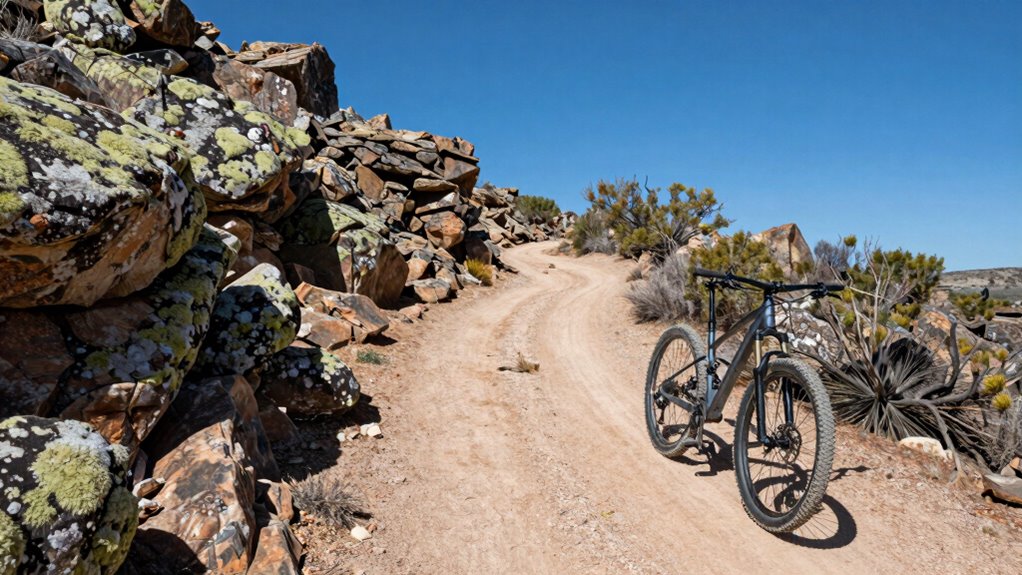

To prevent punctures, choose your line carefully and stay alert for sharp rocks. Ride at a moderate speed to improve control and give yourself time to react to hazards. Scout ahead to spot debris or rocks that might cause flats, and take small detours around them whenever possible. Keeping your focus on the path and adjusting your speed accordingly can make a big difference. Continue to explore more tips for a smooth, flat-free ride.
Key Takeaways
- Choose smooth, debris-free routes to minimize contact with sharp rocks and debris.
- Scan ahead to identify hazards and plan a line that avoids sharp objects.
- Control your speed, especially over rough or debris-laden surfaces, to reduce impact force.
- Slow down before crossing hazards like sharp rocks or gravel patches for better maneuverability.
- Use tire sealants in conjunction with cautious line choice and speed control for extra puncture protection.
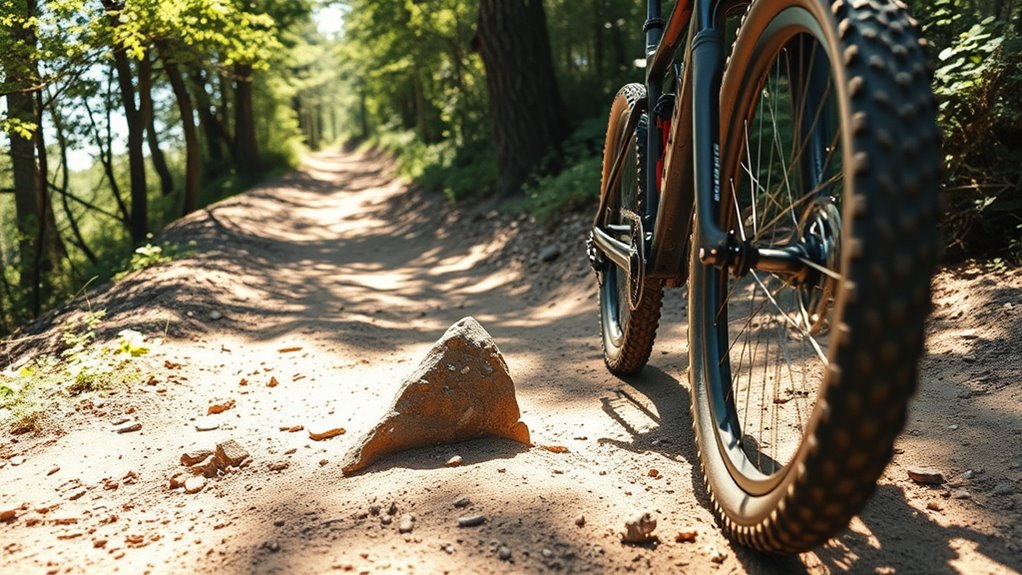
Have you ever experienced the frustration of a sudden tire puncture? It’s that sinking feeling when your ride suddenly becomes bumpy, and you realize you’re losing air fast. To prevent this inconvenience, understanding how to choose the right line, control your speed, and recognize hazards like sharp rocks can make all the difference. One useful tool in your arsenal is tire sealants. These liquids, applied inside your tires, can seal small punctures almost instantly, giving you extra peace of mind on the road. However, relying solely on tire sealants isn’t enough. You also need to be proactive with your road surface choices and riding techniques. Picking smoother routes or avoiding debris-strewn paths reduces the risk of punctures considerably. When you’re on unfamiliar terrain, scan ahead and spot potential hazards—sharp rocks, glass shards, or thorns—that can cause flats. If you see a rough patch or debris, slow down and navigate around it carefully. Maintaining a moderate speed allows you to react quicker and gives you better control over your bike or vehicle. Going too fast over uneven or debris-laden surfaces increases the likelihood of contact with sharp objects, which can puncture your tire. Remember, your line choice is vital. Instead of riding directly through areas cluttered with debris, look for smoother, cleaner paths. Sometimes, a small detour around a pothole or a patch of gravel can save you from a flat later. Controlling your speed helps you stay alert and precise in your line, especially on tricky surfaces. It also reduces the impact force if you do hit something sharp, giving your tires a better chance to withstand the obstacle. Incorporating tire sealants can add extra protection, especially if you frequently ride on rough terrain or gravel roads. These sealants can seal small punctures before they become a problem, but they shouldn’t replace careful route planning and cautious riding. Additionally, choosing tires with a higher contrast ratio can improve your ability to detect hazards on the road surface. Ultimately, the key to preventing tire punctures lies in being attentive to your surroundings, choosing your path wisely, and riding at a controlled speed. Recognizing hazardous road surface choices and avoiding sharp rocks or debris can save you time, money, and frustration. Combine this with the use of tire sealants, and you’ll considerably reduce your chances of ending up stranded with a flat. Staying vigilant, riding smart, and taking preventative measures make all the difference in keeping your tires intact and your ride smooth.
Frequently Asked Questions
How Often Should I Inspect My Tires for Damage?
You should inspect your tires for damage at least before every ride and regularly during longer trips. Tire inspection frequency is key to damage detection methods; look for cuts, embedded debris, or uneven wear. Use a visual check combined with feeling for any bulges or soft spots. Staying vigilant helps you catch issues early, preventing punctures and ensuring safe riding. Make it a routine for ideal tire health and safety.
Are There Specific Tire Types Better for Puncture Resistance?
You should look for tires with a thicker tire casing and reinforced sidewalls, as these offer better puncture resistance. Tires with a robust tread design, featuring more rubber and fewer gaps, also help prevent flats. Such features absorb impacts and resist sharp objects, reducing puncture risk. Choosing tires built for durability and puncture resistance gives you a better chance to avoid flats on rough or unpredictable terrain.
Can Tire Sealants Effectively Prevent Punctures?
Did you know that sealants can reduce flat rates by up to 80%? They can be effective, but remember their limitations—sealants may not fix large or sidewall punctures. To maximize their benefits, follow proper application tips, like ensuring the sealant is evenly distributed and using the right amount. While sealants help, don’t solely rely on them; combine with good line choice, controlled speed, and avoiding sharp rocks for best results.
What Maintenance Practices Reduce the Risk of Sharp Rock Damage?
To reduce sharp rock damage, you should regularly inspect and maintain your tires’ tread depth, ensuring it’s sufficient to provide extra protection. Installing a rock guard can also help shield your tires from sharp edges. Additionally, clean debris from your tires after rides and avoid routes with loose, jagged rocks. These practices work together to minimize the risk of punctures caused by sharp rocks, keeping you safer on rugged trails.
How Does Tire Pressure Affect Puncture Likelihood?
You should keep your tire pressure properly inflated to reduce puncture chances and improve riding comfort. Under-inflated tires are more prone to punctures because they flex and expose the sidewalls to sharp objects, while over-inflated tires can become rigid and less forgiving, increasing the risk of damage from sharp rocks. Maintaining the correct tire pressure balances ride comfort and protection, helping you avoid punctures effectively.
Conclusion
To keep your tires puncture-free, choose your line carefully, maintain appropriate speed, and watch out for sharp rocks. Did you know that over 60% of punctures happen on rough trails? By staying alert and making smart choices, you can considerably reduce your chances of flats. Remember, a little caution goes a long way in preventing those frustrating stops and keeping your ride smooth and enjoyable. Stay vigilant and ride smart!