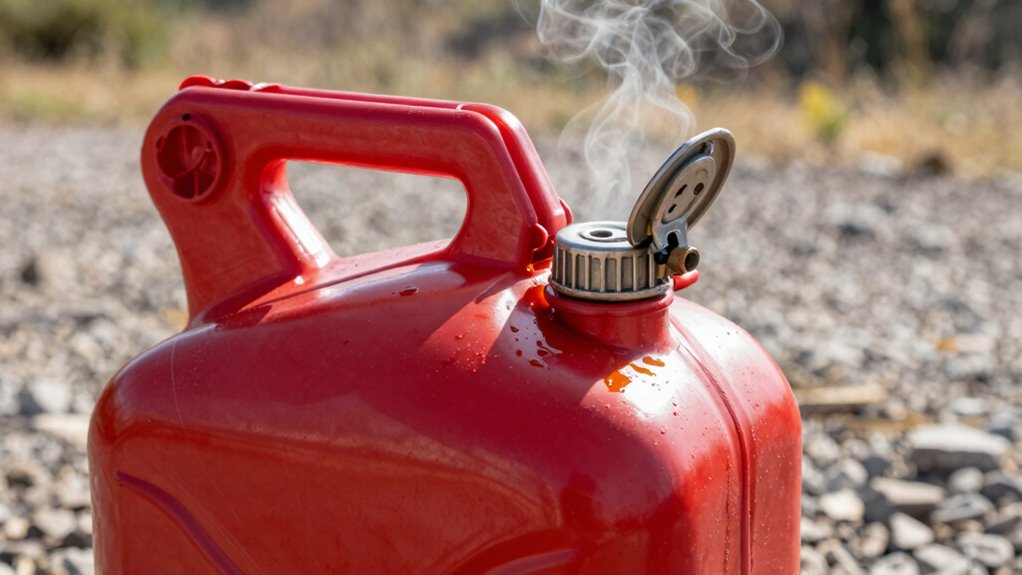

When handling fuel cans, you need to understand that heat causes fuel to expand, increasing pressure inside the container. If you fill the can to the brim, there’s no room for this expansion, which can cause leaks or even ruptures. Proper venting lets excess vapors escape safely, preventing pressure buildup. Full cans often leak because of fuel expansion. To avoid these issues, always use the correct filling practices and check your venting. Keep reading to learn more about keeping fuel safe.

Get business pricing on garage and car supplies
- Business-only prices and quantity discounts
- Tax-exempt purchasing
- Multiple users, one account, clear invoices
Key Takeaways
- Proper venting allows fuel vapors to escape, preventing pressure buildup that can cause leaks or ruptures.
- Filling cans only to about 95% capacity provides space for fuel expansion during temperature increases.
- Fuel expands as temperatures rise, increasing pressure; overfilled cans have no room for this expansion, risking leaks.
- Blocked or damaged vents can trap vapors, leading to pressure buildup and potential safety hazards.
- Secure lids and check for leaks regularly to ensure safe storage and prevent accidents caused by fuel expansion.
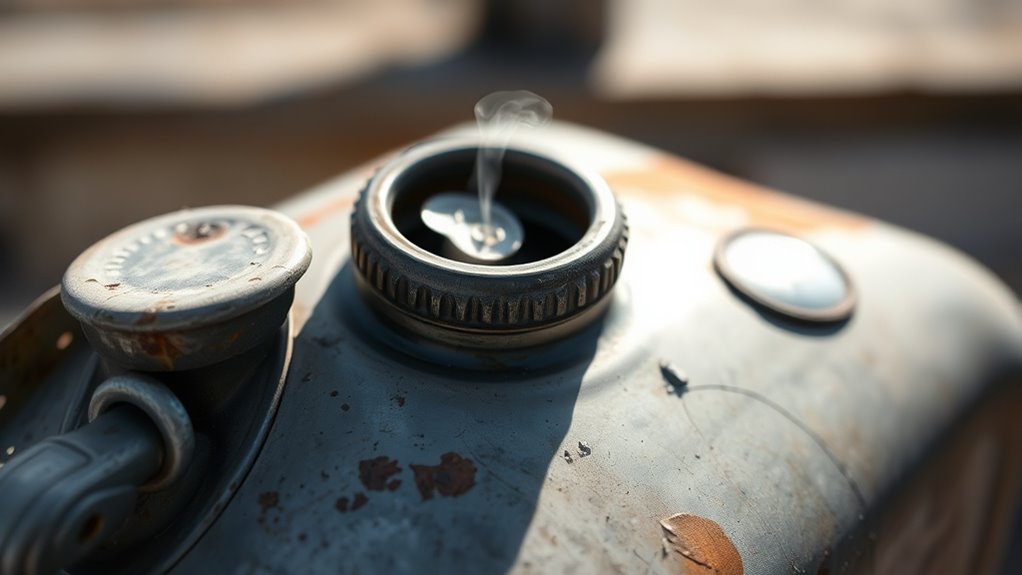
Handling fuel cans safely is vital to prevent accidents and injuries. One of the most important aspects of safety is proper storage. When storing fuel cans, always keep them in a well-ventilated area away from heat sources, sparks, or open flames. Proper storage minimizes the risk of fire hazards, which can quickly escalate if fuel vapors ignite. Never store cans inside your home or in enclosed spaces where fumes can accumulate. Instead, choose a cool, dry location outdoors or in a designated storage shed. Make sure the cans are upright and secure, preventing accidental tipping or spills that could lead to dangerous leaks or fires. Keeping cans away from direct sunlight is also essential, as heat can cause the fuel to expand, increasing pressure inside the container.
Understanding how fuel expands as it warms up is key to avoiding leaks. When a fuel can is full, it’s tempting to fill it to the brim, but this leaves no room for expansion. As temperatures rise, the fuel inside the can expands, creating pressure that can force the lid open or cause leaks. That’s why it’s recommended to fill fuel cans only to about 95% capacity. This small margin of space allows for safe expansion without risking spills or leaks. If you notice your full cans leaking or dripping, it’s often because the fuel has expanded due to heat, or the container isn’t sealed tightly. Always check the lid and verify it’s secure after filling and before storing. Proper venting mechanisms are essential to prevent pressure buildup, which can lead to leaks or ruptures.
Venting is another critical component of fuel can safety. Proper venting allows excess pressure to escape, preventing the can from bursting or leaking. Many fuel cans are designed with built-in vents or venting mechanisms. When using or transporting a can, make sure these vents aren’t blocked or clogged. If you notice a can swelling or if it’s difficult to open the lid, it might be due to trapped vapors that need to escape. Never seal a vented can tightly without allowing for pressure release, as this can turn the container into a hazard. By paying attention to proper storage, venting, and understanding how expansion impacts fuel cans, you reduce the risk of fire hazards and ensure safer handling. Remember, fuel is highly flammable, and even small mistakes can lead to dangerous situations. Always prioritize safety, follow proper procedures, and stay vigilant when managing fuel cans.
Frequently Asked Questions
Can I Safely Transport Fuel Cans in a Car Trunk?
You can transport fuel cans in your car trunk if you select proper containers designed for fuel, ensuring they’re vented and leak-proof. Make sure the cans are tightly sealed, placed upright, and secured to prevent movement. Maintain proper ventilation requirements by leaving some space around the cans and avoiding heat sources. Never transport full cans in enclosed spaces without ventilation, as this can lead to dangerous leaks or pressure buildup.
What Is the Best Way to Store Fuel Cans Long-Term?
Did you know that improper storage causes over 80% of fuel-related fires? To store fuel cans long-term, follow essential storage tips like keeping them in a cool, well-ventilated area away from direct sunlight. Always make certain the cans are tightly sealed to prevent leaks, and use spill-proof containers. Proper storage minimizes leak prevention issues and keeps your fuel safe and secure for future use.
Are Plastic Fuel Cans Safer Than Metal Ones?
Plastic fuel cans are generally safer than metal ones because they offer better plastic safety, reducing risk of leaks and corrosion. They’re lightweight, less likely to dent, and easier to handle. However, metal cans have superior durability, making them resistant to impacts and punctures. Your choice depends on your needs—if safety and ease are priorities, go for plastic; if durability is key, metal may be better.
How Often Should I Inspect My Fuel Cans for Leaks?
Think of your fuel cans like ticking time bombs—regular leak detection guarantees you safe. You should inspect your cans for leaks at least once a month, or more often if you notice any damage or changes. Check for cracks, rust, or fumes, and ensure caps are sealed tightly. Consistent inspection frequency helps prevent accidents and keeps your fuel storage safe and secure.
Do All Fuel Cans Have Venting Mechanisms?
Not all fuel cans have venting mechanisms, but many do to comply with fuel can regulations. These venting systems help release pressure from fuel expansion, preventing leaks and ruptures. When choosing a fuel can, check for proper venting features to guarantee safety and compliance. If your can lacks a vent, avoid overfilling, and consider installing a venting system or replacing it with one that meets current regulations for safer handling.
Conclusion
Remember, handling fuel cans safely isn’t just about following rules—it’s about respecting the potential hazards they carry. Proper venting and understanding expansion help you avoid messy leaks and dangerous accidents. Don’t let complacency be the Achilles’ heel; stay vigilant and treat every can as if it’s walking a tightrope. By staying informed and cautious, you’ll keep yourself and others out of harm’s way. After all, it’s better to be safe than sorry when dealing with volatile fuels.
Halloween Picks
halloween
As an affiliate, we earn on qualifying purchases.