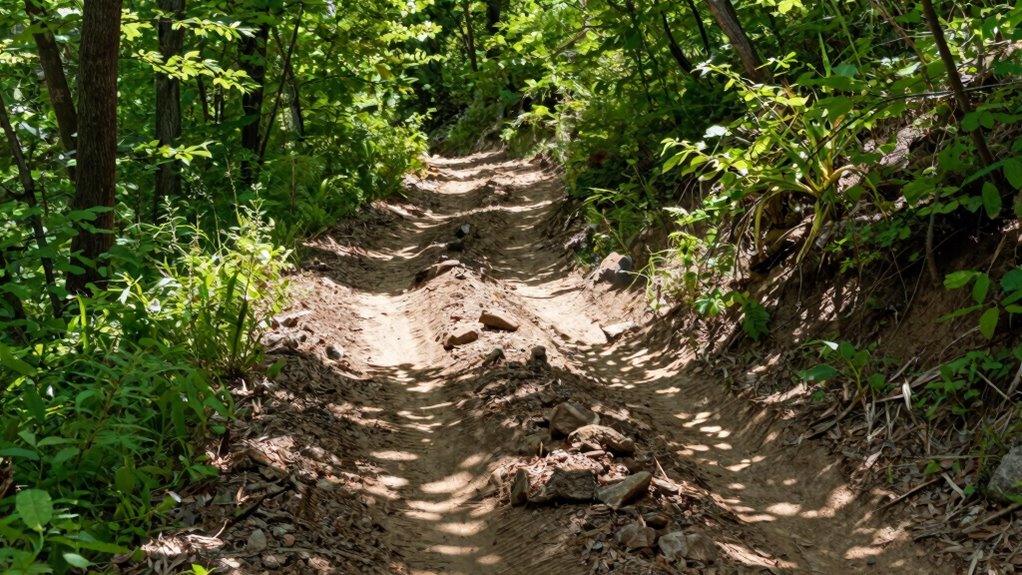

To avoid ruts and vehicle damage, focus on analyzing the terrain ahead by observing surface textures, slopes, and trail signs like tire marks or footprints. Recognize obstacles early, such as rocks or mud, and plan your route around them. Adjust your speed and line based on terrain type, whether sandy, rocky, or muddy, to maintain stability. Mastering these quick assessments helps you navigate confidently and keeps your gear safe—if you keep exploring, you’ll discover even more ways to stay ahead.

Get business pricing on garage and car supplies
- Business-only prices and quantity discounts
- Tax-exempt purchasing
- Multiple users, one account, clear invoices
Key Takeaways
- Assess surface texture and recent trail signs to predict terrain stability and identify potential hazards early.
- Observe tire marks, footprints, and trail features to determine difficulty and plan safer routes.
- Recognize terrain types like mud, loose gravel, or rocky patches to adjust speed and maneuvering accordingly.
- Scan for subtle clues indicating ruts or hidden obstacles to avoid getting stuck or damaging equipment.
- Develop quick decision-making skills for real-time adjustments, ensuring smoother navigation and trail safety.
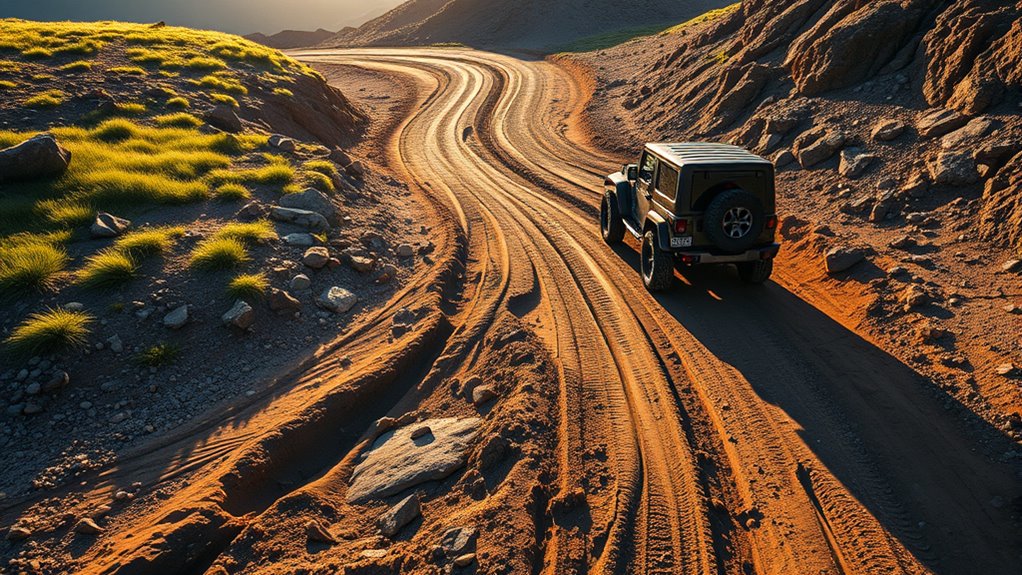
Ever wondered how experienced explorers and outdoor enthusiasts navigate unfamiliar landscapes with confidence? The secret lies in mastering the art of reading terrain, a skill that allows you to anticipate challenges before they become problems. When you develop good trail analysis skills, you can identify the subtle features that reveal the condition of the path ahead. This means paying close attention to the surface texture, slopes, and any signs of recent activity, such as tire marks or footprints. Recognizing these clues helps you make smarter decisions, like adjusting your line or speed to avoid trouble.
Master terrain reading to anticipate challenges and navigate confidently on any trail.
Obstacle recognition is a critical part of this process. You need to be able to spot potential hazards early—whether it’s a hidden rock, a sudden drop-off, a muddy patch, or loose gravel. The moment you see these obstacles, you can plan a route around them or prepare to navigate through them carefully. This prevents your vehicle from getting stuck, slipping, or suffering damage. For example, if you notice a section where the trail narrows and has loose stones, you might choose to slow down and approach with caution, or even find an alternate route. The key is to stay alert and constantly scan the terrain, rather than reacting only when you’re right on top of a hazard.
Developing your trail analysis also involves understanding how different terrains behave under various conditions. Sandy trails, for instance, require a different approach than rocky or muddy sections. By observing how the ground looks and feels, you can gauge its stability and adjust your approach accordingly. Additionally, familiarizing yourself with the principles of 16PF personality traits can help you better adapt your decision-making style in challenging environments. This ability to read terrain effectively helps you avoid rutting or breaking parts of your vehicle or bike, which can happen if you push through areas that aren’t suitable for your equipment.
Practicing obstacle recognition isn’t just about spotting hazards; it’s also about understanding how to maneuver around them. You learn to read the terrain in real time, making split-second decisions that keep you safe and your gear intact. Over time, this skill becomes second nature, giving you the confidence to explore more challenging trails and unfamiliar environments. In essence, mastering trail analysis and obstacle recognition transforms you from a passive traveler into an active participant in your adventure, empowering you to avoid pitfalls and enjoy the journey without the setbacks of getting stuck or causing unnecessary damage.
Frequently Asked Questions
How Can I Identify Hidden Obstacles on the Trail?
To spot hidden obstacles on the trail, you should pay attention to trail markers, which often indicate changes in terrain. Use shadow analysis to identify dips or protrusions that aren’t immediately visible. Keep your eyes moving ahead and scan the ground regularly, especially in shaded areas where obstacles can blend in. Staying alert and using these techniques helps you avoid surprises, making your ride safer and more enjoyable.
What Gear Adjustments Improve Terrain Reading Accuracy?
You can improve terrain reading accuracy by adjusting your vehicle suspension and tire pressure. Lowering tire pressure gives you better contact with uneven surfaces, helping you spot obstacles early. Upgrading or tuning your suspension allows better wheel articulation and stability, making it easier to feel subtle terrain changes. These gear tweaks provide a clearer, more responsive feel of what’s ahead, so you can navigate tricky terrain confidently and avoid surprises.
How Do Weather Conditions Affect Terrain Assessment?
Weather impact profoundly influences your terrain assessment. Rain can soften trail conditions, creating mud and ruts that hide potential hazards, while snow may obscure trail features altogether. Warm temperatures dry out trails, but can also cause loose gravel or dust, reducing traction. You need to adapt your reading skills based on these conditions, paying close attention to how weather changes affect trail features, so you can choose safer routes and avoid breakage.
What Are Common Mistakes Beginners Make When Reading Terrain?
You might overlook trail markers and environmental cues, thinking you can just ride blindly, but that’s a mistake that could lead to disaster. Beginners often misjudge terrain by ignoring subtle signs like loose gravel or moisture spots. Instead, stay alert, read the trail carefully, and use environmental cues to anticipate hazards, preventing breakdowns and ensuring a smoother ride. Don’t underestimate the power of sharp observation—your safety depends on it!
How Can I Practice Terrain Reading Safely Alone?
To practice terrain reading safely alone, start by paying close attention to trail markings and trail signage. Observe how the terrain changes and use markers as guides for safer paths. Stick to well-marked trails, go at a manageable pace, and carry a map or GPS device. Always let someone know your plans, and trust your instincts—if something feels risky, turn back. This approach helps build your skills while keeping you safe.
Conclusion
Now that you know how to read terrain like a pro, you’ll ride with confidence and avoid those pesky ruts and breakages. Remember, every trail is like a story waiting to be uncovered—just like Sherlock Holmes deciphering clues. Keep your eyes sharp, trust your instincts, and you’ll navigate even the trickiest paths smoothly. So, gear up and hit the trail—you’re ready to conquer it all, just like a true adventurer from the days of yore!
Fall Picks
fall essentials
As an affiliate, we earn on qualifying purchases.