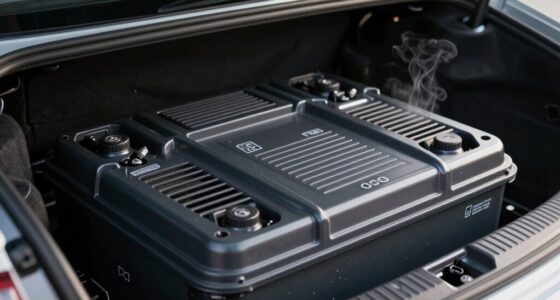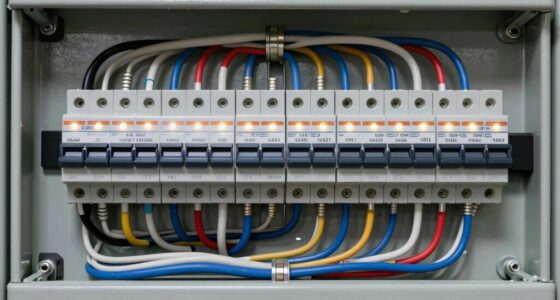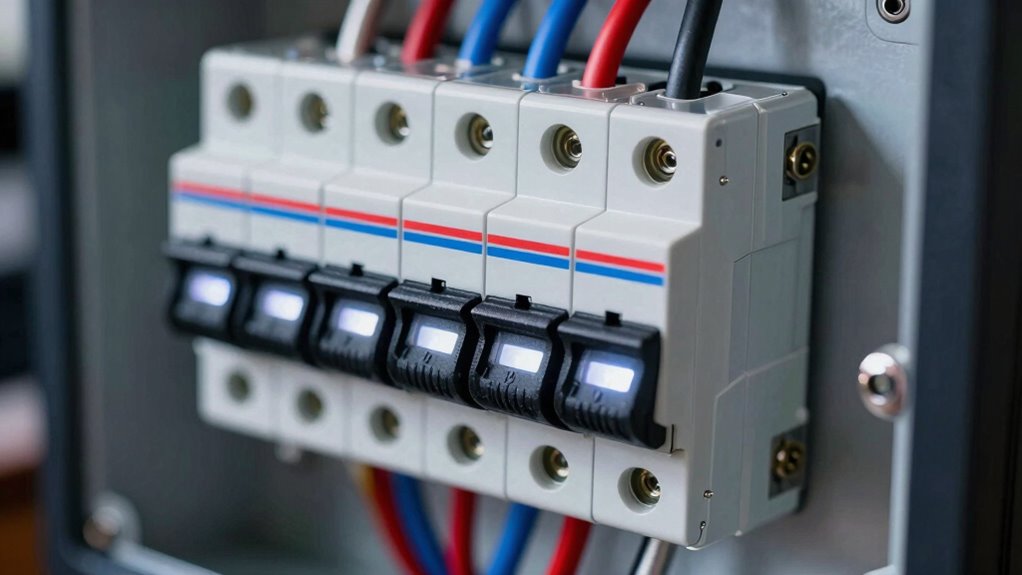

Circuit breakers in 12V systems are smarter than fuses because they can be reset after tripping, eliminating the need for replacement and reducing downtime. They respond quickly to overloads and short circuits, providing flexible and reliable protection. Properly installed, they safeguard your system from damage, overheating, and fires. With features like adjustable trip settings, circuit breakers offer a safer, more efficient alternative—stay with us to discover how to optimize their use effectively.

Get business pricing on garage and car supplies
- Business-only prices and quantity discounts
- Tax-exempt purchasing
- Multiple users, one account, clear invoices
Key Takeaways
- Circuit breakers can be reset and reused, reducing ongoing costs compared to replacing fuses.
- They offer adjustable trip settings, providing tailored protection for specific 12V system needs.
- Circuit breakers respond faster to overloads and short circuits, enhancing system safety.
- They provide smarter protection by integrating with system monitoring and automation features.
- Properly installed circuit breakers maintain system efficiency and reliability over fuse replacements.
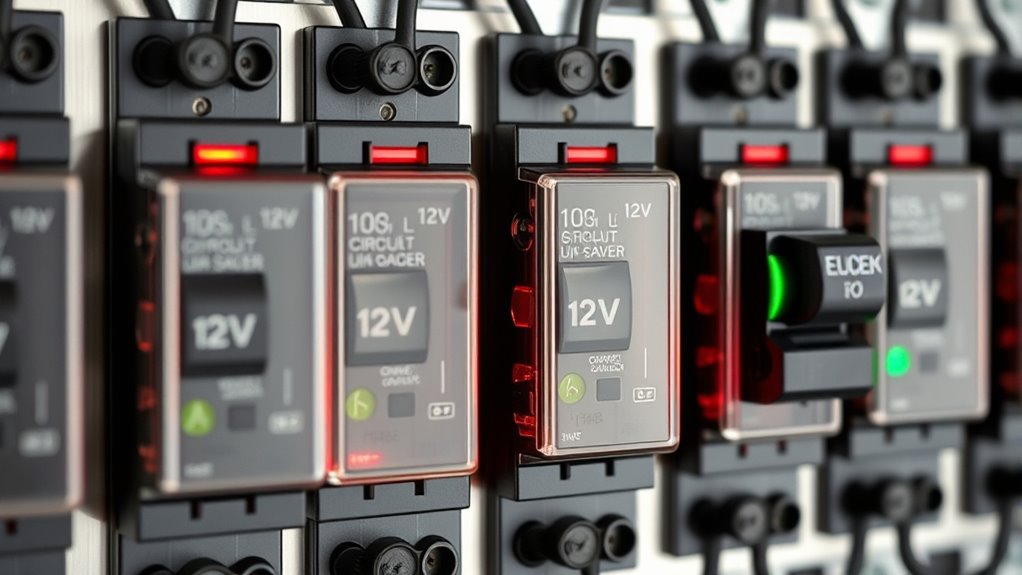
Have you ever wondered how to protect your 12V electrical systems from overloads and short circuits? Most people think of fuses as the go-to solution, but circuit breakers offer smarter, more flexible protection. Unlike fuses, which need replacing after they trip, circuit breakers can be reset and reused, making them ideal for continuous use and easier maintenance. When selecting circuit breakers, it’s essential to consider proper battery protection and follow specific installation guidelines. These steps ensure your system stays safe and functions efficiently over time.
Circuit breakers provide reusable, smarter protection for your 12V system over traditional fuses.
Battery protection is a critical aspect of designing a reliable 12V system. A circuit breaker acts as a safeguard, preventing excessive current flow that could damage your battery, wiring, or connected devices. Properly rated circuit breakers respond immediately when current exceeds safe levels, shutting off power to avoid overheating or potential fires. To achieve effective battery protection, you need to understand your system’s maximum current draw and choose a breaker with a slightly higher rating to handle brief surges without nuisance tripping. Installing the correct circuit breaker not only protects your battery but also prolongs its lifespan and maintains overall system stability.
When it comes to installation guidelines, there are a few key points to keep in mind. First, always install the circuit breaker as close to the battery’s positive terminal as possible. This placement ensures that any fault current is quickly interrupted before reaching the rest of your wiring. Make sure the breaker is rated for the voltage and current of your system, and that it’s compatible with your wiring gauge. Use appropriate connectors and secure all connections tightly to prevent any loose contacts that could cause overheating or false trips. You should also verify that the circuit breaker’s trip characteristics match your system’s needs—some breakers trip instantly, while others have a slight delay, allowing for temporary overloads without shutting down unnecessarily.
Additionally, following the manufacturer’s installation instructions is vital. Some circuit breakers require specific mounting orientations or protective enclosures to work correctly and prevent accidental damage. Regular inspections are recommended to ensure the breaker remains in good condition and that connections stay tight. Incorporating circuit breakers into your 12V system isn’t just about compliance; it’s about creating a safer, more reliable setup that effectively protects your battery and connected devices. When installed correctly and chosen with care, circuit breakers offer a smarter, more sustainable alternative to fuses, giving you peace of mind knowing your system is well-protected from overloads and short circuits. Proper system design and adherence to installation best practices are essential for maximizing the benefits of circuit breakers in your setup.
12V circuit breaker for automotive
As an affiliate, we earn on qualifying purchases.
As an affiliate, we earn on qualifying purchases.
Frequently Asked Questions
How Do Circuit Breakers Differ From Resettable Fuses?
Circuit breakers differ from resettable fuses because they use trip mechanisms triggered by thermal protection or electrical overload, allowing them to automatically disconnect the circuit when issues arise. Unlike fuses, which blow and need replacement, circuit breakers can be reset manually after tripping. This makes them more convenient and cost-effective for ongoing protection, as they provide quick, reliable safety without the need for frequent replacements.
Can Circuit Breakers Be Used in Marine 12V Systems?
Yes, you can definitely use circuit breakers in marine 12V systems. They’re designed to handle harsh conditions like saltwater corrosion and vibration, which are common in marine wiring. Unlike fuses, circuit breakers can be reset easily after tripping, saving you time and hassle. Just make certain you select marine-grade, corrosion-resistant models, and you’ll have reliable protection for your boat’s electrical system even in challenging marine environments.
What Are the Environmental Factors Affecting Circuit Breaker Performance?
Environmental factors like temperature fluctuations and humidity effects can impact your circuit breaker’s performance. Extreme temperatures cause the breaker to overheat or become less responsive, risking failure. High humidity can lead to corrosion or short circuits, reducing reliability. To guarantee ideal operation, keep your breaker in a controlled environment, away from excessive heat or moisture, and regularly inspect it for signs of wear or damage.
How Often Should 12V Circuit Breakers Be Inspected or Replaced?
You should inspect your 12V circuit breakers at least once a year and follow a regular maintenance schedule. Typically, replacement intervals are every 5 to 10 years, but environmental factors like moisture and temperature can diminish this lifespan. Regular inspections ensure they function correctly, preventing potential system failures. Keeping to a consistent maintenance schedule helps you catch issues early and maintains your system’s safety and reliability.
Are There Specific Certifications for Automotive Circuit Breakers?
You should look for automotive circuit breakers that meet specific automotive standards and have undergone certification processes. These certifications guarantee the breakers are reliable, safe, and suitable for vehicle use. Brands often display certification marks from recognized organizations, making it easier for you to verify quality. Always choose circuit breakers with proper automotive standards compliance to ensure maximum protection and performance in your 12V system.
As an affiliate, we earn on qualifying purchases.
Conclusion
Think of circuit breakers as vigilant guardians in your 12V system, always watching over your power flow like a steadfast lighthouse guiding ships safely home. Unlike fuses, they’re smarter, ready to rise again and keep your journey uninterrupted. Embrace these silent protectors, and you’ll navigate your electrical world with confidence, knowing they’re there—steadfast, resilient, always ready to safeguard your voyage through the dark. Your system’s safety isn’t just a feature; it’s a beacon of peace.
adjustable trip circuit breaker 12V
As an affiliate, we earn on qualifying purchases.
As an affiliate, we earn on qualifying purchases.
12V battery protection circuit breaker
As an affiliate, we earn on qualifying purchases.
As an affiliate, we earn on qualifying purchases.
Fall Picks
fall essentials
As an affiliate, we earn on qualifying purchases.