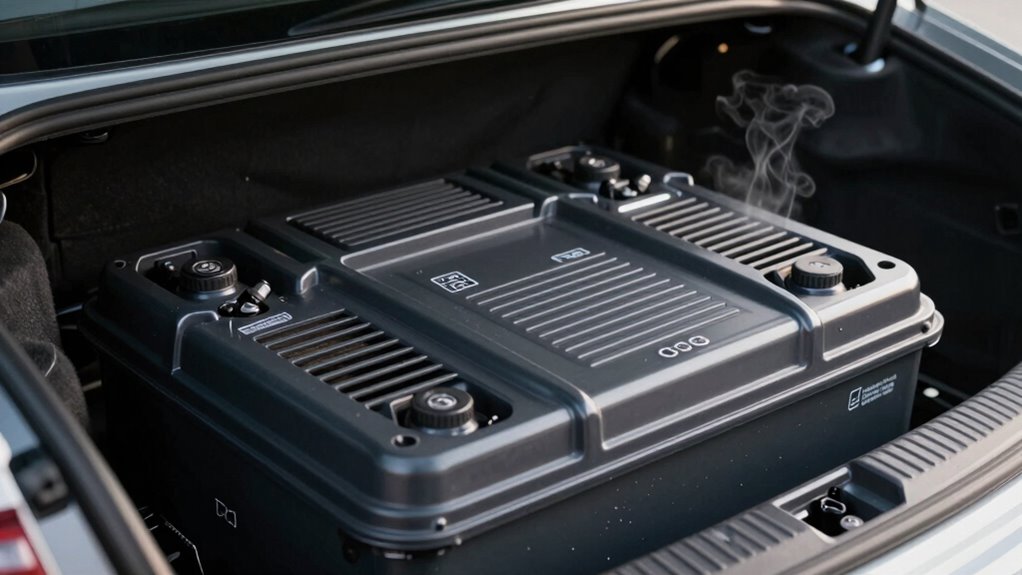

When installing a trunk-mounted battery, you must prioritize proper venting and cooling to guarantee safety and peak performance. Adequate vents help expel gases and prevent heat buildup, reducing the risk of thermal runaway or fire. Using passive vents or active cooling systems like fans keeps temperatures stable and gases safely ventilated. Ignoring these safety basics can lead to dangerous failures, but understanding how to implement effective venting keeps your setup safe and reliable. Keep exploring to learn more.
Listen free for 30 days with Audible
Thousands of audiobooks and originals — cancel anytime.
As an affiliate, we earn on qualifying purchases.
Key Takeaways
- Proper venting directs gases safely outside the vehicle, preventing buildup and reducing explosion or fire risks.
- Effective cooling strategies, such as heat sinks or liquid channels, maintain optimal battery temperatures during operation.
- Venting systems can be passive or active, controlling airflow to enhance safety and prevent thermal runaway.
- Adequate ventilation and cooling extend battery lifespan by minimizing heat-related degradation.
- Ensuring safety in trunk-mounted setups is critical for preventing hazardous situations and maintaining reliable performance.
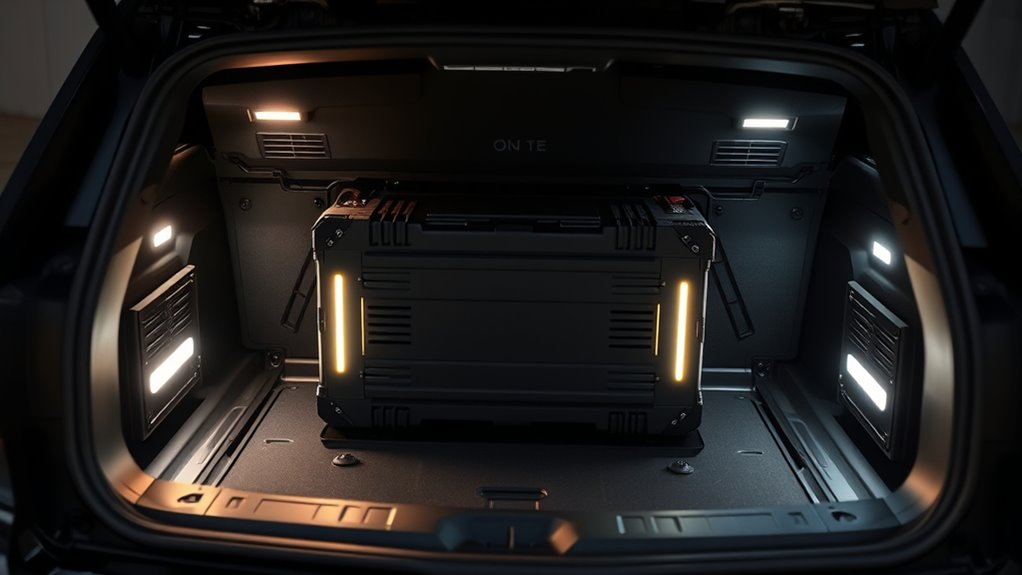
Have you ever wondered why some vehicles mount batteries in the trunk instead of under the hood? The answer often comes down to safety, space optimization, and performance. When a battery is placed in the trunk, especially in high-performance or modified cars, manufacturers pay close attention to how it’s cooled and ventilated. Proper battery cooling is essential because batteries generate heat during operation, and excessive heat can lead to reduced lifespan or even dangerous failures. This is where ventilation design plays a pivotal role. Good ventilation ensures that heat doesn’t build up around the battery, maintaining ideal operating temperatures and preventing thermal runaway, which can be a serious safety hazard.
Proper ventilation in trunk-mounted batteries enhances safety and performance by preventing heat buildup and dangerous failures.
In trunk-mounted battery setups, ventilation design isn’t just an afterthought; it’s a core component. Designers implement specific venting systems that allow for the free flow of air around the battery. These systems might include vents that lead outside the vehicle, ensuring any gases produced during charging or operation are safely expelled. Without proper venting, these gases could accumulate, increasing the risk of fire or explosion. You need to understand that venting isn’t just about releasing gases—it’s also about controlling airflow to keep the battery cool. Many vehicles incorporate passive vents, which rely on natural convection, or active systems that use fans to circulate air continuously.
Additionally, manufacturers often utilize specialized cooling elements such as heat sinks or liquid cooling channels to further regulate temperature. The placement of vents and the overall ventilation design directly influence battery performance and safety. An effective design minimizes heat buildup, especially during high-demand situations like racing or towing, where batteries tend to heat up more rapidly. In some cases, manufacturers add specialized cooling elements, such as heat sinks or liquid cooling channels, to further regulate temperature. These cooling strategies work hand-in-hand with venting to ensure the battery stays within safe temperature ranges, prolonging its life and maintaining reliable power delivery.
Understanding the importance of ventilation design highlights why a trunk-mounted battery isn’t just a matter of shifting weight or saving space. It’s about creating a safe, efficient environment for the battery to operate. Proper ventilation and cooling not only prevent dangerous situations but also enhance performance, especially in demanding conditions. If you’re considering a vehicle modification or a high-performance build, paying attention to how the battery is cooled and vented can make all the difference. Good design ensures that your battery remains safe, durable, and functioning at its best, giving you peace of mind every time you hit the road.
trunk-mounted battery venting system
As an affiliate, we earn on qualifying purchases.
As an affiliate, we earn on qualifying purchases.
Frequently Asked Questions
How Often Should I Inspect My Trunk-Mounted Battery for Safety?
You should inspect your trunk-mounted battery monthly to guarantee safety. During these checks, look for battery corrosion, which can indicate leaks or damage, and perform ventilation checks to ensure proper airflow. Regular inspections help catch issues early, preventing potential hazards. If you notice corrosion or ventilation problems, address them immediately to keep your battery safe and functioning properly. Consistent care keeps your vehicle running smoothly and safely.
Can Trunk-Mounted Batteries Be Used in Cold Weather Conditions?
Yes, trunk-mounted batteries can work in cold weather, but you need to take into account how cold affects battery performance. Cold temperatures can reduce a battery’s capacity and efficiency, so make sure it’s properly insulated and maintained. You should also check the battery regularly for signs of wear or damage during winter. Using a battery warmer or maintaining a charged state helps ensure reliable performance in cold conditions.
What Are the Signs of a Failing Trunk-Mounted Battery?
You might notice signs of a failing trunk-mounted battery if you see battery corrosion around the terminals or fluid leakage underneath the trunk. These issues indicate the battery is deteriorating and may soon fail, leaving you stranded. Keep an eye out for slow engine starts, dimming lights, or electrical glitches. Addressing corrosion and leaks early helps prevent a sudden breakdown and ensures your vehicle’s safety and reliability.
Are There Specific Maintenance Routines for Venting Systems?
Yes, there are specific maintenance routines for your venting system. You should regularly inspect the venting system for blockages or damage, ensuring it’s free of debris and corrosion. Check for proper airflow and make sure the vents aren’t restricted. Periodically clean the vents with a soft brush or compressed air, and replace any damaged components promptly. Consistent maintenance keeps the venting system functioning safely and prevents potential battery issues.
How Do I Safely Dispose of an Old Trunk-Mounted Battery?
To safely dispose of an old trunk-mounted battery, you should promptly take it to a certified battery recycling center or authorized disposal site. Always wear protective gloves and eye protection to prevent contact with hazardous materials. Follow proper disposal safety procedures by avoiding puncturing or opening the battery. Recycling batteries guarantees dangerous chemicals are handled responsibly, protecting the environment and your health. Never throw batteries in regular trash to prevent leaks and contamination.
As an affiliate, we earn on qualifying purchases.
Conclusion
Think of your trunk-mounted battery as the heart of your car’s power. Just like a heart needs proper care to keep blood flowing smoothly, your battery needs proper venting and safety measures to prevent trouble. Ignoring these basics is like ignoring warning signs on a dashboard—you risk a breakdown or dangerous fumes. Stay vigilant, follow safety tips, and treat your battery with respect. That way, your car will keep running smoothly, heartbeat steady and strong.
As an affiliate, we earn on qualifying purchases.
As an affiliate, we earn on qualifying purchases.
Baby shower & registry season Picks
baby registry must-haves
As an affiliate, we earn on qualifying purchases.