TL;DR

Get business pricing on garage and car supplies
- Business-only prices and quantity discounts
- Tax-exempt purchasing
- Multiple users, one account, clear invoices
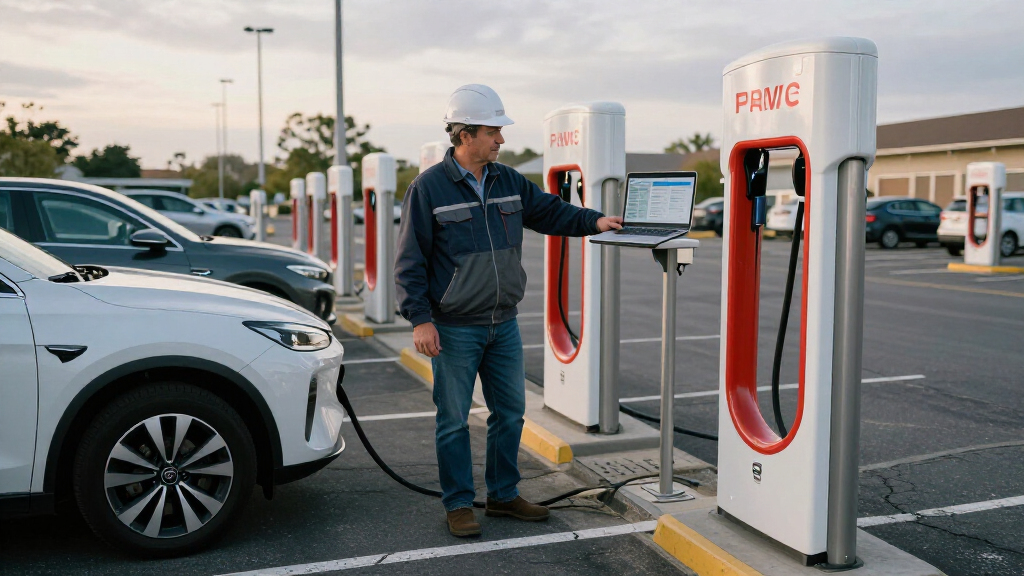
Seth Cutler, CEO of the automaker-backed charging venture Ionna, said in an interview with The Drive that America’s EV charging problems stem from immature technology, a shortage of trained service technicians, and a build-out philosophy focused on charger counts rather than driver experience. Ionna, backed by eight major automakers, aims to build 30,000 fast chargers at 2,000 US stations by 2030.
The CEO of Ionna, the charging network jointly owned by eight of the world’s largest automakers, says America’s broken EV charging experience is the result of immature technology, a shortage of trained technicians, and an industry that prioritized putting chargers in the ground over serving drivers. Seth Cutler, who leads the venture, made the comments in an interview on The Drive’s Drivecast podcast, where he laid out Ionna’s goal of building 30,000 fast chargers at 2,000 US stations by 2030.
Ionna was formed by BMW, Mercedes-Benz, GM, Honda, Hyundai, Kia, and Stellantis as a joint venture to build a nationwide fast-charging network rivaling Tesla’s Superchargers, with Toyota joining a year later, bringing the total to eight automakers. Cutler was appointed CEO to execute the mission: a reliable, high-powered fast-charging network across North America, starting in the US and followed by Canada.
The scale of the problem is measurable. According to figures cited in the interview, there are roughly 5.7 million EVs on US roads but only about 250,000 public chargers nationwide — and just 73,000 of those are DC fast chargers capable of adding substantial range in under 30 minutes. Competing networks, notably Electrify America, have been widely criticized by drivers for frequent equipment failures, while Tesla remains the reliability benchmark even after opening its charging standard to other automakers.
Asked why the industry has struggled, Cutler pointed to three factors: new equipment arriving in a nascent market with technical interoperability quirks; too few people trained to service that equipment; and a cultural problem where companies chase charger counts rather than driver experience. On the first point, he argued that being a later entrant has worked in Ionna’s favor. “Having first-mover advantage isn’t always an advantage in a market,” Cutler said. “Sometimes being second or third is actually a bit of a blessing.”
Why Charging Reliability Decides EV Adoption
Charging reliability has become one of the central bottlenecks for EV adoption in the United States. Even with sales growth slowing amid political headwinds and policy shifts, EV registrations continue, meaning demand for working fast chargers keeps rising against a supply that drivers frequently describe as unreliable. Cutler’s diagnosis matters because it comes from the executive responsible for the industry’s most ambitious collective response: eight competing automakers pooling resources specifically because none of them individually solved charging.
The distinction Cutler drew — building stations to serve drivers rather than simply installing chargers — reflects a broader industry reckoning after early networks earned reputations for broken screens, bricked connectors, and payment failures. If Ionna’s approach works, it could reshape consumer confidence in public charging; if it doesn’t, it would deepen skepticism about whether non-Tesla fast charging can match the reliability of gasoline refueling that consumers take for granted.
Two Decades of Public Charging, Uneven Results
Public chargers first appeared on American roads in 2007, meaning the industry is approaching two decades old — a point The Drive’s interviewers raised when pressing Cutler on why growth has fallen short of predictions made five years ago. The interview drew a comparison to the early, problem-filled decades of gas stations, while Cutler offered his own analogy: he said charging infrastructure more closely resembles cellular networks and cell towers, which took years of buildout, standardization, and refinement before becoming dependable.
Tesla’s Supercharger network remains the industry’s reliability leader, and its decision to open the North American Charging Standard to other automakers has expanded access for non-Tesla drivers — but, as the interview noted, that alone has not been enough to solve the nationwide gap. Ionna was created as the mainstream automakers’ answer, with Toyota’s later entry expanding the ownership group to eight.
Questions Cutler Left Open
Several questions remain unanswered or only partially addressed. The interview did not specify how many Ionna stations are currently operational or the pace of construction relative to the 2030 target, making it difficult to independently gauge progress toward 30,000 chargers. It is also unclear how Ionna will solve the technician shortage Cutler identified — whether through internal training programs, third-party service partnerships, or manufacturer support — and at what cost. Whether the venture’s funding commitments remain intact amid slowing US EV adoption and shifting federal EV policy was not detailed. And Cutler’s claim that late-mover status confers advantages is his interpretation, not an independently verified outcome.
The Road to 30,000 Chargers
Ionna’s stated milestones are at least 30,000 chargers across 2,000 US stations by 2030, with expansion into Canada to follow. The full Drivecast interview, available on Spotify, Apple Podcasts, and Amazon Music, contains additional discussion of charging times, range anxiety, and the venture’s longer-term outlook. In the near term, observers will be watching for announced station counts, uptime statistics, and whether the eight automaker owners maintain their investment levels as the US EV market evolves.
Key Questions
What is Ionna?
Ionna is a joint venture created by seven major automakers — BMW, Mercedes-Benz, GM, Honda, Hyundai, Kia, and Stellantis — to build a nationwide fast-charging network in North America. Toyota joined later, bringing the ownership group to eight.
How many chargers is Ionna planning to build?
According to the company’s stated mission, Ionna aims to operate at least 30,000 fast chargers at 2,000 stations in the US by 2030, followed by expansion into Canada.
Why does public EV charging in the US often feel unreliable?
According to Ionna CEO Seth Cutler, the problems stem from new equipment in a young market, interoperability quirks between technologies, too few trained service technicians, and a build-out culture focused on charger counts rather than the driver experience.
How many fast chargers does the US currently have?
Figures cited in the interview indicate the US has about 250,000 public chargers, of which roughly 73,000 are DC fast chargers capable of charging an EV in under 30 minutes, serving approximately 5.7 million EVs on the road.
Is Ionna’s network already available to drivers?
The interview did not state a current operational station count. Ionna’s buildout is ongoing, and its progress toward the 2030 target of 2,000 stations has not been independently quantified in the published discussion.
Source: rss
Halloween Picks
halloween
As an affiliate, we earn on qualifying purchases.