
Start with a high-quality battery tester that measures calibration and tracks charging cycles, as these features give you a clear view of your battery’s health and help prevent premature failures. Basic testers only show voltage and aren’t enough for detailed insights. Prioritize investing in a versatile model now, and you’ll avoid costly replacements later. Keep going, and you’ll discover how to optimize your battery maintenance strategies for better longevity.

Get business pricing on garage and car supplies
- Business-only prices and quantity discounts
- Tax-exempt purchasing
- Multiple users, one account, clear invoices
Key Takeaways
- Prioritize purchasing a battery tester that can measure calibration and monitor charging cycles for comprehensive health assessment.
- Start with a basic voltage tester if budget is limited; upgrade to advanced models later for detailed data.
- Focus on testers with features that track cycle counts and calibration to prevent premature replacements.
- Regularly conduct tests to identify performance trends, ensuring timely maintenance and calibration.
- Wait on high-end models with extensive data options unless you need detailed analysis for professional or critical use.
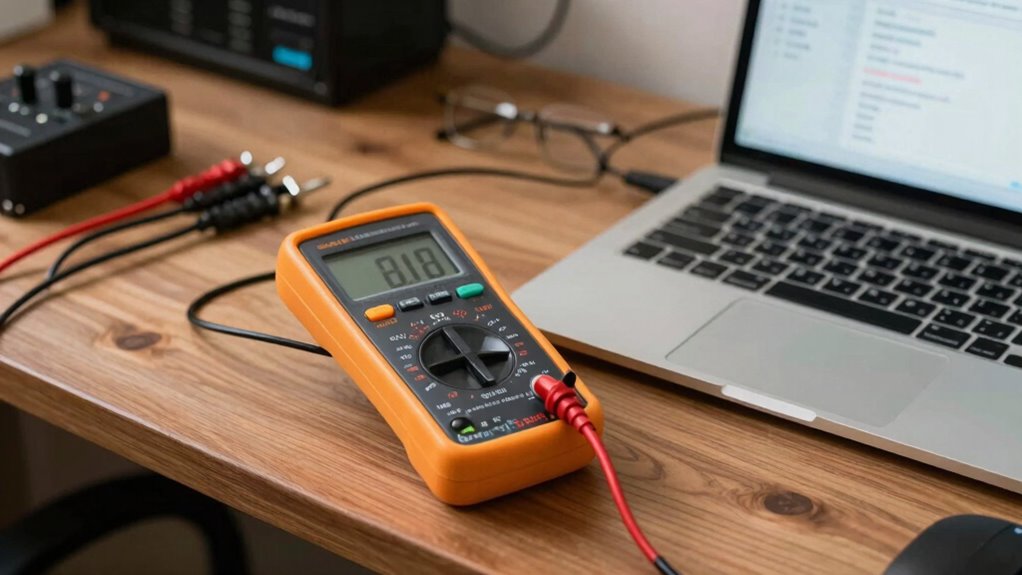
If you’re enthusiastic to assess your battery’s health, the first step is choosing the right testing device. A good battery tester can give you a clear picture of your battery’s current condition and help you spot issues early. When selecting a device, look for one that measures battery calibration, which is crucial for ensuring your device reports accurate battery levels. Proper calibration means your battery’s charge indicator reflects reality, preventing false readings that could lead to unnecessary replacements. Many testers also track charging cycles, which indicate how many times your battery has gone through a full charge and discharge. Batteries have a limited number of charging cycles before their capacity diminishes significantly, so understanding this helps you decide whether your battery is still performing well or needs replacement.
Starting with a reliable tester that monitors charging cycles gives you insight into your battery’s lifespan. If your device has undergone numerous cycles, it’s natural for its capacity to decline, and testing will confirm whether it’s time for a new battery. Keep in mind that not all testers are created equal; some are basic and only display voltage, while more advanced models provide detailed data on calibration and cycle counts. Investing in a tester that offers these features early on saves you from guessing and helps you make informed decisions about repairs or replacements. Additionally, understanding battery health metrics can guide you toward more sustainable choices, reducing unnecessary waste and supporting conservation efforts. Regularly checking battery performance can also help you identify patterns and optimize your charging routines. Furthermore, utilizing proper maintenance practices can significantly extend your battery’s lifespan and efficiency.
It’s also helpful to consider how your usage habits impact your battery’s overall performance longevity, as proper maintenance can significantly extend its life. Using a tester to monitor your battery regularly can help you identify trends and adjust your charging habits accordingly. Keep in mind, sometimes battery recalibration can restore accuracy without the need for replacement, saving you money and resources.
battery tester with cycle count and calibration
As an affiliate, we earn on qualifying purchases.
As an affiliate, we earn on qualifying purchases.
Frequently Asked Questions
Can I Test My Battery at Home Without Professional Tools?
Yes, you can test your battery at home without professional tools, but you should prioritize DIY safety. Use a multimeter to check voltage levels—most car batteries should read around 12.6 volts when fully charged. Keep in mind, this DIY method offers a basic idea of your battery’s health and can help you assess its impact on battery lifespan. For more detailed analysis, professional testing remains the best option.
How Often Should I Perform Battery Health Testing?
You should test your battery health every 3 to 6 months, especially after completing a full battery calibration or numerous charging cycles. Regular testing helps identify capacity loss early. If you notice rapid battery drain or inconsistent charging, increase testing frequency. Monitoring these factors enables you to maintain best possible battery performance and extend its lifespan, ensuring your device stays reliable and efficient over time.
Are There Any Risks in DIY Battery Testing?
DIY hazards can sneak up like an unexpected shadow, so exercise caution with battery testing. While you can perform basic tests, skipping safety precautions might lead to mishaps such as short circuits or leaks. Always wear protective gear, work in a well-ventilated area, and follow manufacturer instructions carefully to minimize risks. Staying vigilant and respecting safety precautions guarantees your DIY efforts stay safe and effective, avoiding potential hazards.
What Are the Signs My Battery Needs Testing?
You should test your battery if you notice a shortened battery lifespan or inconsistent charging habits. Signs include the device shutting off unexpectedly, slow charging, or the battery percentage fluctuating. If your battery drains quickly despite normal use or takes longer to charge, testing can reveal underlying issues. Regular testing helps you catch problems early, ensuring peak performance and preventing unexpected failures.
Do Different Battery Types Require Different Testing Methods?
Think of batteries as different musical instruments—they each require unique tuning. Yes, different battery types, like lithium-ion or lead-acid, demand specific testing methods because their chemistry impacts testing accuracy. Using the wrong approach is like trying to tune a violin with a drumstick. Proper testing methods guarantee you get an accurate read, helping you make informed decisions about your battery’s health and longevity.
As an affiliate, we earn on qualifying purchases.
Conclusion
Now that you know what to prioritize for battery health testing, you’re almost ready to get started. But remember, the most vital step might still be waiting just around the corner—something that could change everything. Don’t jump the gun; the right tool at the right time can make all the difference. Stay tuned, because once you uncover the true condition of your battery, you’ll be glad you waited for the perfect moment to act.
multifunction battery testing device
As an affiliate, we earn on qualifying purchases.
As an affiliate, we earn on qualifying purchases.
As an affiliate, we earn on qualifying purchases.
Halloween Picks
halloween
As an affiliate, we earn on qualifying purchases.