
To clean battery terminals and prevent corrosion from returning, start by disconnecting the negative cable, then the positive, in a well-ventilated area while wearing safety gear. Use a baking soda paste and a wire brush to scrub off deposits, then rinse with water or a baking soda solution. Apply a protective coating like dielectric grease to keep moisture out. Following proper steps and maintenance tips will help keep your terminals clean and corrosion-free longer.
Key Takeaways
- Disconnect the negative terminal before cleaning to prevent sparks and acid exposure.
- Use a baking soda and water paste with a wire brush to scrub away corrosion effectively.
- Rinse terminals with water, then neutralize remaining acid with a baking soda solution.
- Apply a protective coating like dielectric grease or battery terminal protector after cleaning.
- Regularly inspect and clean terminals, reapplying protective coatings annually to prevent corrosion buildup.

TKDMR Battery Terminal Cleaners (2 pcs),12 pcs Battery Terminal Anti-Corrosion Fiber Washers (6 Red & 6 Green) for Car Marine Battery
Quantity: comes with 10 pieces battery anti-corrosion washers(5 red & 5 green) and 2pcs Battery Terminal Cleaning Brush.
As an affiliate, we earn on qualifying purchases.
As an affiliate, we earn on qualifying purchases.
Understanding Why Battery Terminals Corrode
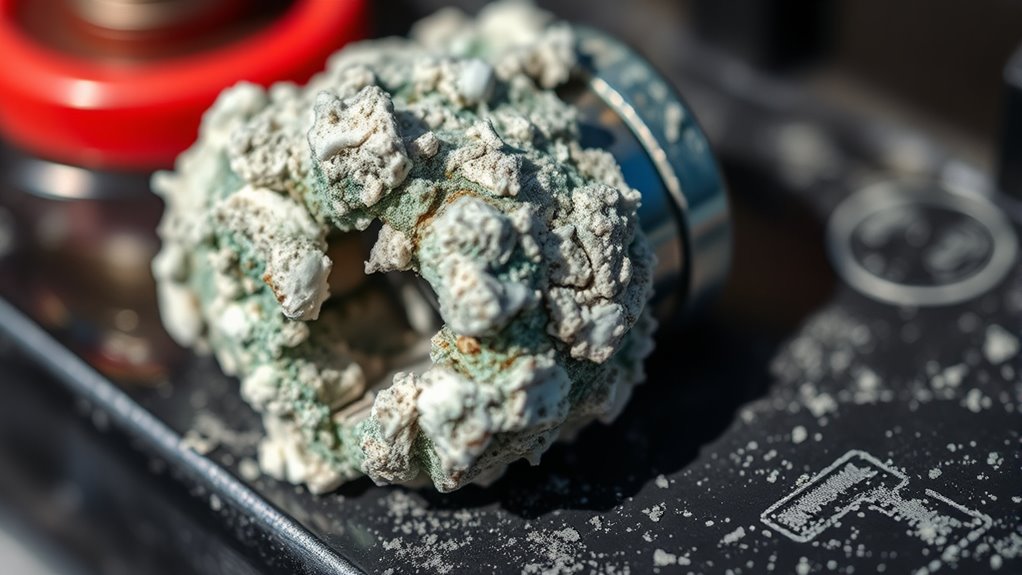
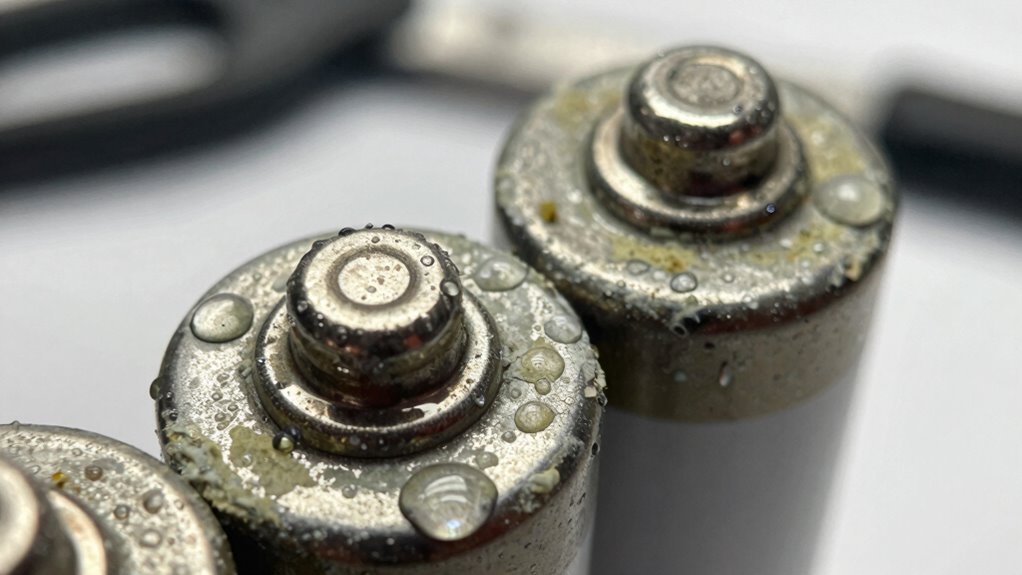
Battery terminals corrode mainly because of chemical reactions between the metal and sulfuric acid from the battery. When the acid leaks or spills onto the terminals, it reacts with the metal, forming powdery and white or greenish deposits. Overfilled batteries cause electrolyte to overflow, increasing exposure to corrosion. Leaky or damaged batteries accelerate this process by releasing more acid, which attacks the metal surfaces. Additionally, the electrolyte can become diluted, leading to more spillage and further corrosion. These reactions weaken the connection, reduce battery efficiency, and can cause starting problems. The corrosion is a natural consequence of the chemical activity inside the battery, especially when protective measures are ignored or maintenance is neglected. Recognizing these causes helps you understand how to prevent and address terminal corrosion effectively. Proper cleaning and maintenance can help prevent further damage and extend the life of your battery. Regular inspection of the battery seals can also help identify potential leaks early before severe corrosion occurs.

Permatex 22058 Dielectric Tune-Up Grease, 3oz. – High Performance Dielectric Grease Used to Protect Terminals, Spark Plugs, Wiring and Other Electrical Connections Against Salt, Dirt, and Corrosion
Protects Electrical Connections And Wiring From Salt, Dirt And Corrosion
As an affiliate, we earn on qualifying purchases.
As an affiliate, we earn on qualifying purchases.
Recognizing the Signs of Corrosion and Damage
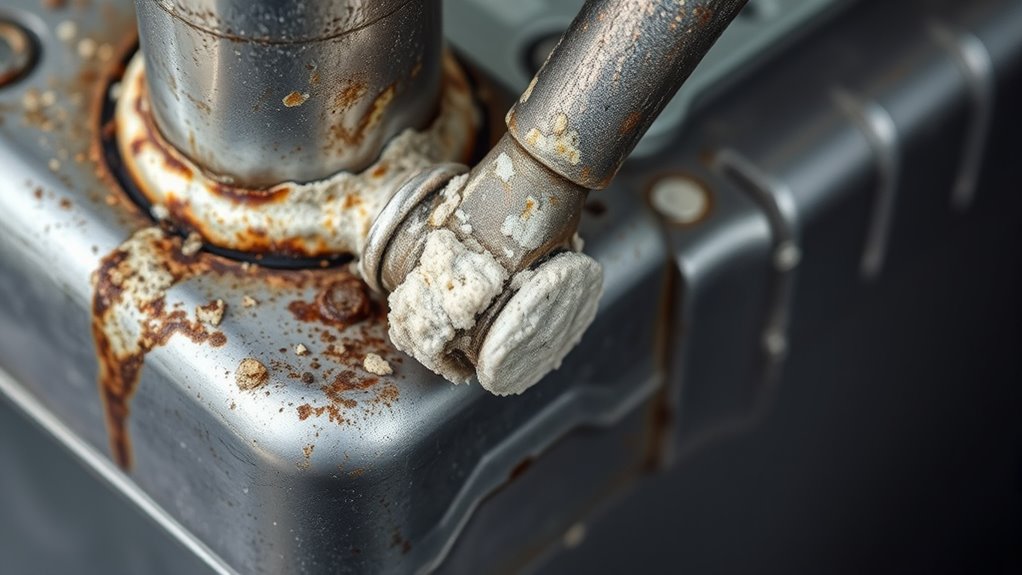
Corrosion and damage on terminals often present visible clues that indicate underlying issues. You should look for white, greenish, or blueish powdery deposits around the terminals, which signal corrosion. Rust spots or pitting on metal surfaces also suggest deterioration. Swollen or cracked battery cases indicate leaks or damage. Loose or corroded cable clamps can cause poor connections and performance. Additionally, if your vehicle experiences slow starting or dim lights, it could be a sign of compromised power flow. Paying attention to contrast ratio can also help identify issues with display quality, though in the case of battery terminals, visual signs are key indicators. Regular inspection and understanding corrosion signs can prevent further damage and ensure reliable vehicle operation. Being familiar with battery maintenance routines can help catch issues early before they lead to more serious problems.

12 in 1 Battery Terminal Cleaner Kit – Must Have Tool Best for Extend Car Marine Battery Life with 10PCS Fiber Washers Protector and 2PCS Cleaning Brush
【Battery Terminal Protection】: This kit contains 2 battery terminal brushes and 10 fibre washers.This kit effectively cleans the…
As an affiliate, we earn on qualifying purchases.
As an affiliate, we earn on qualifying purchases.
Preparing for Safe Cleaning Procedures
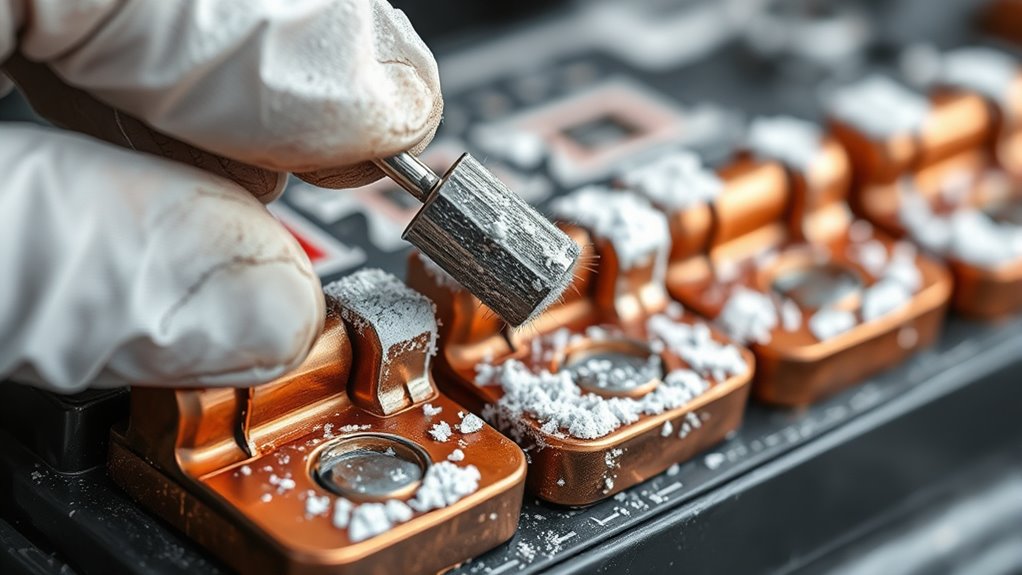
Have you prepared properly before cleaning battery terminals? First, verify your vehicle is turned off and the keys are removed. Wear safety glasses and gloves to protect yourself from sulfuric acid splashes. Disconnect the negative (black) terminal first, then the positive (red) to prevent sparks. Keep metal tools away from the terminals during handling. Work in a well-ventilated area to avoid inhaling fumes. Gather your cleaning supplies, like baking soda, water, and a wire brush, so everything’s within reach. Check the battery for leaks or damage beforehand; do not proceed if you notice cracks or corrosion beyond the terminals. Taking these precautions keeps you safe and prevents accidental damage during the cleaning process. Additionally, understanding battery maintenance can help extend the life of your vehicle’s electrical system. Using essential oils for corrosion as a natural cleaning aid is an emerging method some enthusiasts explore to prevent future buildup. Proper corrosion prevention techniques are essential for maintaining a reliable connection and avoiding recurring issues. Incorporating routine inspections into your maintenance schedule can further help detect early signs of corrosion before they become severe.

CRC 05046 Battery Terminal Protector – 7.5 Wt Oz.
Specially designed to protect battery terminals from corrosion, a leading cause of hard starting and battery failure.
As an affiliate, we earn on qualifying purchases.
As an affiliate, we earn on qualifying purchases.
Effective Methods to Remove Existing Corrosion

To effectively remove existing corrosion from your battery terminals, start by disconnecting the negative cable first to prevent sparks. Once disconnected, you can choose from several effective methods. You might use a baking soda and water paste, applying it with a wire brush to scrub away corrosion. Pouring cola on the terminals can help break down buildup; let it sit for a few minutes before wiping clean. Using a dedicated battery terminal brush ensures thorough cleaning, especially in tight spots. Spraying CorrosionX provides a quick, protective fix—wait 20 seconds, then wipe. Finally, wiping with a baking soda solution helps neutralize acid and loosen deposits.
- Always wear safety gear during cleaning
- Use proper tools for thorough removal
- Rinse thoroughly to prevent residue
- Avoid harsh abrasives that damage terminals
- Work in a well-ventilated area
Applying Protective Coatings to Prevent Future Build-Up
Choosing the right protective products and applying them correctly can make a big difference in preventing future corrosion. You should select products like dielectric grease, battery-terminal grease, or specialized protectors, and follow their application instructions carefully. Proper techniques guarantee your terminals stay clean and protected longer, saving you time and hassle down the road. Additionally, understanding Free Floating concepts can help in selecting coatings that work effectively in various environmental conditions. Being aware of contingency plans can also be beneficial if unexpected issues arise during application or in extreme weather environments.
Choosing Effective Protective Products
Applying protective coatings to your battery terminals is essential for preventing future corrosion buildup and ensuring reliable performance. The right product forms a barrier against moisture, acids, and other corrosive elements that cause deterioration. When choosing a protective product, look for those specifically designed for automotive or marine batteries. Consider the type—grease, spray, or gel—that best suits your maintenance routine. High-quality coatings resist washing away and provide long-lasting protection. Always verify compatibility with your battery type and follow manufacturer recommendations. Proper selection simplifies future cleaning and prolongs battery life.
- Opt for corrosion-inhibiting formulas formulated for battery terminals
- Choose water-resistant, long-lasting products
- Use products compatible with your battery’s material
- Select easy-to-apply options like sprays or greases
- Ensure the product is safe for electrical connections
Proper Application Techniques
Proper application techniques guarantee that protective coatings effectively shield your battery terminals from corrosion. Start by ensuring the terminals are thoroughly cleaned and dry. Apply the coating evenly, using a brush, cloth, or your finger, covering all metal surfaces and the post where the terminal contacts the battery. For grease or gel products, use a generous, thin layer—too much can attract dirt. When using sprays, hold the can about six inches away and spray evenly over the area, avoiding overspray onto other components. Reapply coatings regularly, especially after cleaning or exposure to harsh conditions. Always follow the product’s instructions for drying time before reconnecting the battery. Proper application guarantees your protective layer stays intact, preventing future corrosion buildup and extending your battery’s lifespan.
Best Practices for Regular Maintenance and Inspection
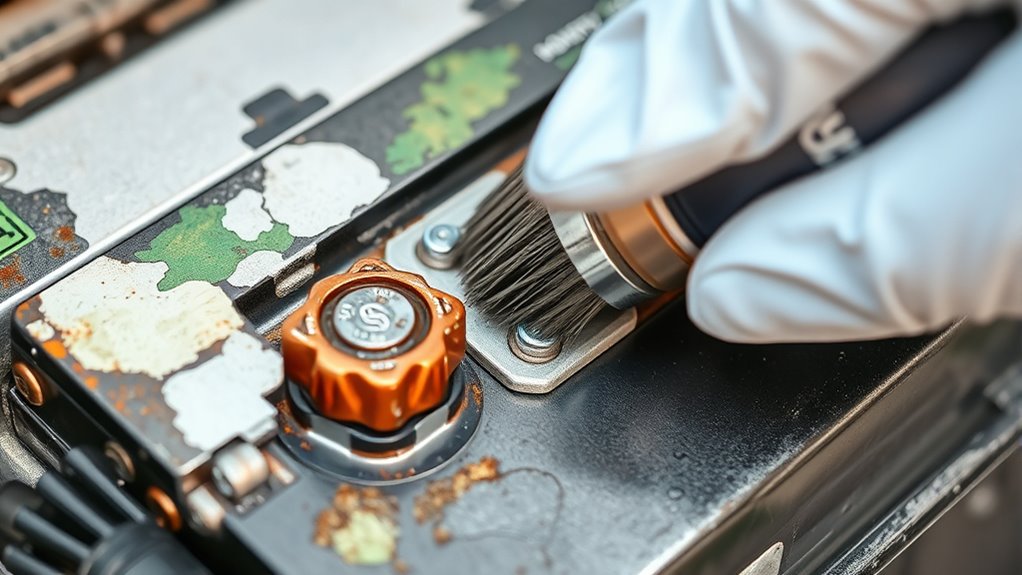
Regular maintenance and inspection are essential to keep your battery terminals in ideal condition and prevent unexpected failures. By routinely checking your terminals, you can identify early signs of corrosion, leaks, or damage before they cause problems. Consistent inspections help prolong your battery’s lifespan and ensure reliable performance. Using appropriate wiring basics can also help prevent connection issues over time. Regularly cleaning and applying terminal coatings or greases can further protect against moisture and corrosion, especially in humid or wet environments.
- Look for white or greenish deposits around terminals.
- Check for loose or corroded connections.
- Ensure terminals are clean and free of buildup.
- Examine the battery case for leaks or cracks.
- Confirm that terminal coatings or greases are intact and effective.
Perform these checks at least once a month, especially before long trips or during seasonal changes. Staying proactive keeps your battery in top shape and minimizes costly repairs.
Tips for Long-Term Battery Care and Management
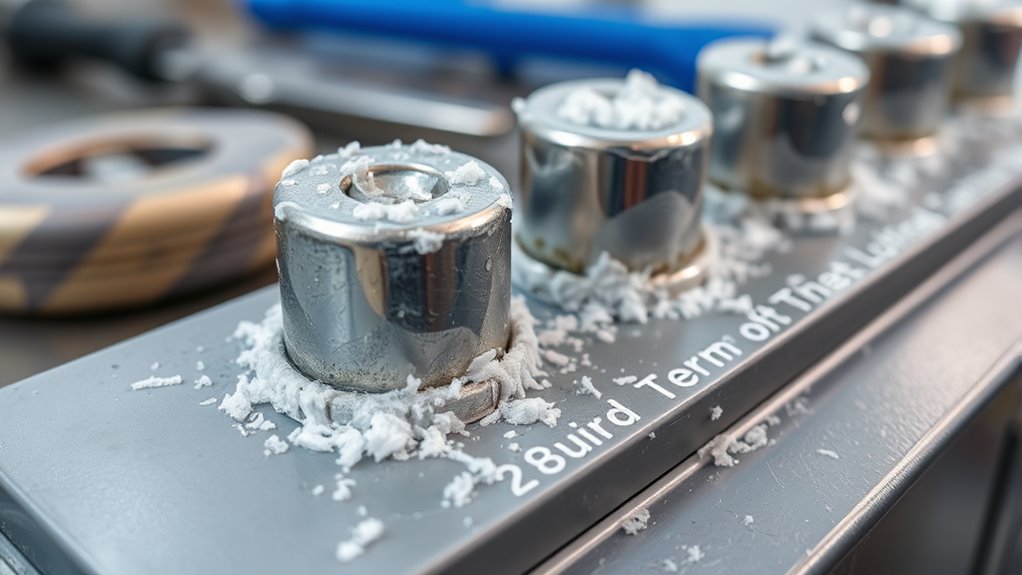
Maintaining your battery over the long term requires ongoing attention to its condition and proper management habits. Start by ensuring you’re using the correct charger and avoiding overcharging, which can damage the battery. Regularly inspect your terminals for signs of corrosion or leaks, and clean them as needed. Keep electrolyte levels topped up with distilled water if you have flooded lead-acid batteries, preventing damage and maintaining performance. Store your batteries in cool, dry places away from direct sunlight to slow down aging. Reapply protective coatings like dielectric grease or corrosion-resistant sprays annually to prevent corrosion buildup. Environmental factors such as temperature fluctuations and humidity can significantly influence battery aging and performance. To further protect your batteries, consider using corrosion-resistant sprays designed specifically for battery terminals. Additionally, understanding battery maintenance best practices can help you identify issues early and extend your battery’s lifespan. Proper storage conditions are essential for preserving battery health over time. Also, replace damaged or leaky batteries promptly to avoid further issues. Consistent, mindful care helps extend your battery’s lifespan and keeps it performing reliably over time.
Safety Precautions During Battery Maintenance

Battery maintenance can be risky if safety precautions aren’t followed, as sulfuric acid in the terminals poses serious hazards. Always wear safety glasses and gloves to protect your skin and eyes from acid splashes. Disconnect the negative terminal first to prevent short circuits, then the positive. Keep aerosol cans and sparks away from the battery to avoid arcing. Check for cracks, leaks, or damage before handling—damaged batteries can leak harmful acid. Work in a well-ventilated area to reduce exposure to harmful fumes. Handle tools carefully to avoid accidental sparks. Additionally, understanding the importance of connected equipment and safety procedures can help prevent accidents during maintenance. Proper piercing care and hygiene practices, such as wearing gloves and cleaning thoroughly, can similarly protect you from potential hazards. Being aware of battery inspection and maintenance techniques can further enhance your safety and battery lifespan.
When to Replace a Damaged or Leaking Battery
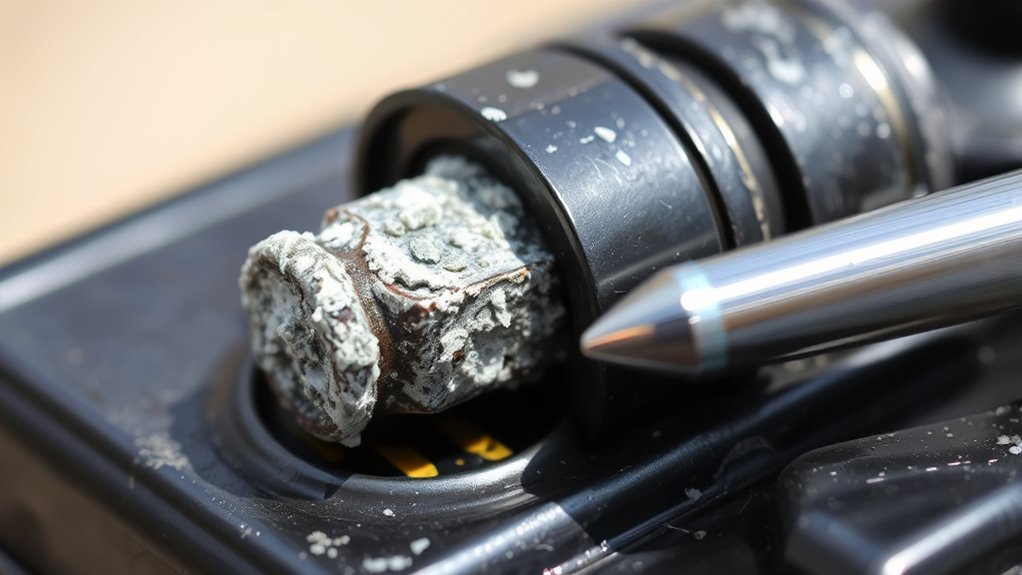
You should consider replacing your battery if you notice corrosion, leaks, or a swollen casing. These signs indicate damage that can compromise performance and safety. Prompt replacement helps avoid breakdowns and potential damage to your vehicle.
Signs of Battery Damage
Recognizing the signs of a damaged or leaking battery is essential to prevent further vehicle issues or safety hazards. If you notice any of these indicators, it’s time to contemplate replacing the battery:
- Corrosion buildup around terminals that won’t clean off
- Swollen or cracked battery casing
- Persistent difficulty starting your vehicle
- Battery leaks or acid stains underneath the vehicle
- Unusual smells like rotten eggs near the engine bay
These signs suggest internal damage or leaks that can compromise performance and safety. Ignoring them increases the risk of breakdowns or electrical failures. Regularly inspecting your battery can catch issues early, ensuring you replace it before it causes more significant problems. Stay vigilant to keep your vehicle running smoothly and safely.
When to Seek Replacement
Identifying when a battery needs replacement prevents unexpected breakdowns and safety hazards. If you notice persistent corrosion despite cleaning, it’s a sign the battery may be failing. Leaking fluid, swollen casing, or cracks indicate damage that can lead to leaks or short circuits. If your vehicle struggles to start, or if the battery is more than three to five years old, it’s wise to contemplate replacement. Corrosion that returns quickly after cleaning suggests internal deterioration. Also, a foul smell, excessive heat, or frequent need for jump-starts point to a failing battery. Don’t ignore these signs; continuing to use a damaged or leaking battery risks safety and damage to your vehicle’s electrical system. When in doubt, have a professional assess whether replacement is necessary.
Frequently Asked Questions
Can Corrosion Cause a Vehicle to Fail to Start?
Corrosion can definitely cause your vehicle to fail to start. When terminals are corroded, it creates poor or no electrical contact, preventing the battery from delivering enough power to start the engine. You might notice difficulty turning the key or a clicking noise. Regularly cleaning and applying protective coatings to your battery terminals can prevent corrosion buildup, ensuring reliable starting power and avoiding those frustrating starting issues caused by corrosion.
Is It Safe to Use Cola for Cleaning Battery Terminals?
Using cola to clean battery terminals is like calling on a soda fountain to fix your car—it’s not the best idea. Cola contains acids that can remove corrosion temporarily, but it also leaves sticky residues and can cause further damage. Instead, opt for safer, more effective methods like a baking soda solution or a battery terminal brush. These keep your terminals clean without risking future issues.
How Often Should I Reapply Protective Coatings?
You should reapply protective coatings, like dielectric grease or CorrosionX, at least once a year to prevent corrosion buildup. If you notice signs of corrosion or after cleaning, reapply immediately to keep your terminals protected. Regular maintenance helps maintain a good connection and prolongs your battery’s lifespan. In harsh environments, consider reapplying every 6 months for ideal protection.
What Type of Grease Works Best for Battery Terminals?
Think of the grease as a shield armor for your battery terminals, and the best type is dielectric grease. It’s thick, tar-like, and sticky, creating a barrier that repels moisture and corrosion. You’ll want a high-quality, silicone-based dielectric grease, which withstands temperature swings and resists breaking down. Apply it liberally after cleaning, ensuring your terminals stay protected and corrosion stays out, like invaders kept at bay.
Can I Clean Corrosion Without Disconnecting the Battery?
You can clean corrosion without disconnecting the battery, but it’s safer to disconnect first. If you choose to clean while connected, turn off your vehicle, wear gloves and safety glasses, and use a wire brush or baking soda solution carefully. Be cautious to avoid causing a spark or arcing. For best safety and effectiveness, disconnect the negative terminal first, then proceed with cleaning to prevent electrical shorts.
Conclusion
Think of your battery terminals as the roots of a mighty tree. When they stay healthy and clean, your whole vehicle thrives. But neglect can cause corrosion to spread like disease, weakening the entire system. Regular care is your gardener’s touch—removing the rot and applying protective mulch. Keep your battery flourishing by staying vigilant and gentle. With consistent attention, you’ll guarantee your car’s roots stay strong and dependable for miles to come.