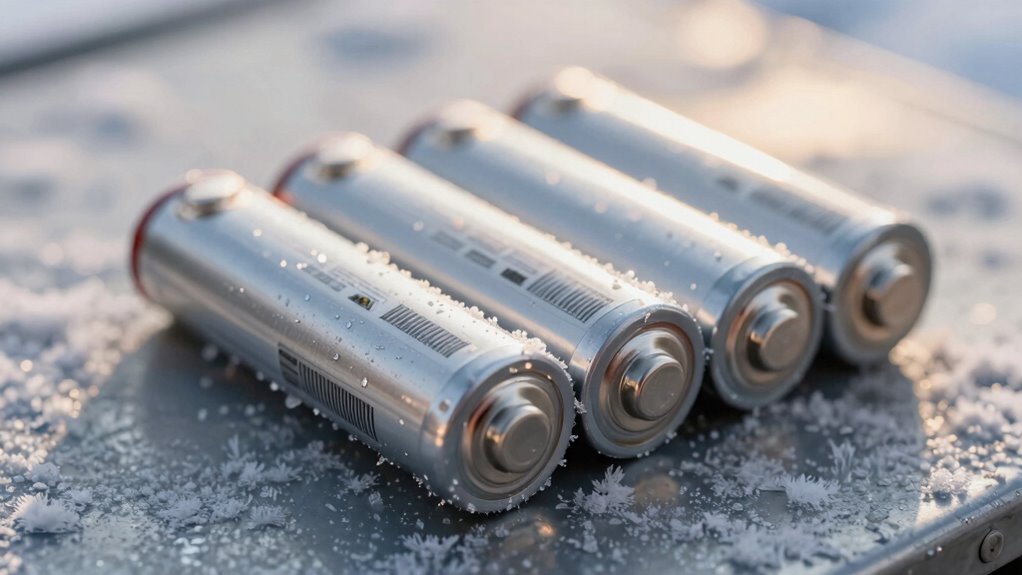

When it’s cold, your lithium battery pack might seem fully charged but still suddenly cut out. Cold temperatures slow down chemical reactions inside the battery, making capacity appear stable while actually reducing usable power. This can cause your device to shut down unexpectedly. To prevent this, proper thermal management like warming the pack or insulating it helps maintain performance. Want to understand the science behind this and how to keep your battery reliable in cold? Keep exploring to learn more.

Get business pricing on garage and car supplies
- Business-only prices and quantity discounts
- Tax-exempt purchasing
- Multiple users, one account, clear invoices
Key Takeaways
- Cold temperatures slow down chemical reactions inside lithium batteries, reducing usable power despite a full charge indicator.
- Battery capacity appears unchanged but is temporarily unavailable due to slowed internal chemistry in low temperatures.
- Thermal management, like pre-warming or insulation, helps maintain optimal battery chemistry and reliable power output.
- A full charge in cold weather doesn’t guarantee power availability; internal chemical slowdown can cause sudden power loss.
- Proper temperature regulation extends battery lifespan and ensures accurate power delivery even in cold conditions.
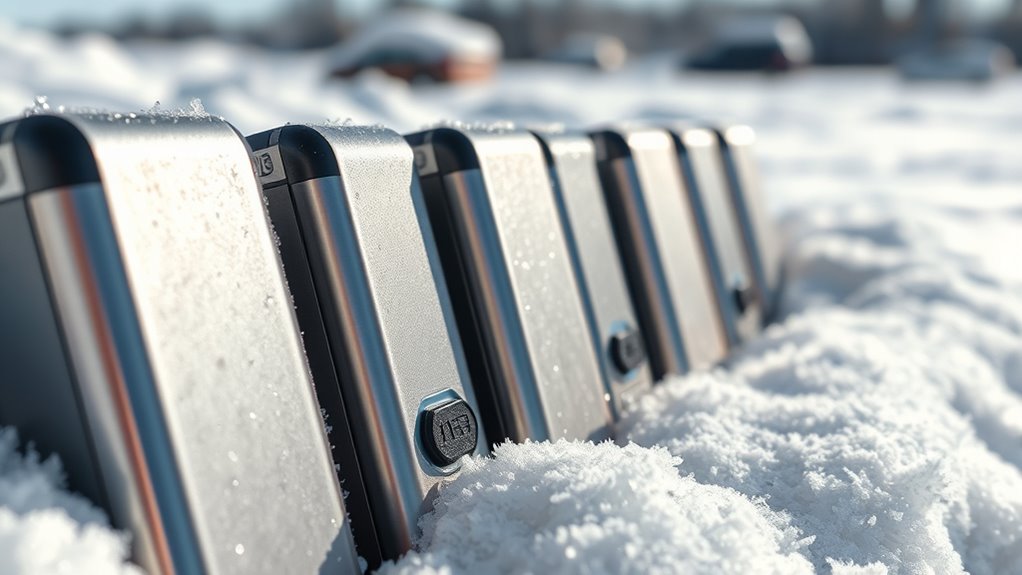
When temperatures drop, lithium battery packs can struggle to perform reliably. You might see that your battery still shows a full charge on the display, but it suddenly loses power when you try to use it. This discrepancy happens because cold weather accelerates issues like battery degradation and hampers the battery’s ability to deliver current effectively. Lithium chemistry relies on chemical reactions that slow down considerably in low temperatures, meaning your pack’s capacity isn’t truly available even if it indicates a full charge. This situation can be confusing and frustrating, especially when you’re counting on your device or vehicle to operate smoothly.
One of the key factors behind this problem is battery degradation, which occurs over time and is exacerbated by extreme cold. When a lithium pack gets cold, the internal processes become less efficient, damaging the delicate electrode structures and causing long-term capacity loss. The more your battery endures cold conditions, the more its overall lifespan and performance can decline. This isn’t just about a temporary performance dip; repeated exposure to low temperatures can accelerate degradation, leaving you with a less dependable power source over time.
To combat these issues, thermal management becomes vital. Proper thermal management involves keeping the battery within an ideal temperature range to maintain performance and prolong life. Many modern lithium packs incorporate heating elements or insulation to prevent the internal temperature from dropping too low. When you’re in cold environments, these systems work to keep the battery warm enough for chemical reactions to occur normally. Without effective thermal management, your battery’s internal chemistry slows down, leading to reduced power output and inaccurate state-of-charge readings. This is why your battery might still report as “full,” but you experience a sudden power failure.
It’s essential to recognize that in cold weather, simply relying on the “full” indicator doesn’t guarantee your battery has the capacity to deliver power. You should consider pre-warming your device or vehicle before use, especially in frigid conditions. Using dedicated thermal management solutions, like battery warmers or insulated covers, can considerably improve performance and reduce the risk of battery degradation over time. Additionally, understanding the impact of temperature on battery chemistry can help you make informed decisions about usage and care. Remember, maintaining a stable temperature not only guarantees that your lithium pack delivers true power when you need it but also helps in preserving its longevity. Proper care and thermal regulation are your best defenses against the cold’s impact on lithium batteries, ensuring you get consistent, reliable performance no matter the weather.
As an affiliate, we earn on qualifying purchases.
Frequently Asked Questions
Can Lithium Packs Be Safely Stored in Freezing Temperatures?
Yes, you can store lithium packs in freezing temperatures, but you should use battery insulation and thermal regulation. Cold temperatures can reduce performance and potentially damage the pack if not properly protected. Keep the battery in a insulated container and consider using thermal regulation devices to maintain a safer temperature range. This helps preserve battery health and ensures reliable power when you need it most.
How Does Cold Weather Affect Lithium Battery Lifespan?
Cold weather accelerates the degradation of your lithium battery chemistry, shortening its lifespan. Low temperatures cause internal resistance to increase, reducing capacity and efficiency. Proper thermal management helps mitigate these effects by maintaining a suitable temperature range, prolonging battery life. You should store and operate your lithium batteries within recommended temperature limits, especially in cold environments, to ensure longevity and reliable performance over time.
Are There Specific Brands Better Suited for Cold Climates?
You might think all lithium batteries are equal, but some brands excel in cold climates. Reliable brands like Anker or Goal Zero are designed with cold climate suitability in mind, offering better performance when temperatures drop. While lesser-known options may seem appealing, they often lack the durability needed for winter conditions. Choosing a brand with proven cold weather resilience guarantees your power remains consistent, even when the temperatures plummet.
What Are the Signs of a Lithium Pack Failing in Cold Conditions?
You’ll notice signs of a failing lithium pack in cold conditions when its performance drops unexpectedly, even if it shows a full charge. Battery insulation can help retain heat, but if the pack still struggles, cold charging might be insufficient, causing reduced capacity. You may also see inconsistent power delivery or rapid voltage drops. Keep an eye on these signs to prevent unexpected shutdowns, especially in freezing environments.
How Should I Maintain Lithium Packs During Winter Months?
Like a trusty steed in a medieval joust, you should regularly check your lithium packs during winter. Guarantee proper battery insulation to protect against cold temperatures, and manage their charge levels to prevent freezing. Keep them in a warm, dry place when not in use, and avoid deep discharges. Proper maintenance with these steps helps sustain performance and prolongs lifespan, even amidst winter’s chill.
battery insulation cover for cold weather
As an affiliate, we earn on qualifying purchases.
As an affiliate, we earn on qualifying purchases.
Conclusion
So, next time you reach for your lithium pack in the cold, remember it’s like a fragile glass—looks full but can still shatter your plans. Cold temperatures can drain your pack’s power faster than you’d think, even when it’s ‘full.’ Keep it warm and handle it with care, or you might find yourself stranded in the cold, wishing you’d paid more attention to its hidden weaknesses. Stay smart, stay warm, and keep your power flowing.
thermal management for lithium batteries
As an affiliate, we earn on qualifying purchases.
As an affiliate, we earn on qualifying purchases.
As an affiliate, we earn on qualifying purchases.
Fall Picks
fall essentials
As an affiliate, we earn on qualifying purchases.