Forced induction boosts your engine’s airflow and power, making your vehicle faster and more responsive. It does this by compressing air into the combustion chamber, which enhances fuel efficiency and performance. However, this added pressure can cause turbo lag, a delay before the engine responds, especially at low RPMs. It also puts extra stress on engine parts. If you’re curious about how these changes affect your engine’s behavior, there’s more to discover ahead.

Get business pricing on garage and car supplies
- Business-only prices and quantity discounts
- Tax-exempt purchasing
- Multiple users, one account, clear invoices
Key Takeaways
- Forced induction increases air intake and power output, significantly enhancing engine performance.
- It introduces turbo lag, causing a delay in power delivery during acceleration.
- Boost pressure rises with throttle input, improving fuel combustion and engine efficiency.
- Modern systems use electronic controls to regulate boost, preventing engine damage from excessive pressure.
- Forced induction alters engine response, making it more responsive or delayed depending on system design and driving conditions.
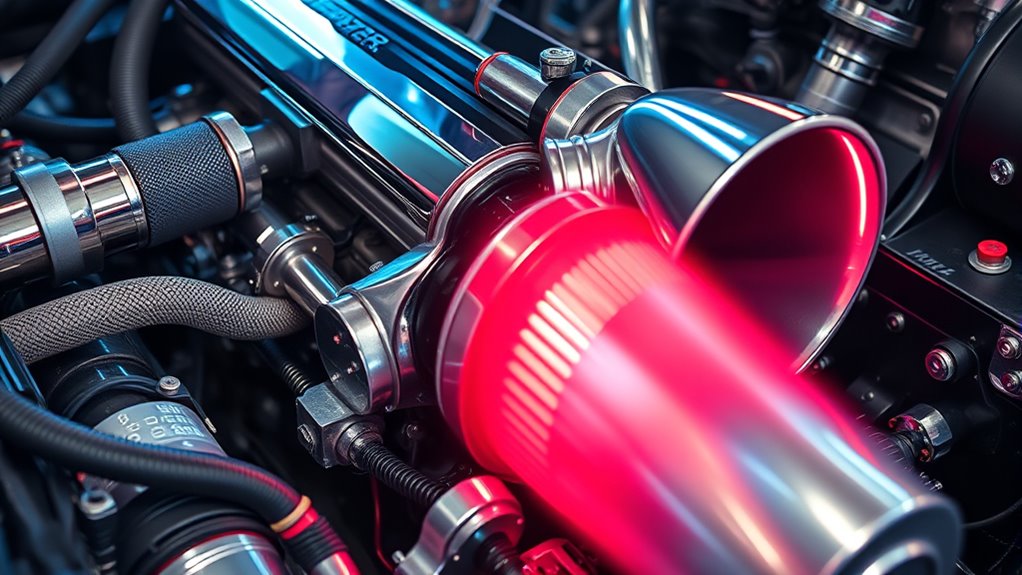
Forced induction systems, such as turbochargers and superchargers, markedly alter how an engine behaves by increasing its air intake and, consequently, its power output. When you equip your vehicle with these systems, you’ll notice a significant boost in performance, but it also introduces certain quirks you should understand. One common phenomenon is turbo lag, which is the delay between pressing the accelerator and feeling the engine’s full response. This happens because the turbocharger needs to spool up — that is, build enough boost pressure to force more air into the engine. During this lag, your engine may feel sluggish, especially at lower RPMs, as the turbo struggles to reach the desired boost pressure quickly enough. Once the turbo reaches essential boost pressure, power delivery becomes much more aggressive, giving you that satisfying surge of acceleration.
Boost pressure, which refers to the pressure of the compressed air supplied to the engine, plays a pivotal role in how your engine responds. When you accelerate, the turbocharger increases boost pressure, pushing more air into the cylinders. This allows for more fuel to be burned efficiently, resulting in higher power output. However, managing boost pressure is fundamental to prevent engine damage. Many modern turbocharged engines incorporate electronic controls to regulate boost levels, preventing excessive pressure that might cause knocking or mechanical failure. As you increase throttle, you’ll notice that the engine’s behavior changes based on how much boost is being generated. A higher boost pressure generally means more power, but it also demands more from the engine components, which is why proper tuning and maintenance are indispensable.
You’ll find that the response of a turbocharged engine varies depending on your driving style and the system’s design. Some turbo systems are designed to minimize turbo lag, employing techniques like twin-scroll turbines or variable-geometry turbines. These innovations help spool the turbo faster, reducing the time between your pedal input and engine response. When you push your vehicle hard, boost pressure can spike, providing that exhilarating boost you seek. Conversely, in everyday driving, the engine might operate at lower boost levels, offering better fuel economy and smoother power delivery. Understanding how turbo lag and boost pressure impact your engine helps you anticipate its behavior, manage your driving style, and appreciate the technological advancements that make forced induction a game-changer in automotive performance.
As an affiliate, we earn on qualifying purchases.
Frequently Asked Questions
How Does Turbo Lag Affect Daily Driving?
Turbo lag can make your daily driving feel less responsive, especially when you need quick acceleration. You might notice a delay between pressing the throttle and feeling the engine respond, which affects throttle response. This delay can be frustrating in city driving or merging onto highways. To compensate, you may need to anticipate your moves earlier, giving the turbo time to spool up and improve overall responsiveness during your everyday drives.
Can Forced Induction Engines Run on Regular Fuel?
Think of forced induction engines like high-performance athletes—they often need premium fuel to perform their best. You can run them on regular fuel, but it might not be ideal. Check your vehicle’s fuel compatibility and octane requirements; using lower octane can cause knocking and harm the engine. For peak performance and longevity, it’s best to follow the manufacturer’s recommendations and use the appropriate fuel grade.
What Maintenance Is Required for Turbocharged Engines?
You need to perform regular turbo maintenance to keep your engine running smoothly. This includes checking and changing the oil regularly, as turbo engines have specific oil requirements for peak performance and to prevent damage. Also, monitor your turbocharger for signs of wear, clean the intercooler, and ensure all connections are tight. Proper maintenance minimizes risks like oil leaks or turbo failure, extending your engine’s lifespan and maintaining efficiency.
Does Forced Induction Increase Engine Noise?
Yes, forced induction can increase engine noise, especially with turbocharged engines. You’ll notice a louder engine noise and a distinctive turbo whistle when accelerating. This occurs because the turbocharger compresses air, causing additional sound from the intake and exhaust systems. The turbo whistle, in particular, is a high-pitched sound that signals the turbo’s operation. Overall, forced induction makes your engine sound more aggressive and sporty.
Are There Environmental Benefits to Forced Induction?
Forced induction acts like a revitalizing gust for your engine, offering environmental benefits like emissions reduction and improved fuel efficiency. By helping your engine burn fuel more completely, it reduces harmful pollutants and conserves fuel, making every mile greener. This turbocharged boost not only powers your drive but also treads lighter on the planet, turning your ride into a more eco-friendly journey with cleaner emissions and smarter fuel use.
As an affiliate, we earn on qualifying purchases.
Conclusion
As you harness forced induction, you’re opening a gateway to a beast beneath the hood, transforming your engine into a roaring predator ready to release power. It’s like giving your engine a shot of adrenaline, awakening hidden depths of performance. With each boost, you steer into a more exhilarating driving experience—where raw force meets precision. Embrace this change, and watch your engine dance to a new rhythm, forever changed by the powerful touch of forced induction.
As an affiliate, we earn on qualifying purchases.
As an affiliate, we earn on qualifying purchases.
Halloween Picks
halloween
As an affiliate, we earn on qualifying purchases.