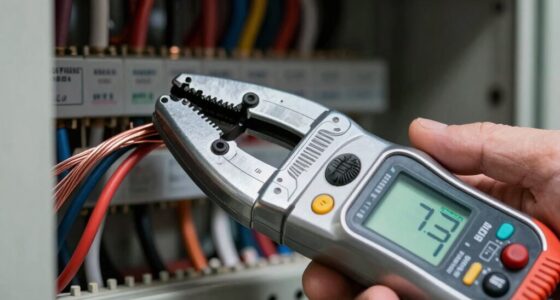
To relocate your battery safely, make certain you reroute the main power cable from the alternator to the new location using quality, appropriately thick cables secured firmly and away from heat or sharp edges. Install a fuse or circuit breaker near the positive terminal, rated slightly above your maximum current. Establish a solid ground connection close to the new battery with a clean, unpainted metal surface. For more detailed steps on proper cable routing and fusing, keep exploring to get your setup right.
Key Takeaways
- Use high-quality, appropriately rated cables and route them away from heat, sharp edges, and moving parts for safety and durability.
- Secure all cables firmly with clamps and grommets to prevent vibrations, chafing, and mechanical damage.
- Establish a solid grounding point near the new battery using clean, unpainted metal, and keep grounding cables short for minimal resistance.
- Install a dedicated fuse or circuit breaker close to the battery’s positive terminal, rated slightly above the maximum expected current.
- Maintain neat, organized cable pathways to ensure optimal electrical performance and easy inspection or troubleshooting.

Relocating your vehicle’s battery can improve performance, safety, and accessibility, but it requires careful planning. One of the most important aspects is ensuring proper alternator wiring. You need to reroute the main power cable from the alternator to the new battery location, making sure the wire is thick enough to handle the increased current load. Use high-quality, automotive-grade cables to prevent voltage drops and overheating. When routing this cable, avoid sharp edges, moving parts, and areas prone to heat, which could damage the wire over time. Secure the cable firmly, using appropriate clamps and grommets, to prevent vibrations and chafing. Proper cable routing not only keeps your setup neat but also minimizes electrical resistance, guaranteeing your vehicle’s electrical system functions efficiently. Proper cable routing also helps maintain the safety and longevity of your electrical system by reducing potential damage from heat and vibrations.
Grounding points are equally vital in a relocation project. Instead of grounding the battery to its original location, you’ll need to establish a solid grounding point near the new battery position. Choose a clean, unpainted metal surface that’s free of rust and corrosion. Sand down the area if necessary to guarantee a good connection, and use a heavy-duty terminal bolt to attach the grounding cable securely. This grounding point should be as short as possible to reduce electrical resistance, providing a reliable return path for the electrical system. Remember, a weak or loose ground can cause electrical issues, including charging system failures or intermittent power problems. Ensuring a solid grounding connection is crucial for consistent electrical performance and safety.
When it comes to fusing, you must install a dedicated fuse or circuit breaker close to the battery’s positive terminal. This fuse acts as a safety backup, protecting your vehicle’s wiring and electrical components from potential short circuits or overloads. Choose a fuse rated slightly above your maximum expected current, but not too high, to guarantee it blows in case of a fault. Make sure the fuse holder is mounted securely and away from heat sources. Proper cable routing, fuse placement, and grounding points all work together to create a safe, efficient, and reliable battery setup after relocation.

Pro Chaser 400W Power Inverters for Vehicles - DC 12v to AC 110v Car Inverter Converter, 6.2A Dual USB Charging Ports, Dual AC Adapter for Laptops Air Compressor
【Pro Chaser Power Inverter Basics】: This inverter provides a steady 400W of DC to AC power with a...
As an affiliate, we earn on qualifying purchases.
Frequently Asked Questions
Can I Relocate My Battery Without Professional Help?
You can attempt a DIY installation, but prioritize battery safety. If you’re experienced with electrical work, carefully follow proper cable routing and fusing procedures to prevent hazards. Make sure to disconnect the battery properly, use the right tools, and secure all connections. However, if you’re unsure or inexperienced, it’s best to seek professional help to avoid damage or safety risks. Proper installation guarantees your vehicle’s safety and reliable performance.
What Tools Are Essential for Safe Battery Relocation?
Think of essential tools as the backbone of your project—screwdrivers, wire cutters, and pliers are your primary allies, ensuring proper cable management and battery safety. A multimeter helps verify connections, while a drill may be needed for mounting. Never forget safety gear like gloves and goggles. These tools help you execute a safe, organized relocation, preventing damage and hazards while keeping your battery system reliable and secure.
How Do I Choose the Right Fuse Size?
To choose the right fuse size, you need to take into account the fuse ratings suitable for your cable protection, making sure they match the wire’s current capacity. Check the cable’s gauge and the maximum current it can handle safely. Using a fuse too small may cause unwanted trips, while too large can risk damage. Always follow manufacturer recommendations and ensure the fuse protects your wiring effectively without compromising safety.
Are There Specific Regulations for Battery Relocation?
Like a knight preparing for battle, you must guarantee your battery relocation complies with specific regulations. These laws focus on battery safety and legal compliance, including proper cable routing, secure mounting, and correct fusing. Check local electrical codes and manufacturer guidelines to avoid hazards and legal issues. Staying informed and following these standards guarantees your upgrade is safe, legal, and ready for action without risking your vehicle or safety.
How Often Should I Inspect Relocated Cables?
You should inspect your relocated cables at least every three to six months. During inspections, look for signs of cable corrosion, which can compromise safety, and verify fuse ratings are intact and suitable for your setup. Regular checks help prevent electrical issues and maintain proper fuse protection. Keep an eye on connections, and replace any corroded cables or mismatched fuses promptly to keep your system safe and reliable.
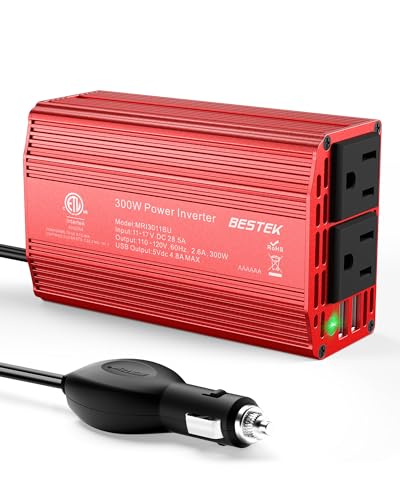
BESTEK Power Inverter DC 12V to AC 110V - 300W Car Plug Adapter Outlet with 4.8A Dual USB Fast Charging Port - Car Charger Cigarette Lighter Adapter for Phone, Laptop on Road Trip - Aluminum Housing
BESTEK Advantage Upgraded: Bestek is power inverter patents owner, America's leading power inverter brand. Our inverter tech upgraded...
As an affiliate, we earn on qualifying purchases.
Conclusion
By following this checklist, you reduce the risk of electrical fires and guarantee a safe, reliable battery relocation. Proper cable routing and fusing are vital steps that can prevent costly damage and keep you safe on the road. Did you know that improper wiring is responsible for over 20% of vehicle fires? Staying diligent with these safety measures not only protects your vehicle but also gives you peace of mind knowing you’ve done it right.

BELTTT 2000W Pure Sine Wave Inverter, Inverter 12V DC to 120V AC for Solar, RV, Truck, Outdoor, Power Inverter with Dual AC and 20A Socket, 5V 2.1A USB, Surge 4000W, Hardwire Port, Remote Controller
【POWERFUL DC to AC CONVERTER】: This solar inverter delivers 2000W of continuous battery DC 12V to AC 110V...
As an affiliate, we earn on qualifying purchases.

Cantonape 3000W Power Inverter 12V to 110V/120V DC to AC with LCD Display, Remote Controller 4 x AC Outlets and 4 x 3.1A USB Car Adapter for Car Truck Boat RV Solar System
POWERFUL OUTPUT: Convert power of DC 12V to AC 110V/120V 60Hz. Provides 3000 Watts continuous modified sine wave...
As an affiliate, we earn on qualifying purchases.