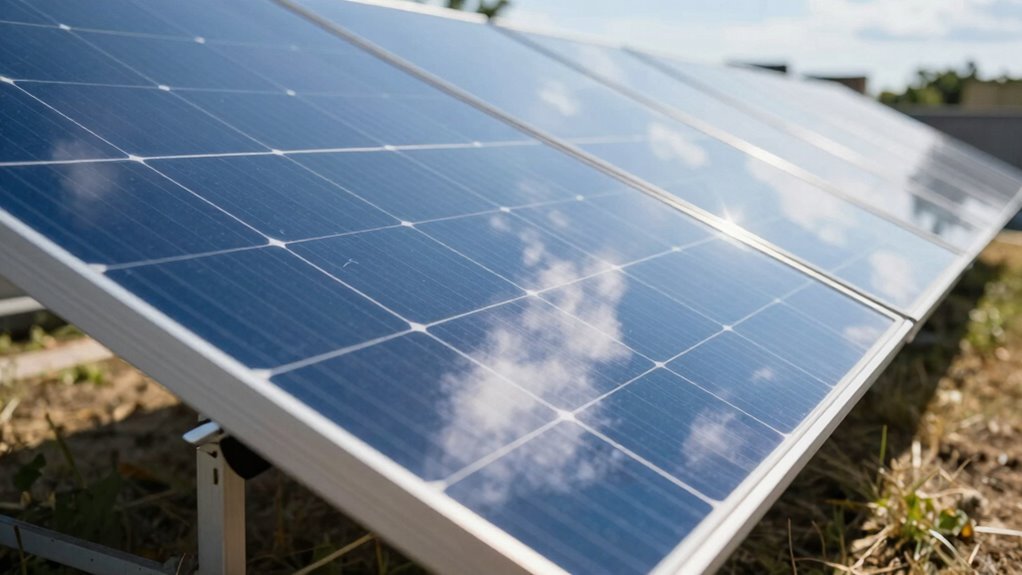

In real-world conditions, your solar output can be markedly reduced by improper panel angle, shading, and high temperatures. If your panels aren’t angled correctly, you miss out on ideal sunlight throughout the year. Shadows from trees or buildings—even small ones—can cut energy production sharply. Hot weather also decreases efficiency, since high temperatures hinder conversion. To get the best from your system, you need to understand these factors and how to manage them effectively—that’s just the beginning of what you’ll discover.

Get business pricing on garage and car supplies
- Business-only prices and quantity discounts
- Tax-exempt purchasing
- Multiple users, one account, clear invoices
Key Takeaways
- Incorrect panel angles reduce sunlight capture, especially during seasonal sun path shifts, lowering energy production.
- Excessive heat decreases panel efficiency, as high temperatures impair the conversion process despite abundant sunlight.
- Shading from trees, buildings, or nearby objects causes significant output drops, even with small shadows.
- Proper installation and positioning are vital to prevent shading and optimize angle for maximum sunlight exposure.
- Environmental factors like wind and snow loads can affect mounting stability, impacting overall system performance.
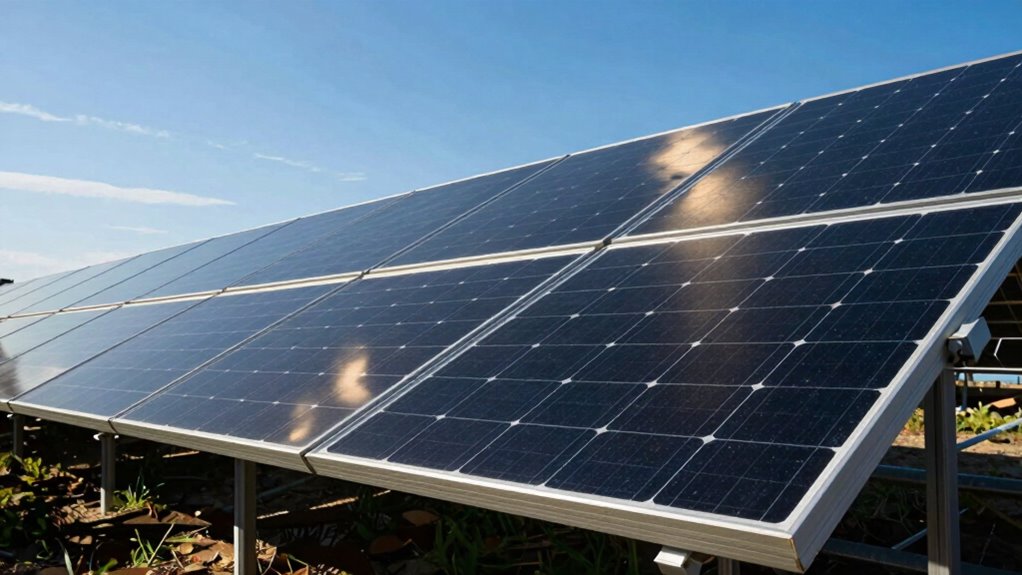
Have you ever wondered how solar power works outside of textbooks and ideal conditions? It’s not just about placing panels in the sun and watching them generate electricity. Real-world conditions introduce a variety of factors that influence how much energy you actually get. Efficiency factors, for example, play a notable role. No solar panel is 100% efficient, meaning some sunlight is always lost during conversion into usable electricity. The angle of your panels is essential—if they’re not tilted correctly, especially relative to the sun’s position, you won’t harvest the maximum amount of energy. During different times of the year, the sun’s path shifts, so a fixed angle might work well in summer but underperform in winter. Adjusting the tilt or using tracking systems can improve efficiency, but this introduces installation challenges that need careful planning and investment.
Installation challenges are often overlooked but are indispensable to consider. Properly mounting panels requires a stable surface and precise alignment, which isn’t always straightforward, especially on irregular roofs or in areas prone to high winds or snow loads. If panels aren’t installed correctly, their angle may be subpar, or they could be exposed to shading from nearby trees, buildings, or even other panels. Shade dramatically reduces output because even a small shadow can greatly hinder the flow of electricity. It’s important to evaluate shading throughout the day and across seasons, which can complicate installation and sometimes require trimming trees or repositioning panels. Additionally, understanding solar panel efficiency helps in choosing the right technology and setup for your environment. Recognizing how weather conditions affect panel performance can also help in planning for seasonal changes and potential maintenance needs. Proper assessment of shading impact is crucial to optimize performance and avoid unexpected losses.
Heat is another factor that affects a solar system’s performance. While sunlight is necessary for energy generation, excessive heat can actually decrease a panel’s efficiency. Most panels perform best at moderate temperatures; when it gets too hot, their ability to convert sunlight diminishes. This is especially relevant in hot climates or during summer months, where panels might be exposed to intense heat. Proper ventilation and choosing panels designed to handle higher temperatures can help mitigate this issue, but it adds another layer of complexity and cost. Additionally, understanding how thermal effects influence efficiency can guide better system design and material choices. Recognizing the interaction between heat and efficiency is important for optimizing performance in various climates.
All these factors—angle, heat, shade, and installation challenges—interact to determine how well your solar system performs in the real world. You might find that what works in a sunny, open field doesn’t translate directly to your home’s unique environment. Understanding these efficiency factors helps you set realistic expectations and plan for ideal placement and maintenance, ensuring you get the most out of your solar investment despite the hurdles nature and practical limitations present.
adjustable solar panel mounting brackets
As an affiliate, we earn on qualifying purchases.
As an affiliate, we earn on qualifying purchases.
Frequently Asked Questions
How Does Snow Accumulation Affect Solar Panel Efficiency?
Snow coverage on your solar panels greatly reduces their efficiency because it blocks sunlight from reaching the cells. When snow accumulates, less light is absorbed, decreasing energy production. To maintain ideal panel efficiency, you should regularly clear snow from the surface. Keep in mind, prolonged snow coverage can cause a notable drop in output, so staying proactive helps guarantee your system continues generating power effectively during winter months.
Can Shading From Nearby Trees Be Permanently Mitigated?
Did you know that shading can reduce solar panel output by up to 80%? You can permanently mitigate shading from nearby trees through strategic tree pruning, removing branches that block sunlight, or installing shade mitigation devices like microinverters. Regularly trimming trees guarantees consistent sunlight exposure, maximizing your panels’ efficiency. This approach keeps your solar system performing well, even as seasons change and trees grow.
What’s the Best Time of Year for Optimal Solar Output?
You’ll get the best solar output during late spring and early summer when seasonal sunlight is strongest, and days are longer. This period offers ideal weather variations, meaning clear skies and minimal cloud cover maximize energy production. Keep in mind, as seasons change, sunlight angle shifts, affecting efficiency. Planning your solar setup around these peak months helps you harness the most energy, even amid weather fluctuations.
How Do Different Roof Materials Impact Solar Panel Installation?
Think of your roof as a stage for solar panels—its texture and material durability set the scene. Smooth, sturdy surfaces like metal or asphalt shingles make installation easier and guarantee long-lasting support. Conversely, rough or fragile materials like clay tiles or wood shake can complicate mounting and may reduce panel lifespan. Choosing the right roof material guarantees your solar setup performs at its best and endures over time.
Are There Specific Solar Panel Types More Resistant to Heat?
You’ll find heat resistant panels, like those with advanced coatings or made from materials such as monocrystalline silicon, offer better resistance to high temperatures. These panels withstand heat better and maintain efficiency longer. When choosing solar panels, consider durability considerations to guarantee they perform well under hot conditions. Investing in heat resistant panels helps prevent efficiency drops and extends lifespan, especially if you live in a hot climate.
solar panel tilt angle optimizer
As an affiliate, we earn on qualifying purchases.
As an affiliate, we earn on qualifying purchases.
Conclusion
So, as you navigate the dance of angles, heat, and shade, remember—solar energy isn’t just about shining panels but about understanding the dance floor they sit on. Just like a masterful conductor, you can turn these variables into harmony, maximizing your output. Don’t let obstacles block your sunshine; instead, adapt and optimize. After all, isn’t it worth dancing with the sun to unleash its full power?
As an affiliate, we earn on qualifying purchases.
solar panel heat resistant cooling fans
As an affiliate, we earn on qualifying purchases.
As an affiliate, we earn on qualifying purchases.
Halloween Picks
halloween
As an affiliate, we earn on qualifying purchases.