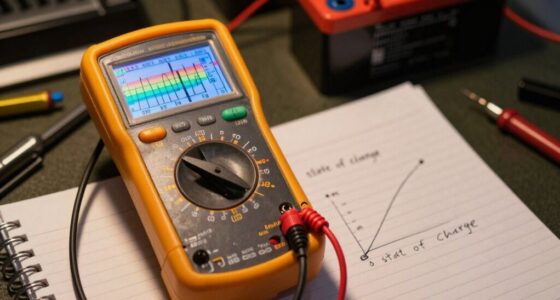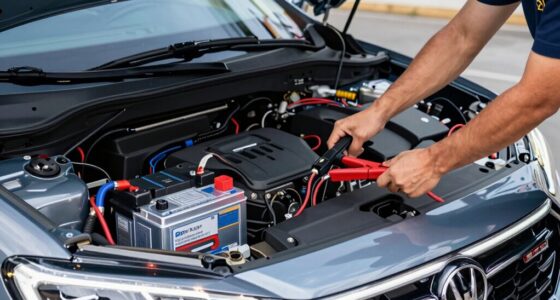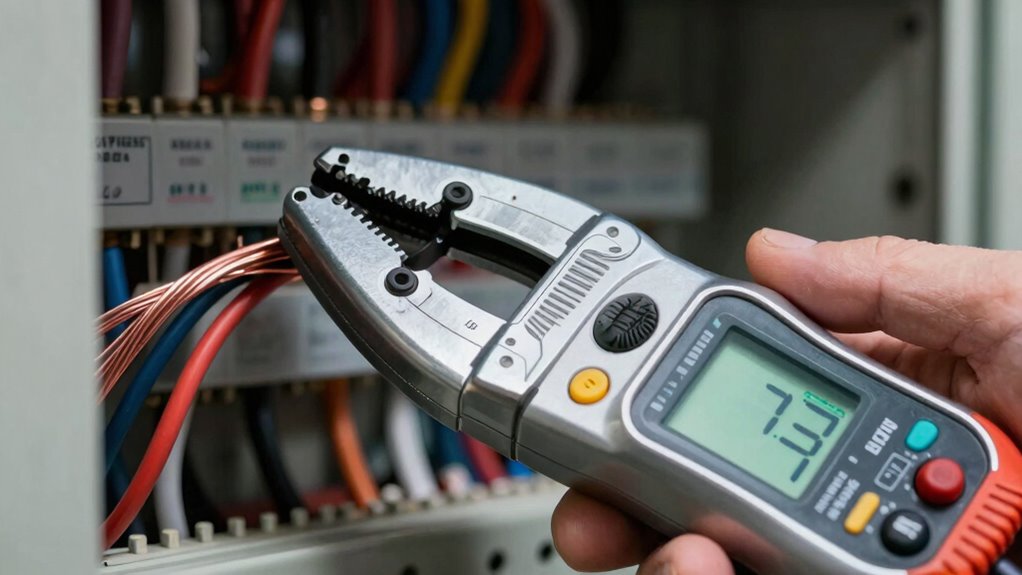

Using a clamp meter is the safest way to find electrical drain because you can measure current without disconnecting wires. Simply open the clamp and encircle a single wire to get an accurate reading. This method eliminates the need to shut down circuits, reducing risks of shock or damage. It’s quick, easy, and non-intrusive, letting you pinpoint issues efficiently. Keep going to discover more tips for safe and effective current testing.

Get business pricing on garage and car supplies
- Business-only prices and quantity discounts
- Tax-exempt purchasing
- Multiple users, one account, clear invoices
Key Takeaways
- Clamp the meter around a single wire to accurately measure current without disconnecting circuits.
- Ensure the circuit is energized to obtain correct current readings safely.
- Use the clamp meter to quickly identify abnormal current drains and troubleshoot issues.
- Avoid clamping around multiple wires to prevent inaccurate measurements.
- Employing a clamp meter reduces electrical shock risks and minimizes system downtime during testing.
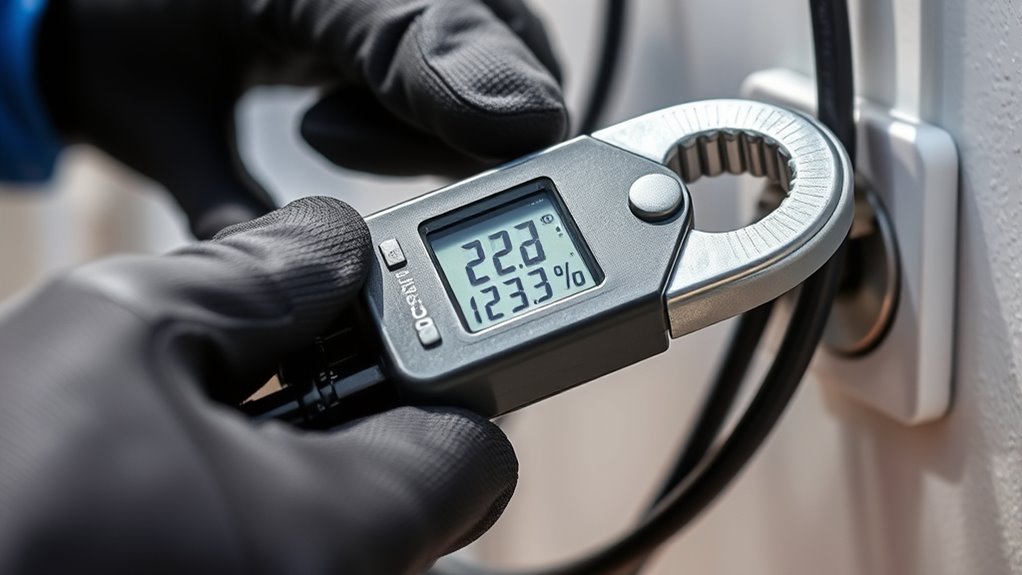
Ever wondered how to measure electrical current without disconnecting circuits? Using a clamp meter is your answer. This tool allows you to measure current safely and efficiently, especially when dealing with complex wiring systems. Instead of shutting down and disconnecting wires, you simply clamp the meter around a conductor to get an instant reading. This method not only saves time but also enhances safety by reducing exposure to live circuits. When you’re troubleshooting electrical issues, this non-intrusive approach is invaluable. It enables you to identify current drain problems quickly, which is *essential* for maintaining circuit protection and preventing damage to your electrical system.
Measuring current safely without disconnecting circuits with a clamp meter is quick and essential for troubleshooting.
To start, you need to select the right clamp meter for your specific needs, ensuring it can handle the expected current range. Once you have your meter, make sure the circuit is energized so you can get an accurate reading. Simply open the clamp jaw, place it around a single wire—never around multiple conductors or a bundle—and close it. The meter will then display the current flowing through that wire. This process eliminates the need to disconnect or cut into wires, reducing the risk of shorts or sparks. It’s a straightforward technique that promotes safety and simplifies troubleshooting. Additionally, understanding the fundamentals of electrical measurement helps ensure accurate readings and safe operation.
One of the key benefits of using a clamp meter is its ability to help with circuit protection. By quickly detecting abnormal current levels, you can prevent overloads and potential fires before they happen. It’s an *integral* tool for electricians and DIY enthusiasts alike. When troubleshooting, it’s important to remember that a clamp meter measures only the current flowing through a conductor, not voltage or resistance. So, it should be part of a *thorough* troubleshooting technique, combined with other testing methods to get a complete picture of your electrical system’s health.
Additionally, a clamp meter provides a safe way to monitor ongoing electrical loads without interrupting your circuit. If you suspect a drain or abnormal power consumption, you can easily check different wires in the system without risking shock or damage. This real-time insight allows you to pinpoint issues faster and take corrective action promptly. Proper use of a clamp meter enhances your troubleshooting techniques, making your work safer and more precise. It’s a practical, effective tool that simplifies complex electrical tasks while ensuring your circuit protection measures stay intact. With this approach, you gain better control and understanding of your electrical system’s current flow, making maintenance and repairs more manageable and less risky.
Frequently Asked Questions
Can Clamp Meters Measure DC Current Accurately?
Yes, clamp meters can measure DC current accurately if they’re designed for it. Unlike traditional AC measurements, DC measurement requires a Hall effect sensor in the clamp. You can use it for battery testing or finding drain on circuits, but make certain your meter specifies DC capability. For precise results, always follow the manufacturer’s instructions, especially when measuring small DC currents or troubleshooting battery issues.
What Safety Precautions Are Necessary When Using a Clamp Meter?
Safety first, because safety isn’t expensive, it’s priceless. When using a clamp meter, always wear safety gear like gloves and safety glasses. Make certain you have proper training to handle electrical measurements safely. Keep the environment dry, avoid touching live parts, and double-check connections before measuring. Following these precautions minimizes risks and helps you work confidently, protecting yourself while accurately diagnosing electrical issues.
How Do I Select the Right Clamp Meter for My Needs?
To select the right clamp meter, consider its features like jaw size, measurement range, and AC/DC capabilities to match your needs. You want a meter with a measurement range that covers your typical current levels, guaranteeing accuracy and safety. Look for user-friendly features such as an easy-to-read display, auto-ranging, and safety ratings. Choosing a model with the appropriate clamp size and functions guarantees reliable readings and safe operation for your specific tasks.
Is Calibration Required for Precise Current Measurements?
Think of calibration as sharpening your tools for precision. Yes, calibration is important for measurement accuracy; it guarantees your clamp meter provides reliable readings. Without it, your measurements can drift, leading to errors in diagnosing electrical issues. Regular calibration acts as a safeguard, maintaining the integrity of your measurements. So, for accurate current readings, you should calibrate your clamp meter periodically, especially if you notice inconsistent results.
Can Clamp Meters Test Other Electrical Parameters?
Yes, clamp meters can test other electrical parameters like voltage measurement and resistance testing. You simply connect the meter’s leads or use the clamp feature accordingly. For voltage measurement, place the leads across the component. For resistance testing, disconnect power and connect the leads to the component terminals. While clamp meters are mainly designed for current, many models offer these additional functions, making them versatile tools for your electrical troubleshooting.
Conclusion
Using a clamp meter to check your device’s current draw is like having a secret weapon—safe, simple, and effective. It keeps you out of harm’s way while revealing the hidden drain that could be draining your wallet. So, next time you’re troubleshooting, remember: with a clamp meter in hand, you hold the key to peace of mind. Don’t let unseen leaks sneak past you; catch them before they become a costly mystery.
Halloween Picks
halloween
As an affiliate, we earn on qualifying purchases.