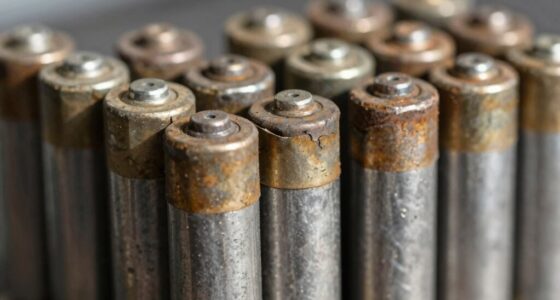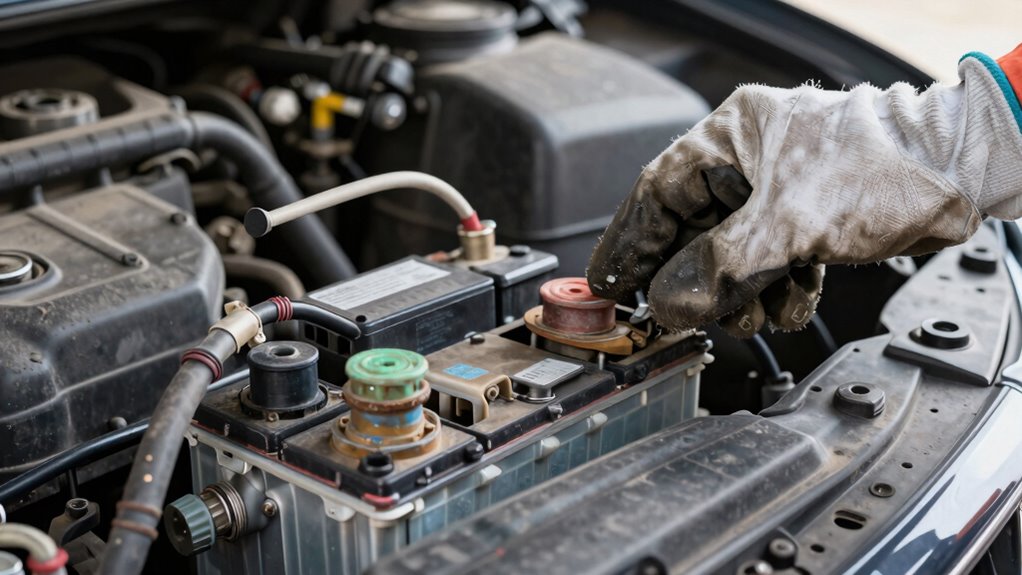

If your car keeps dying and you keep replacing the battery, you’re not fixing the real problem. Regularly check your terminals for corrosion, tighten cables, and test the battery’s charge and system components like the alternator. Faulty wiring or parasitic drains can drain your battery quickly, regardless of how new it is. Staying on top of these maintenance steps helps prevent unnecessary replacements. Continue exploring how to identify and fix these hidden issues to keep your vehicle reliable.

Get business pricing on garage and car supplies
- Business-only prices and quantity discounts
- Tax-exempt purchasing
- Multiple users, one account, clear invoices
Key Takeaways
- Regularly inspect and clean battery terminals to prevent corrosion and ensure a solid electrical connection.
- Test the alternator’s output to confirm proper charging and identify potential failure.
- Check for parasitic drains that may deplete the battery when the vehicle is off.
- Inspect wiring and fuses for damage or corrosion to prevent electrical faults.
- Maintain overall electrical system health with routine checks to avoid recurring dead starts.
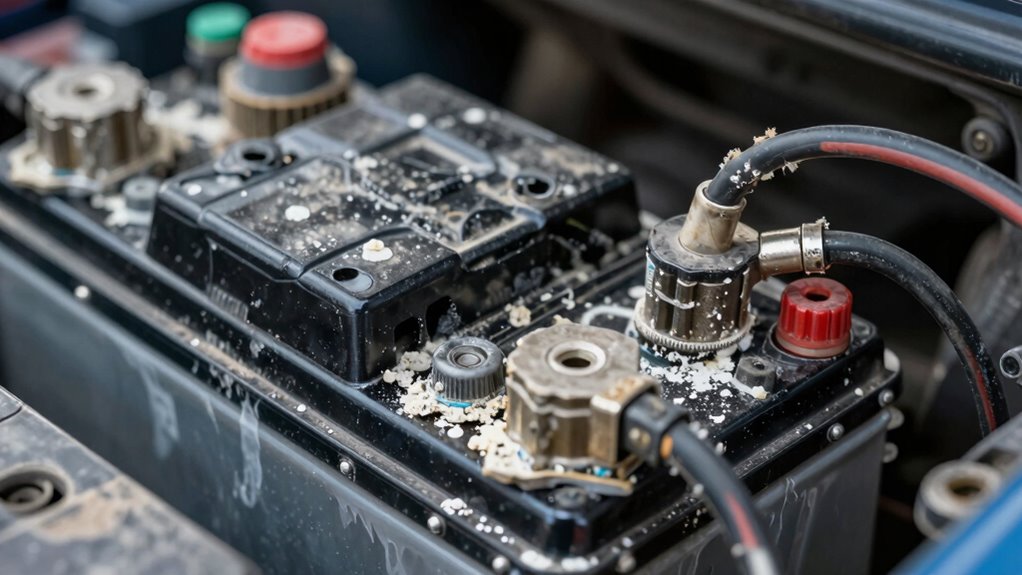
If you’re tired of constantly replacing batteries, it’s time to think about more sustainable and cost-effective alternatives. The key to stopping the cycle of dead batteries is understanding that the root cause often lies in your vehicle’s electrical system. Regular battery maintenance becomes essential because neglecting it leads to poor performance and early battery failure. When you overlook basic checks, such as inspecting terminals for corrosion, ensuring cables are tight, or testing the battery’s charge, you’re setting yourself up for repeated replacements. Instead of replacing batteries over and over, focus on diagnosing and fixing underlying issues within the electrical system.
Your vehicle’s electrical system is complex, and even small faults can drain the battery prematurely. For example, a malfunctioning alternator may fail to recharge the battery properly, leading to repeated dead starts. Similarly, a parasitic drain—an electrical component pulling power when the vehicle is off—can deplete your battery overnight. These issues are often overlooked but are the real culprits behind frequent battery failures. Proper battery maintenance involves more than just checking the voltage; it requires an in-depth assessment of the entire electrical system. Testing the alternator’s output, inspecting wiring for damage, and ensuring fuses are intact can help identify problems before they cause your battery to give out. Electrical system maintenance can significantly extend your battery’s lifespan. Regularly monitoring battery health with appropriate tools can further help detect early signs of trouble. Additionally, understanding the charging system in your vehicle is crucial to prevent ongoing issues that lead to battery failure. Keeping an eye on battery capacity and ensuring it remains within optimal ranges can also prevent unexpected failures. Furthermore, using proper maintenance techniques can help you avoid unnecessary replacements and keep your vehicle running smoothly.
When you proactively maintain your electrical system, you extend your battery’s lifespan and improve overall vehicle reliability. Keeping terminals clean and corrosion-free ensures a good connection, which is vital for consistent power flow. Using a multimeter to regularly check your battery’s voltage can alert you to potential issues before they lead to a dead start. If you notice your vehicle struggles to start, don’t just replace the battery—investigate whether the charging system is functioning correctly. Sometimes, the fix is as simple as tightening loose connections or replacing worn-out cables, rather than buying a new battery every time.
As an affiliate, we earn on qualifying purchases.
Frequently Asked Questions
How Can I Test if My Battery Is Truly Failing?
To test if your battery is truly failing, start by inspecting for battery corrosion around the terminals—corrosion can hinder performance. Next, check the alternator belts; loose or worn belts can prevent proper charging. Use a multimeter to measure voltage; a healthy battery should read around 12.6 volts when the car is off, and around 13.7-14.7 volts when running. If readings are low, your battery or charging system may need attention.
What Are Common Signs of a Failing Alternator?
You can spot a failing alternator by watching for dimming headlights, flickering dashboard lights, or a battery warning light. If your vehicle’s electrical system seems inconsistent, it’s time for alternator maintenance. A faulty alternator shortens your battery lifespan because it doesn’t charge the battery properly. Regularly testing and maintaining your alternator helps prevent dead starts and guarantees your battery stays healthy longer.
Can Wiring Issues Cause Repeated Dead Starts?
Yes, wiring issues can cause repeated dead starts. Battery corrosion can disrupt electrical flow, making it hard for your car to start consistently. Fuse connections that are loose or corroded can also prevent proper power distribution, leading to dead starts. Regularly inspecting and cleaning battery terminals, and ensuring fuse connections are secure, helps prevent wiring problems that cause repeated starting issues, saving you from unnecessary battery replacements.
How Often Should I Check My Vehicle’s Charging System?
You should check your vehicle’s charging system at least once a year, especially before long trips or during seasonal changes. Regular battery maintenance involves inspecting the battery terminals for corrosion and ensuring the alternator is functioning properly. Use proper charging techniques to keep the system in good shape, and if you notice dimming headlights or slow engine starts, it’s time for a thorough inspection to prevent repeated dead starts.
Are There DIY Methods to Diagnose Electrical Problems?
Yes, you can DIY diagnose electrical problems by performing basic battery maintenance and troubleshooting. Start by checking the battery terminals for corrosion and ensuring they’re tight. Use a multimeter to test voltage—around 12.6 volts indicates a healthy battery. Inspect fuses and wiring for damage. These simple steps help identify common issues, saving you time and money before seeking professional help. Remember, proper maintenance keeps your electrical system running smoothly.
As an affiliate, we earn on qualifying purchases.
Conclusion
Don’t keep replacing batteries—fix the real issue instead. Nearly 60% of dead starts are caused by underlying electrical problems, not the battery itself. By diagnosing and repairing these root causes, you save money, time, and frustration. Imagine the relief of knowing your vehicle won’t leave you stranded unexpectedly. Take action now to address the actual problem, and enjoy peace of mind on every drive. Your car will thank you for it.
As an affiliate, we earn on qualifying purchases.
As an affiliate, we earn on qualifying purchases.
Evergreen bestsellers Picks
bestsellers
As an affiliate, we earn on qualifying purchases.