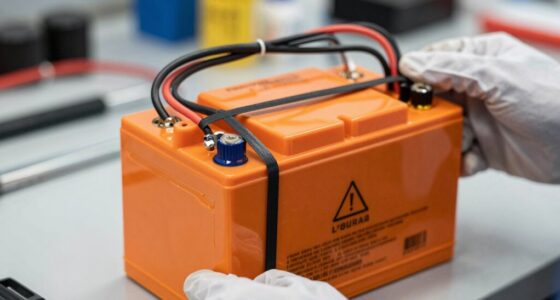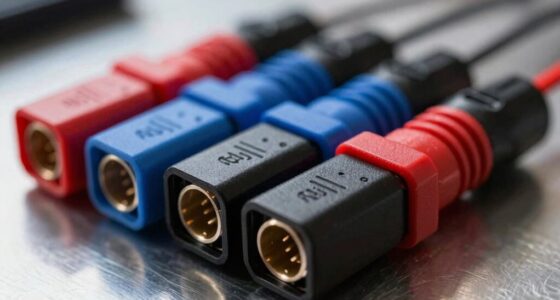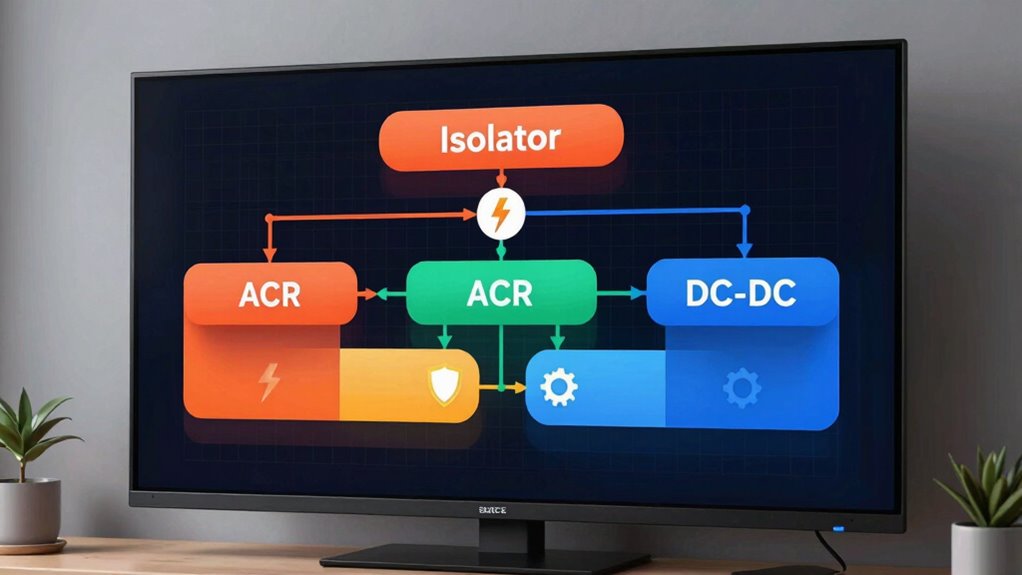

If you’re choosing between an isolator, ACR, and DC-DC converter, it’s about what you need to safeguard, control, or convert power. An isolator prevents direct electrical connections, offering safety and noise reduction. An ACR regulates current to ensure stability despite load changes, without changing voltage levels. A DC-DC converter adjusts voltage levels efficiently for different components. Understanding these differences helps you pick the right solution—stick with us, and you’ll gain clarity on making the best choice.

Get business pricing on garage and car supplies
- Business-only prices and quantity discounts
- Tax-exempt purchasing
- Multiple users, one account, clear invoices
Key Takeaways
- Isolators provide galvanic isolation and protect against electrical noise, not voltage or current regulation.
- ACR focuses on maintaining stable current flow, preventing overloads and voltage drops within systems.
- DC-DC converters handle voltage level adjustments, enabling efficient power conversion between different voltages.
- Use isolators for safety-critical signal isolation; ACR for current stability; DC-DC for voltage transformation.
- Selecting the appropriate component depends on whether you need signal isolation, current regulation, or voltage conversion.
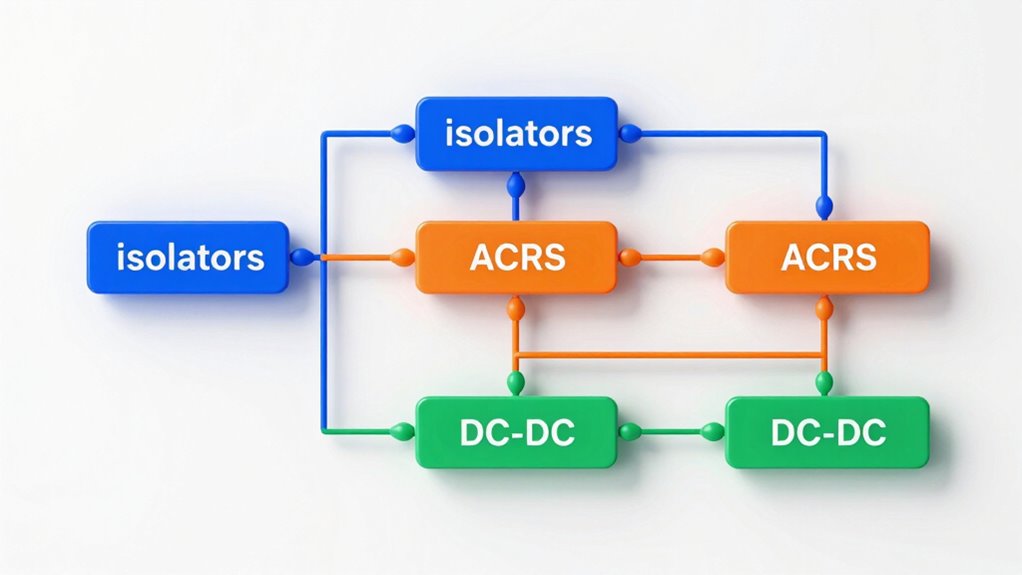
When choosing between an isolator, an ACR, and a DC-DC converter, understanding their fundamental differences is essential for optimizing your power management system. These components each serve distinct roles in power conversion and signal integrity, making it critical to match their capabilities to your application’s needs. An isolator primarily provides galvanic isolation, preventing unwanted current flow between different parts of your system. It’s ideal when you need to protect sensitive components from high voltages or electrical noise, ensuring that signals remain clean and accurate. Since isolators block direct electrical connection, they help maintain signal integrity, especially in environments prone to interference or ground loops. They don’t typically convert power voltage levels but focus on isolating signals, making them suitable for safety-critical systems or measurements where accuracy is paramount. galvanic isolation is a key feature that underscores the importance of isolators in safeguarding sensitive electronics. Additionally, selecting the appropriate isolation method can influence overall system safety and reliability.
In contrast, an ACR, or Automatic Current Regulator, centers on controlling and stabilizing current flow within your system. It’s designed to guarantee consistent current delivery regardless of load variations, which is essential for protecting components and maintaining stable operation. While an ACR mainly handles current regulation rather than voltage conversion, it indirectly influences power conversion efficiency by preventing overloads and voltage drops. This regulation enhances signal integrity by reducing noise caused by fluctuating power levels, ensuring your system’s outputs remain stable and predictable. An ACR is particularly useful when your system requires reliable current control without extensive voltage adjustments. Additionally, understanding power management principles can help optimize system performance by selecting the appropriate component for your specific needs.
isolation amplifier for signal protection
As an affiliate, we earn on qualifying purchases.
As an affiliate, we earn on qualifying purchases.
Frequently Asked Questions
How Do Cost Differences Impact Long-Term System Maintenance?
Cost differences considerably impact your long-term system maintenance. Choosing more cost-efficient options like DC-DC converters can lower initial expenses and reduce ongoing maintenance costs, saving you money over time. Conversely, higher upfront costs for isolators or ACRs might lead to increased maintenance efforts and expenses down the line. Ultimately, evaluating cost efficiency helps you select components that balance initial investment with long-term reliability, minimizing future repair and upkeep costs.
Can These Devices Be Used Together in the Same System?
Using an isolator, ACR, and DC-DC converter together is like trying to fit puzzle pieces from different sets—sometimes it works, but compatibility issues and signal interference can cause problems. You can combine them if designed carefully, ensuring proper shielding and compatibility checks. However, mixing these devices might increase complexity and risk signal interference, so it is crucial to plan your system layout meticulously to keep everything running smoothly.
What Are the Environmental Limitations for Each Device Type?
You need to take into account environmental durability and thermal resilience when choosing these devices. Isolators generally handle harsh conditions better, thanks to robust insulation and shielding. ACRs are more sensitive to temperature fluctuations and require careful thermal management. DC-DC converters usually have good thermal resilience but can be affected by extreme environments unless specifically rated for such conditions. Always check manufacturer specs for environmental limitations to guarantee reliable operation.
How Does Installation Complexity Vary Among Them?
You’ll find that installation challenges vary markedly: isolators often require straightforward setup procedures, making them easier for most users. ACRs involve more complex wiring and calibration, which can increase setup time. DC-DC converters, while compact, demand careful attention during installation to prevent electrical issues. Approximately 60% of technicians report smoother installations with isolators, highlighting their simplicity compared to the more involved processes of ACRs and DC-DC units.
Are There Specific Industry Standards Governing Their Use?
You’ll find that industry standards and regulatory guidance heavily influence your choice among isolators, ACRs, and DC-DC converters. Standards compliance guarantees safety, reliability, and interoperability, so check if the equipment meets certifications like UL, IEC, or ISO. Regulatory guidance varies by industry, requiring adherence to specific protocols. Staying informed about these standards helps you select the right device, simplifying installation and ensuring your system remains compliant and safe.
As an affiliate, we earn on qualifying purchases.
Conclusion
Choosing between an isolator, ACR, and DC-DC converter isn’t just about technical specs; it’s about understanding your system’s core needs. While an isolator offers safety through separation, an ACR provides seamless power sharing, and a DC-DC converter ensures voltage flexibility. Each has its strengths and trade-offs—like contrasting worlds that challenge your decision. By weighing these nuances, you’ll discover the perfect fit, transforming confusion into clarity and your project into a success.
As an affiliate, we earn on qualifying purchases.
As an affiliate, we earn on qualifying purchases.
Fall Picks
fall essentials
As an affiliate, we earn on qualifying purchases.