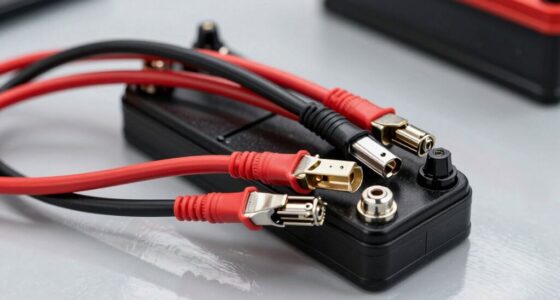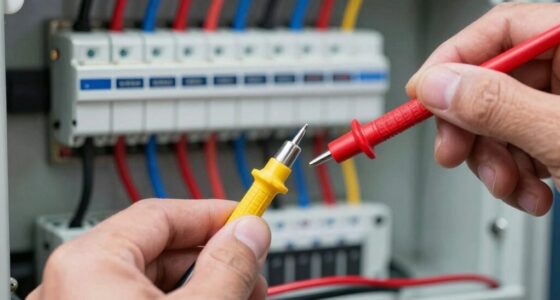

When your cable runs are too long, voltage drops increase, which can cause your devices to malfunction or run inefficiently. Using thinner wires or extending cables without proper planning raises resistance and worsens voltage loss. To keep your system reliable and power-efficient, you need to balance cable length and wire gauge carefully. Ignoring these rules might lead to performance issues, but there’s more you should know to get it just right.

Get business pricing on garage and car supplies
- Business-only prices and quantity discounts
- Tax-exempt purchasing
- Multiple users, one account, clear invoices
Key Takeaways
- Longer cables increase voltage drop, risking device malfunction and inefficiency.
- Thinner wires have higher resistance, leading to greater voltage loss over distance.
- Proper wire gauge selection minimizes voltage drop and ensures reliable power delivery.
- Excessive voltage drop causes devices to draw more current, raising energy costs.
- Balancing cable length and wire gauge is essential for system efficiency and device longevity.
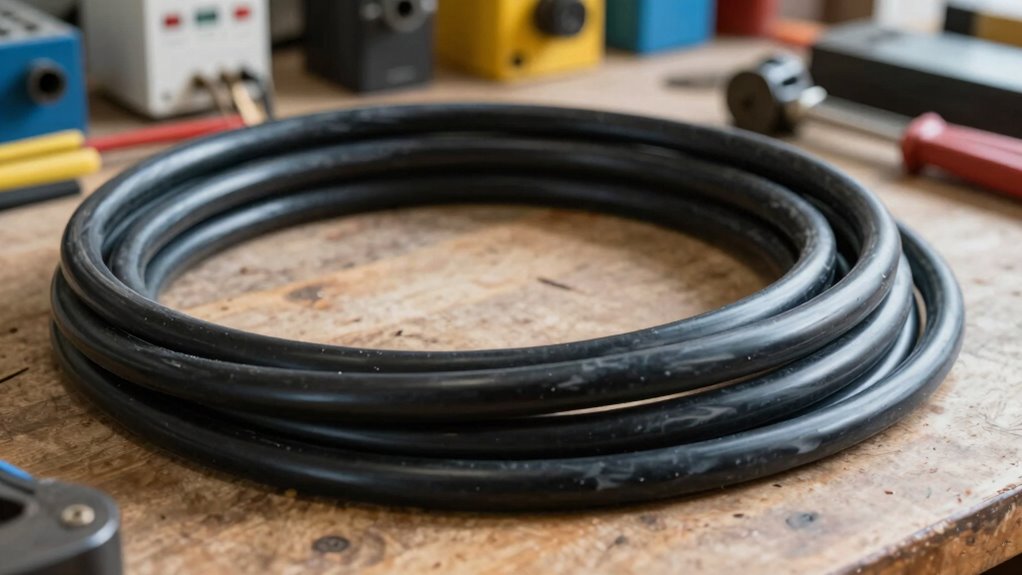
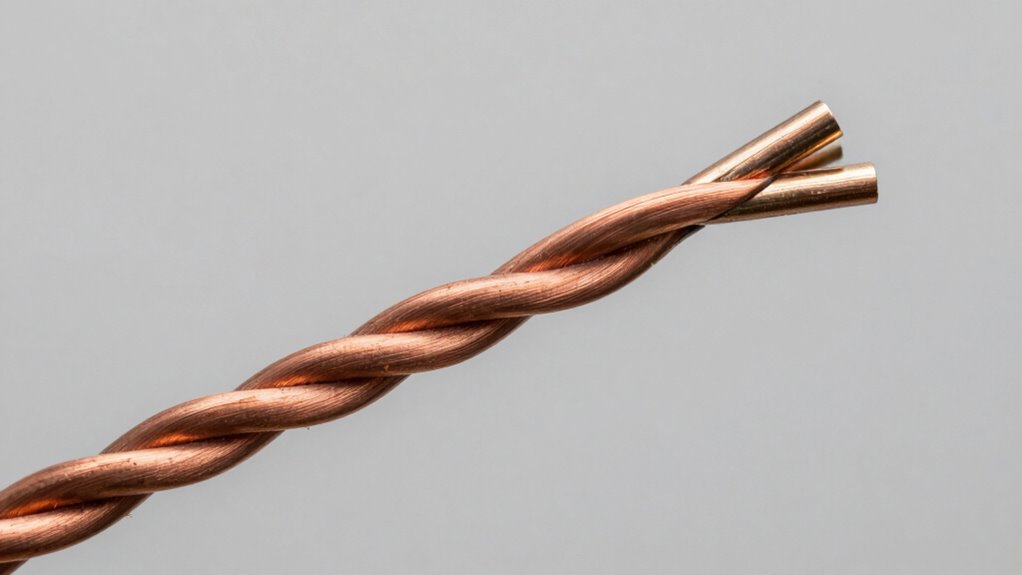
When it comes to connecting devices, cable length can considerably impact performance and reliability. The longer the cable, the higher the chance of voltage drop, which can cause devices to malfunction or operate inefficiently. Understanding this is essential, especially when setting up electrical systems or powering sensitive equipment. One key factor that influences voltage drop is wire gauge. Thinner wires, with a higher gauge number, have greater resistance, leading to more significant voltage losses over longer distances. Conversely, thicker wires with a lower gauge number reduce resistance, helping maintain stable voltage levels. Choosing the right wire gauge for your cable length is necessary to guarantee power efficiency isn’t compromised. When you use a cable that’s too thin for the distance it covers, you risk losing critical voltage before it reaches your device, which can lead to poor performance or even damage over time. **Additionally, selecting the appropriate wire gauge based on the voltage drop calculations can further optimize your **setup. Proper planning and understanding the voltage drop rule are crucial for ensuring your devices operate at peak performance. Power efficiency plays a significant role here. When voltage drops, your device may draw more current to compensate, which increases energy consumption and can stress the power supply. This inefficiency not only wastes electricity but also raises your energy costs. By selecting a cable with an appropriate wire gauge based on your desired length, you can minimize voltage drop, leading to better power efficiency. It’s tempting to go with the shortest cable possible, but that’s not always practical or cost-effective. Instead, you should balance cable length with the right wire gauge to guarantee your system runs smoothly and efficiently. Ignoring this rule can result in inadequate voltage reaching your devices, causing them to underperform or fail prematurely. Furthermore, understanding the resistance inherent in different wire gauges helps prevent unnecessary power loss. Additionally, considering wire resistance is vital to accurately predict voltage drops over specific distances.
As an affiliate, we earn on qualifying purchases.
Frequently Asked Questions
How Do I Calculate Voltage Drop for Different Wire Types?
To calculate voltage drop for different wire types, you need to know the wire gauge and conductor material. Use a voltage drop calculator or formula: Voltage Drop = (2 x Length x Current x Resistance per unit length) / 1000. Adjust for wire gauge, as thicker wires have lower resistance, and consider the conductor material—copper has lower resistance than aluminum. This guarantees you select the right wire for your needs.
What Are the Signs of Excessive Voltage Drop in a Circuit?
A warning sign that your circuit suffers from excessive voltage drop is if devices run dimmer or slower than usual. You might notice increased power consumption or overheating, hinting at cable degradation and reduced power efficiency. Remember, a chain is only as strong as its weakest link; similarly, high voltage drops weaken your system’s performance. Keep an eye on these signs to prevent long-term damage and maintain peak operation.
Can Longer Cables Improve Voltage Stability?
Longer cables generally don’t improve voltage stability; they can actually cause more voltage drop, especially if the cable material has high resistance. To enhance power transmission, choose cables made from high-quality materials like copper or aluminum, which conduct electricity efficiently over longer distances. Keep in mind, increasing cable length without considering these factors can lead to voltage issues, so always balance length with proper material selection for maximum stability.
How Does Cable Insulation Affect Voltage Drop?
Cable insulation directly affects voltage drop because durable insulation with high temperature resistance helps prevent energy loss along the wire. If the insulation wears out or melts, resistance increases, causing more voltage to drop before reaching your device. Choose cables with insulation that’s resistant to heat and wear to guarantee minimal voltage loss and consistent performance. Proper insulation not only protects the wire but also maintains voltage stability over its lifespan.
Are There Safety Concerns With High Voltage Drop?
Yes, high voltage drops can cause safety setbacks and power problems. Electrical safety becomes compromised when wires weaken, risking overheating or fires. Power efficiency suffers, leading to wasted energy and increased costs. You should prioritize proper cable sizing and installation to minimize voltage drop, ensuring safe and efficient operation. Ignoring these issues can result in dangerous malfunctions, so always adhere to electrical safety standards for maximum performance and protection.
cable length voltage drop calculator
As an affiliate, we earn on qualifying purchases.
As an affiliate, we earn on qualifying purchases.
Conclusion
Remember, just like you wouldn’t ignore a knight’s warning in a medieval tale, don’t overlook cable length when wiring your home. The voltage drop rule is your trusty steed—ignoring it could leave your devices underpowered or damaged. So, measure twice, cut once, and keep your setup efficient. It’s no fancy spell, just good sense from the good old days of craftsmanship. Stay wise, stay safe, and don’t let voltage drop catch you unprepared!
As an affiliate, we earn on qualifying purchases.
electrical wire gauge for long distances
As an affiliate, we earn on qualifying purchases.
As an affiliate, we earn on qualifying purchases.
Fall Picks
fall essentials
As an affiliate, we earn on qualifying purchases.