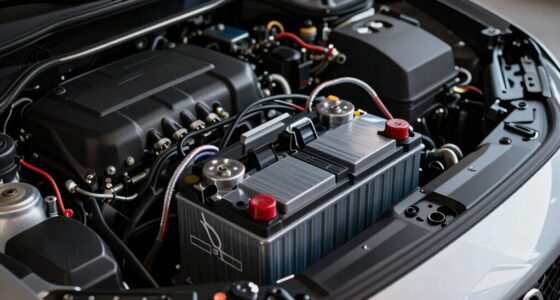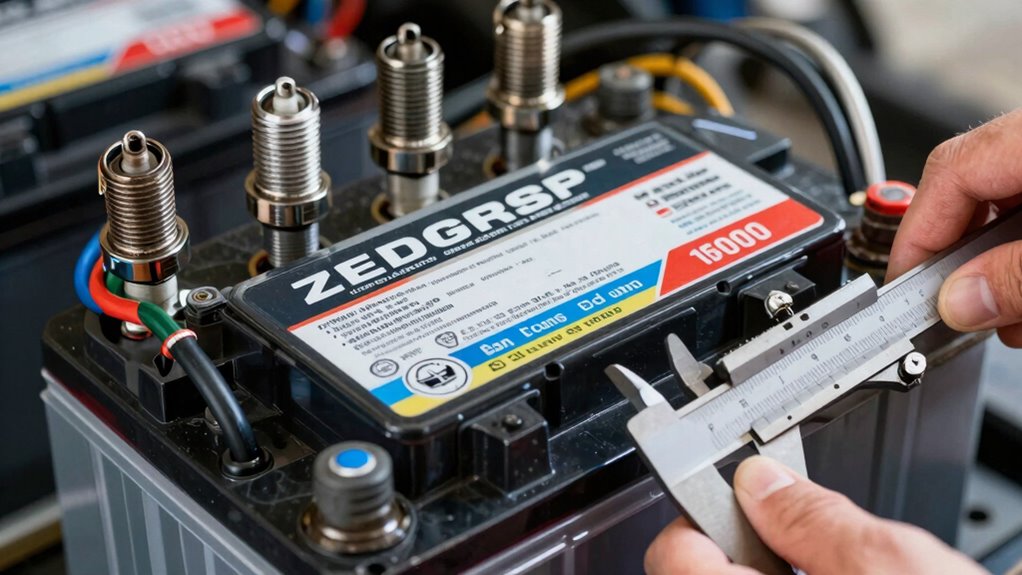

To choose the right battery size, start by checking your device or vehicle’s recommended group number, which indicates its physical size and capacity needs. Confirm the battery fits securely and matches the terminal configuration. Consider the capacity to meet power demands and verify compatibility with your charging system to prevent early failures. Balancing performance, longevity, and cost is key. Keep exploring to discover how to make the best choice for your needs.

Get business pricing on garage and car supplies
- Business-only prices and quantity discounts
- Tax-exempt purchasing
- Multiple users, one account, clear invoices
Key Takeaways
- Match the battery’s group number to your device or vehicle’s specifications for proper fit and performance.
- Check physical dimensions and terminal configurations to ensure compatibility with your application.
- Consider the capacity needed to meet your power demands without overloading or underpowering the battery.
- Verify that the battery’s charging requirements align with your charger’s specifications for longevity.
- Balance cost, performance, and longevity by selecting a battery that fits your application and budget.
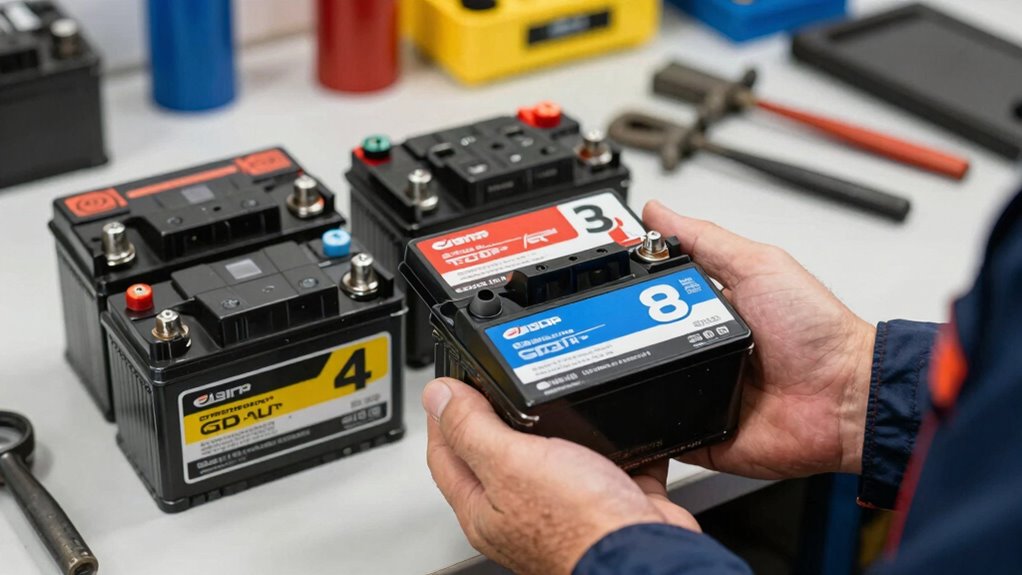
Selecting the right battery size is fundamental to guarantee your device or vehicle performs reliably without unnecessary weight or cost. When choosing a battery, you want to verify it fits perfectly and meets your power needs. One of the key factors to evaluate is the battery’s group number, which helps identify the size and specifications suitable for your application. If you pick a battery that’s too small, it might not deliver enough power, leading to frequent failures or reduced performance. Conversely, choosing a larger battery than necessary adds unnecessary weight and expense, which can impact fuel efficiency or portability.
Battery lifespan is another essential aspect to keep in mind. A correctly sized battery tends to last longer because it operates within its ideal load range, reducing stress and wear. If you select a battery that’s too powerful for your needs, it might not necessarily last longer; instead, it could suffer from faster degradation due to overcharging or excessive cycling. On the other hand, a smaller or underpowered battery will strain to keep up, accelerating its decline and requiring more frequent replacements. Proper sizing guarantees your battery remains reliable over its lifespan, saving you money and inconvenience in the long run. Additionally, understanding battery capacity helps you determine how much power your device or vehicle requires to operate efficiently over time.
Charging compatibility is equally important when picking the right size. Different batteries have specific charging requirements, and using an incompatible charger can damage the battery or shorten its lifespan. Making sure your chosen battery is compatible with your charging system is key. For example, some batteries need a higher amperage or a particular charging profile, especially advanced or deep-cycle types. When you select a battery that matches your charger’s specifications, you prevent issues like improper charging, reduced efficiency, or early failure. It also simplifies maintenance because you won’t have to hunt for specialized chargers or worry about overcharging.
In addition to these factors, you should evaluate the physical dimensions and terminal configurations of the battery to confirm it fits securely in your device or vehicle. Always check the manufacturer’s recommended group number—such as Group 24, 35, or 51—to find the perfect match. This number encapsulates the size, terminal placement, and overall capacity, making it a quick reference. Understanding the group number as a crucial concept helps you make more informed decisions when selecting a battery. Additionally, becoming familiar with battery standards can help you better compare options and ensure compatibility across multiple brands and models. When you understand how to match the group number with your needs, you make smarter choices that balance performance, longevity, and cost. Ultimately, selecting the right battery size isn’t just about fitting a slot; it’s about guaranteeing reliable performance, enhancing lifespan, and maintaining charging compatibility for smooth operation.
As an affiliate, we earn on qualifying purchases.
Frequently Asked Questions
How Often Should I Replace My Vehicle Battery?
You should replace your vehicle battery every 3 to 5 years, as part of regular maintenance. Battery lifespan varies depending on climate, driving habits, and maintenance, so pay attention to signs like slow engine starts or electrical issues. Regular inspections can help determine the best replacement frequency, preventing unexpected breakdowns. Don’t forget, proactive replacement ensures your vehicle stays reliable, especially before extreme weather conditions that can accelerate battery wear.
Can I Upgrade to a Larger Battery for Better Performance?
Think of your vehicle’s battery as a power plant—upgrading to a larger one can boost performance, but only if it’s suitable. You can upgrade to a bigger battery for better performance, but check the upgrade compatibility first. Keep in mind, a larger battery may impact your battery lifespan and fitment. Always consult your vehicle’s specifications to make sure the new battery fits and functions properly, avoiding potential electrical issues.
Do Battery Sizes Affect Fuel Efficiency?
Yes, battery sizes can affect fuel efficiency. Heavier batteries increase your vehicle’s overall weight, which can lead to higher fuel consumption. Choosing a battery that matches your car’s size compatibility guarantees maximum performance without unnecessary weight. A properly sized battery reduces strain on your engine, helping improve fuel economy. So, always select a battery that fits your vehicle’s specifications to balance power needs with efficiency.
Are There Eco-Friendly Battery Options Available?
Yes, eco-friendly battery options are available. You can look for batteries made with eco-friendly materials and supported by recycling programs, which help reduce environmental impact. These batteries use sustainable components, and recycling initiatives guarantee proper disposal, preventing hazardous waste. Choosing such options helps protect the environment while maintaining reliable power. Always check for certifications or labels indicating eco-friendliness to make a responsible, sustainable choice.
How Do Climate Conditions Influence Battery Size Selection?
Climate conditions dramatically influence your battery choice, acting like a weather wizard. Temperature impact is vital; extreme cold can reduce battery capacity, while excessive heat accelerates wear. For climate adaptation, select a size that compensates for these fluctuations—larger batteries often handle temperature swings better. Ensuring your battery matches your environment helps maintain reliable performance and longevity, so don’t overlook climate considerations when choosing your ideal size.
As an affiliate, we earn on qualifying purchases.
Conclusion
Picking the right battery size is like finding the perfect key for a lock—when it fits just right, everything runs smoothly. By understanding your vehicle’s needs and matching the group number accordingly, you guarantee reliable performance and peace of mind. Remember, a well-chosen battery is the backbone of your car’s heartbeat, keeping it alive and vibrant. So, take your time, do your homework, and let your vehicle’s energy flow seamlessly like a well-conducted symphony.
vehicle battery terminal connectors
As an affiliate, we earn on qualifying purchases.
As an affiliate, we earn on qualifying purchases.
battery charger compatible with group 35
As an affiliate, we earn on qualifying purchases.
As an affiliate, we earn on qualifying purchases.
Halloween Picks
halloween
As an affiliate, we earn on qualifying purchases.