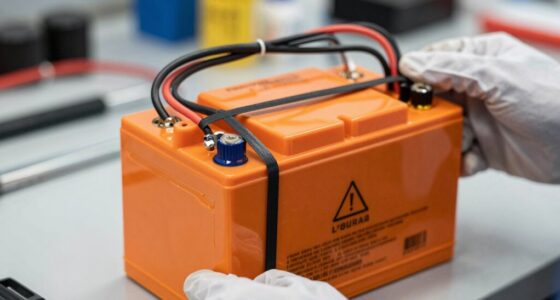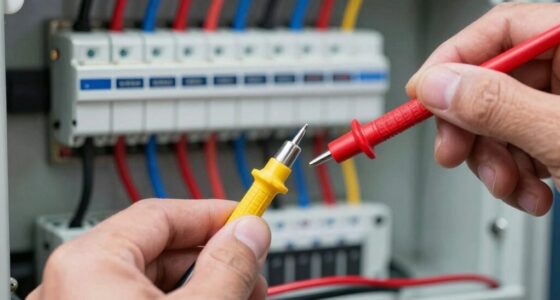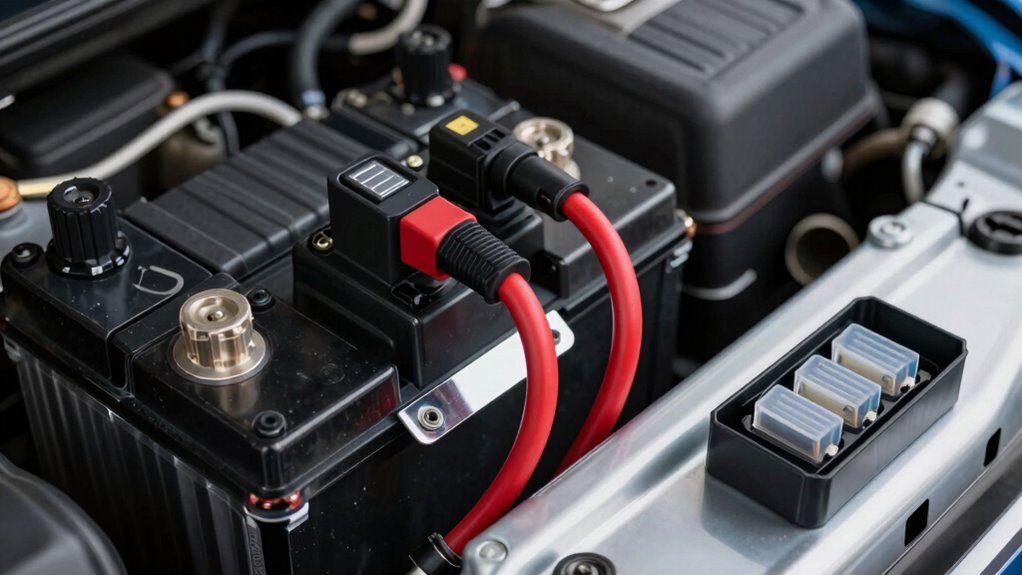
You should mount your battery disconnect switch near the driver’s seat or control panel for easy access, on a sturdy, dry surface that can withstand vibrations and stress. Secure it firmly to prevent accidental disconnection. For safety, fuse the wiring close to the battery using the appropriate rating, and guarantee all connections are tight and insulated. Following proper mounting and fusing practices can boost safety and system reliability—keep going to learn detailed tips for ideal setup.

Get business pricing on garage and car supplies
- Business-only prices and quantity discounts
- Tax-exempt purchasing
- Multiple users, one account, clear invoices
Key Takeaways
- Mount the disconnect switch near the battery or control panel for easy access and safety.
- Ensure the mounting surface is sturdy, dry, and can withstand vibrations and stress.
- Use proper hardware to securely fasten the switch, preventing accidental disconnection.
- Connect using insulated, appropriately rated cables, and confirm all wiring is tight and grounded.
- Fuse the circuit close to the battery to protect against overcurrent and ensure system safety.
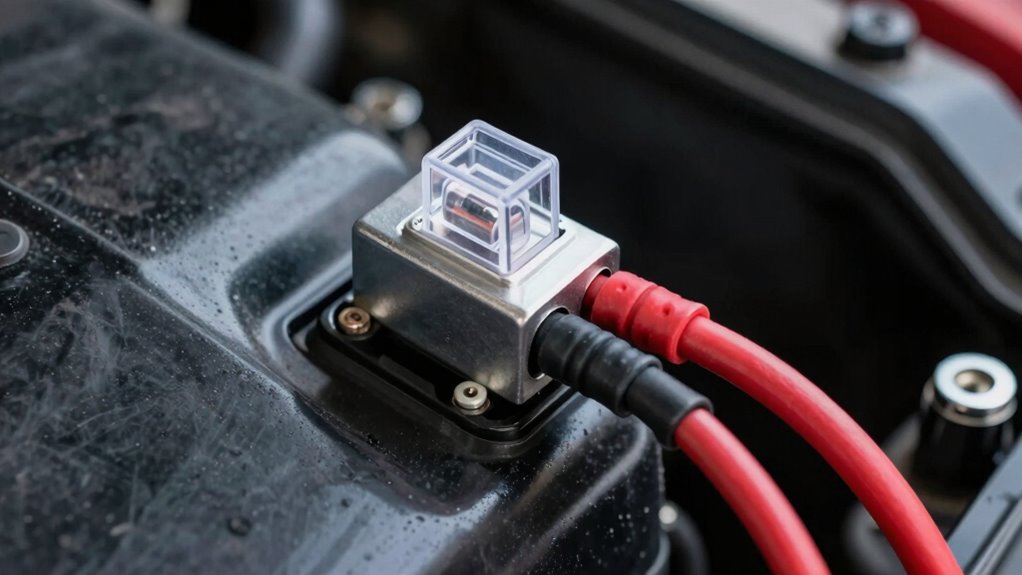
When considering where to mount the switch, think about convenience and safety first. If you’re working on a vehicle or boat, a location near the driver’s seat or control panel often proves ideal. For stationary equipment, mounting it inside a control box or on a panel in a dry, protected area works best. Keep in mind that the switch should be mounted securely to prevent vibrations or accidental knocks, which could cause unintentional disconnection or damage. Additionally, confirm the mounting surface can support the weight and stress that might occur during use or in rough conditions.
Switch installation also involves wiring the switch correctly, confirming all connections are tight and insulated to prevent accidental shorts. Use appropriately rated cables and connectors, and double-check your grounding points. Proper wiring is essential for battery safety, as loose or corroded connections can lead to increased resistance, overheating, or electrical failures. When installing, always turn off the battery power to avoid sparks or short circuits, and follow the manufacturer’s instructions for your specific switch model. Ensuring proper electrical connections is vital for maintaining system safety and performance. It’s also wise to regularly inspect your wiring and connections to catch potential issues early. Incorporating proper installation practices can significantly extend the lifespan of your electrical system and prevent future problems. Regular maintenance and inspection of these components are crucial for electrical reliability, especially in demanding environments. Properly secured mounting can also help reduce the risk of damage from vibrations or movement over time.
battery disconnect switch with mounting hardware
As an affiliate, we earn on qualifying purchases.
As an affiliate, we earn on qualifying purchases.
Frequently Asked Questions
Are Battery Disconnect Switches Legal in All Vehicle Types?
Battery disconnect switches are generally legal for many vehicle types, but you should always check local regulations first. They promote battery safety by preventing electrical issues and fires. Compatibility varies depending on your vehicle, so verify the switch you choose is suitable for your specific model. Always follow manufacturer instructions and legal guidelines to ensure safe and compliant installation, especially in recreational, marine, or commercial vehicles.
How Often Should a Battery Disconnect Switch Be Inspected?
You should inspect your battery disconnect switch at least once every three to six months. For example, a boat owner found corrosion buildup after six months, which compromised the switch’s function. Regular inspections help extend battery lifespan and prevent corrosion. During checks, look for corrosion, loose connections, or damage. Proper maintenance guarantees your switch works reliably, keeps your battery safe, and maximizes its lifespan.
Can a Disconnect Switch Prevent Battery Theft?
A disconnect switch can enhance battery security and theft prevention by allowing you to quickly cut power when you’re away. When activated, it makes it harder for thieves to access or steal your battery, adding an extra layer of protection. However, it shouldn’t be solely relied on for theft prevention. Combining a disconnect switch with other security measures, like alarms or locks, provides more thorough theft deterrence.
Do Disconnect Switches Work With All Battery Types?
Yes, disconnect switches work with most battery types, but you should check for compatibility first. Focus on battery compatibility to guarantee the switch functions properly without damaging your battery. Additionally, choose a switch with good switch durability to withstand frequent use and harsh conditions. Always verify the switch’s specifications against your battery’s type and capacity to ensure safe, reliable operation.
What Safety Precautions Are Needed When Installing a Disconnect Switch?
Imagine you’re installing a disconnect switch in your boat’s electrical system. For installation safety, always wear insulated gloves and turn off the main power before starting. Check voltage compatibility to prevent damage, and verify wiring is secure and insulated. Use proper fuses to protect against overloads. By following these precautions, you minimize risks of electric shock or fire, keeping your setup safe and reliable during installation.
marine battery disconnect switch
As an affiliate, we earn on qualifying purchases.
As an affiliate, we earn on qualifying purchases.
Conclusion
By carefully selecting the right mounting location and properly fusing your battery disconnect switch, you guarantee both safety and longevity for your electrical system. While some might worry about complexity, taking these steps actually simplifies troubleshooting and maintenance down the line. Investing a little extra effort now prevents costly damage and keeps your system running smoothly. Remember, a well-installed disconnect switch isn’t just about safety—it’s about peace of mind for the long haul.
As an affiliate, we earn on qualifying purchases.
As an affiliate, we earn on qualifying purchases.
Halloween Picks
halloween
As an affiliate, we earn on qualifying purchases.