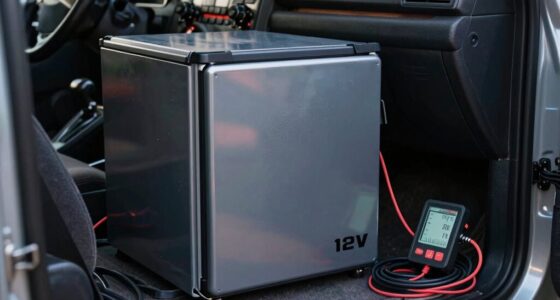
To prevent damage to your LiFePO4 batteries in vehicles, you need to keep the temperature within the ideal range. Too hot or cold can cause irreversible harm, reduce capacity, and shorten lifespan. Use effective cooling systems, monitor internal temperatures with sensors, and avoid extreme temperatures during charging or discharging. Proper thermal management ensures safe, reliable performance and maximizes battery life. Continuing will help you understand how to implement these essential temperature rules effectively.

Get garage and car supplies delivered free — and shop member deals
- Fast, free delivery on millions of items
- Access to Prime Big Deal Days deals on October 6–7
- Prime Video, Amazon Music and more included
Key Takeaways
- Maintain optimal temperature ranges to prevent irreversible damage and ensure longevity of LiFePO4 batteries in vehicles.
- Use effective cooling systems, like liquid cooling or air circulation, to manage heat during high load or rapid charging.
- Continuously monitor internal battery temperatures with sensors to trigger cooling and prevent overheating.
- Avoid exposing batteries to extreme cold or heat, which can impair performance and cause capacity loss.
- Proper thermal regulation enhances safety, reliability, and extends the lifespan of LiFePO4 batteries in vehicle applications.

Have you contemplated how LiFePO4 batteries are transforming vehicle energy storage? These batteries are gaining popularity because they offer impressive battery longevity, making them a reliable choice for electric vehicles and other transportation modes. One key factor behind their durability is effective thermal management. When you keep the battery within an ideal temperature range, you prevent damage that could shorten its lifespan. Excessive heat accelerates chemical reactions inside the battery, leading to faster degradation, while cold temperatures can impair performance and reduce capacity. Proper thermal regulation ensures the battery operates smoothly, maintaining its integrity over many charge and discharge cycles.
Effective thermal management extends LiFePO4 battery life and maintains optimal performance in electric vehicles.
In vehicles, thermal management isn’t just about comfort; it’s essential for preserving the battery’s health. When you drive, the battery generates heat, especially during rapid charging or high load conditions. If this heat isn’t properly managed, it can cause hotspots that damage the internal structure of the battery cells. Advanced cooling systems, such as liquid cooling or air circulation, are integrated into many EV designs to keep temperatures in check. By controlling heat effectively, these systems extend the battery’s lifespan and improve overall safety. Additionally, understanding thermal behavior helps in designing more efficient cooling solutions that adapt to different operating conditions. Recognizing the impact of temperature on battery chemistry is crucial for optimizing cooling strategies. Monitoring temperature variations is also vital for early detection of potential issues, allowing for preventative maintenance.
Remember, a well-maintained thermal environment isn’t just about preventing immediate failures; it’s about ensuring your battery remains functional and efficient for years to come. Incorporating temperature management techniques can further enhance thermal regulation and safeguard your battery’s longevity. Moreover, advances in thermal sensors have made it possible to achieve more precise control over battery temperatures, reducing the risk of damage even further.
Another aspect to think about is the importance of monitoring temperature levels continuously. Modern LiFePO4 batteries come equipped with sensors that track internal temperatures in real time. This technology allows the vehicle’s control system to adjust charging rates or trigger cooling mechanisms if temperatures rise too high. When you understand and respect these temperature thresholds, you’re actively contributing to the longevity of your battery. Avoiding extreme temperatures during charging and discharging processes helps minimize stress on the cells, keeping the chemistry stable and preventing irreversible damage. Implementing temperature sensors is a key step in advanced thermal management systems, enhancing safety and efficiency.
Ultimately, the temperature rule that prevents damage to LiFePO4 batteries is straightforward but crucial. Maintaining proper thermal management isn’t just a technical detail; it’s a critical factor in maximizing battery longevity. By ensuring your vehicle’s cooling systems operate correctly and you avoid exposing the battery to extreme heat or cold, you help protect your investment. In doing so, you ensure your vehicle remains reliable, safe, and efficient for many years, harnessing the full potential of LiFePO4 technology without compromising its lifespan.
LiFePO4 battery thermal management system
As an affiliate, we earn on qualifying purchases.
As an affiliate, we earn on qualifying purchases.
Frequently Asked Questions
How Does Temperature Affect the Lifespan of Lifepo4 Batteries?
You need to understand that temperature greatly impacts the lifespan of LiFePO4 batteries due to their battery chemistry. Excessive heat accelerates chemical reactions, causing faster wear, while cold temperatures reduce performance temporarily. Proper thermal management keeps the battery within a suitable temperature range, preventing damage and prolonging its life. Maintaining this balance ensures your battery remains reliable and efficient over time.
What Is the Ideal Temperature Range for Charging Lifepo4 in Vehicles?
You should aim to charge your LiFePO4 batteries within a temperature range of 0°C to 45°C. Proper thermal management is essential to maintain ideal battery chemistry and prevent damage. When charging outside this range, the risk of capacity loss and reduced lifespan increases. Always monitor ambient and battery temperature during charging to guarantee safety and longevity, especially in vehicle applications where conditions can vary quickly.
Can Lifepo4 Batteries Operate Effectively in Extreme Cold or Heat?
Imagine your battery as a tiny engine, battling against icy winds or blazing heat. LiFePO4 batteries can struggle in extreme cold or heat, but with proper battery thermal management, cold weather performance improves substantially. In freezing temperatures, they might slow down or lose capacity, yet effective thermal regulation keeps them running smoothly. Conversely, in scorching heat, proper cooling prevents overheating, ensuring your battery operates reliably in all weather conditions.
Are There Specific Insulation Methods to Protect Batteries From Temperature Extremes?
Yes, you can use thermal insulation and thermal management methods to protect your batteries from temperature extremes. Insulating materials like foam or cork wrap around the battery, reducing heat transfer. Additionally, active thermal management systems regulate temperature by heating or cooling the battery as needed. This combination helps maintain ideal operating temperatures, preventing damage and ensuring your LiFePO4 batteries perform reliably in both cold and hot environments.
How Can I Monitor Battery Temperature During Vehicle Operation?
You can monitor battery temperature during vehicle operation by installing thermal sensors directly on the LiFePO4 cells or battery pack. These sensors send real-time data to a monitoring system, allowing you to keep track of temperature changes. If temperatures rise too high, your vehicle’s cooling system can activate automatically to prevent damage. Regularly checking these readings helps guarantee your battery remains within safe operational limits.
LiFePO4 battery temperature sensor
As an affiliate, we earn on qualifying purchases.
As an affiliate, we earn on qualifying purchases.
Conclusion
As you navigate the road ahead, remember that LiFePO4 batteries thrive within a specific temperature range, like a delicate flower in perfect sunlight. When the chill bites or the heat blazes, these batteries can weaken or crack. Keep an eye on the thermometer—think of it as your vehicle’s heartbeat—and make sure it stays within the safe zone. With this simple rule, you safeguard your energy source, keeping your journey smooth and your battery alive.
As an affiliate, we earn on qualifying purchases.
As an affiliate, we earn on qualifying purchases.
Fall Picks
fall essentials
As an affiliate, we earn on qualifying purchases.