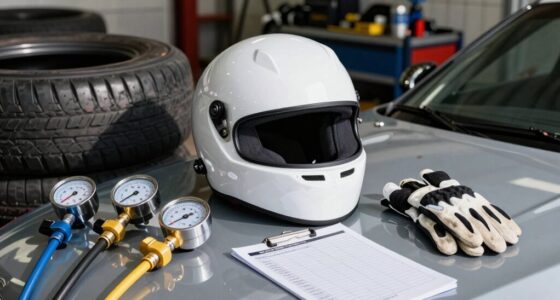
When participating in a track day, wearing proper safety gear is vital for protection and confidence. You’ll want a certified helmet that fits snugly, with features like good ventilation for comfort. Fire-resistant suits made of Nomex, along with gloves and socks, help protect you from heat hazards. Good fit and quality are key to safety and performance. Keep exploring to discover essential tips for choosing and wearing the best gear for your track day experience.
Key Takeaways
- Essential safety gear includes helmets, fire-resistant suits, gloves, and shoes designed to meet safety standards like Snell or FIA.
- Proper fit of helmets and suits enhances safety, comfort, and performance during track sessions.
- Full-face helmets provide comprehensive protection and should be snug without restricting movement.
- Fire-resistant suits made from Nomex or similar materials protect against heat and burns, ensuring driver safety.
- Correctly fitting safety gear prevents hazards, reduces fatigue, and improves overall safety during track days.
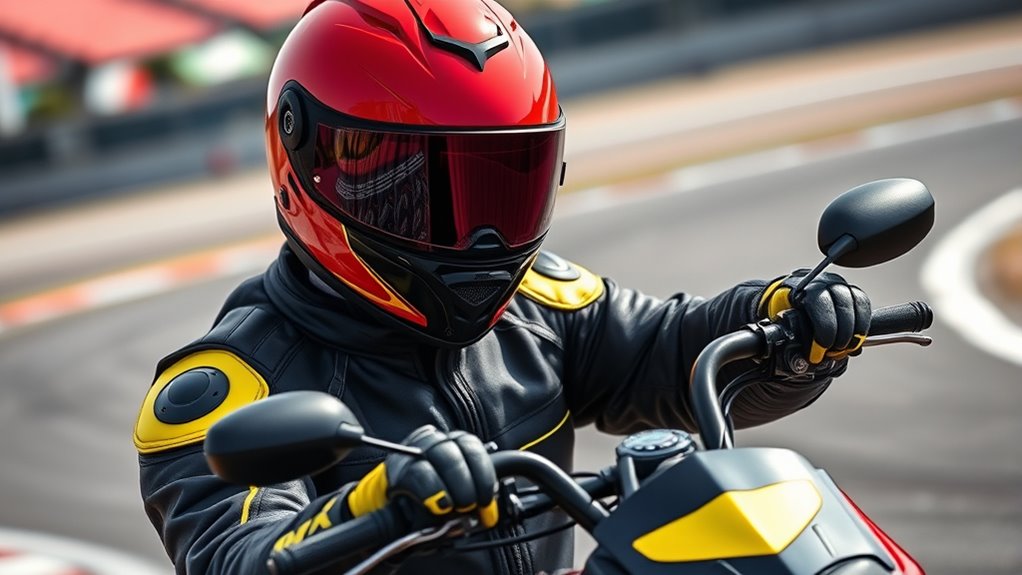
Are you prepared to hit the track safely? Before you start racing, it’s essential to understand the safety gear that keeps you protected in high-stakes environments. One of the most critical pieces is your helmet. Not all helmets are created equal; there are various helmet types designed for different levels of protection and comfort. For track days, you’ll want a helmet that meets strict safety standards like Snell or FIA certifications. Full-face helmets are the most common because they offer comprehensive protection, covering your head and face, which is vital in case of a crash. Some helmets feature advanced ventilation systems to keep you cool during intense laps, while others are designed with lightweight materials to reduce fatigue. Choosing the right helmet depends on your driving style, the type of car you’re racing, and personal comfort preferences. Remember, a good helmet doesn’t just fit well — it also stays securely on your head during high-speed maneuvers. Additionally, understanding the impact of helmet fit can significantly enhance safety and comfort on the track. Proper fit is crucial because even the best helmet cannot provide optimal protection if it does not sit correctly on your head. Ensuring your helmet is properly fitted involves checking its snugness and positioning, which can be influenced by the helmet size and shape. Using proper helmet fit techniques can prevent unnecessary movement and improve safety during an accident. Alongside your helmet, fire resistant suits are crucial safety gear on the track. These suits are made from specialized materials like Nomex, which can withstand extreme heat and prevent flames from reaching your skin in the event of a fire. When you’re racing, a fire-resistant suit acts as your first line of defense against burns and injuries, giving you precious seconds to escape if an accident occurs. These suits are designed to be both protective and breathable, ensuring you stay comfortable during long sessions. They typically come with additional features like reinforced seams, fire-resistant gloves, and socks, providing full-body coverage. It’s important to select a suit that fits properly; too loose can be a hazard, and too tight can restrict movement. Many suits also include moisture-wicking linings to help manage sweat and keep you dry, which enhances comfort and focus. Wearing a fire-resistant suit isn’t just about compliance; it’s about prioritizing your safety and peace of mind when you’re pushing your vehicle to the limit. Choosing properly fitting safety gear can make a significant difference in your overall safety and performance on the track.
Frequently Asked Questions
How Often Should Safety Gear Be Replaced After Use?
You should replace your safety gear based on gear maintenance and replacement intervals to guarantee maximum protection. Helmets typically need replacement every 5 years or after a significant impact, while gloves and suits should be inspected regularly and replaced if damaged or worn out. Always follow manufacturer recommendations for specific gear. Regularly checking your gear helps maintain safety and ensures it performs correctly during every track day.
Are There Different Safety Gear Requirements for Beginners Versus Experienced Drivers?
Yes, as a beginner, you should prioritize gear material and safety certifications more strictly. Beginners often use gear made from basic materials, but upgrading to high-quality, certified gear guarantees better protection. Experienced drivers might have specialized gear tailored to their needs. Always check safety certifications to confirm your gear meets industry standards, regardless of experience level. Proper gear material and certifications keep you safe and compliant during track days.
Can I Rent Safety Gear Instead of Buying My Own?
Yes, you can rent safety gear instead of buying your own. Rental safety gear is available at most track day events, allowing you to try different gear types and sizes without a big investment. Just make sure to check the gear size fit when renting, as proper fit is essential for safety and comfort. Renting is a convenient option, especially if you’re just starting out or attending infrequent track days.
How Do I Choose the Right Size Safety Gear?
To choose the right size safety gear, you need to prioritize size fit and gear comfort. Imagine slipping into a glove that’s too tight or too loose—uncomfortable and unsafe. Measure your head, chest, and waist carefully, then compare your measurements to the gear sizing chart. Always try on gear before the event if possible, ensuring it fits snugly without restricting movement or causing discomfort, for supreme safety and confidence on track day.
Is There Safety Gear Recommended for Specific Weather Conditions?
Yes, you should use weather-specific gear for different conditions. For hot weather, opt for breathable, lightweight seasonal safety equipment to stay cool and avoid overheating. In rainy or cold conditions, gear with waterproof features and thermal insulation keeps you dry and warm. Always check the weather forecast before your track day and select the appropriate seasonal safety equipment to guarantee safety and comfort in any conditions.
Conclusion
Ultimately, mastering your track day gear makes your drives safer and more satisfying. By balancing breathable helmets, sturdy suits, and snug gloves, you boost your bravery and bolster your barrier against bumps. Remember, proper protection prolongs your passion and prevents peril. Prepare prudently, gear up gracefully, and enjoy every exhilarating event with confidence. With the right safety set, you’ll turn cautious corners into confident cruises, conquering the course with courage and control.