When driving on a wet track, you must adjust your technique to stay safe and maintain control. Focus on smooth steering and brakes, avoid sudden moves, and reduce your speed in heavy rain or standing water. Choose the best racing line to maximize grip and minimize hydroplaning risks by avoiding deep water. Keep an eye on your vehicle’s feedback, and remember that proper tire maintenance and line choice are key. Continue exploring these fundamentals to master wet driving.

Get business pricing on garage and car supplies
- Business-only prices and quantity discounts
- Tax-exempt purchasing
- Multiple users, one account, clear invoices
Key Takeaways
- Maintain smooth, gradual steering and braking to prevent loss of traction on wet surfaces.
- Choose optimal racing lines that avoid standing water and maximize tire grip.
- Ensure proper tire pressure and tread depth for effective water evacuation and reduced hydroplaning risk.
- Reduce speed significantly in heavy rain or puddles to enhance control and safety.
- Continuously monitor vehicle feedback for signs of hydroplaning and adjust inputs accordingly.
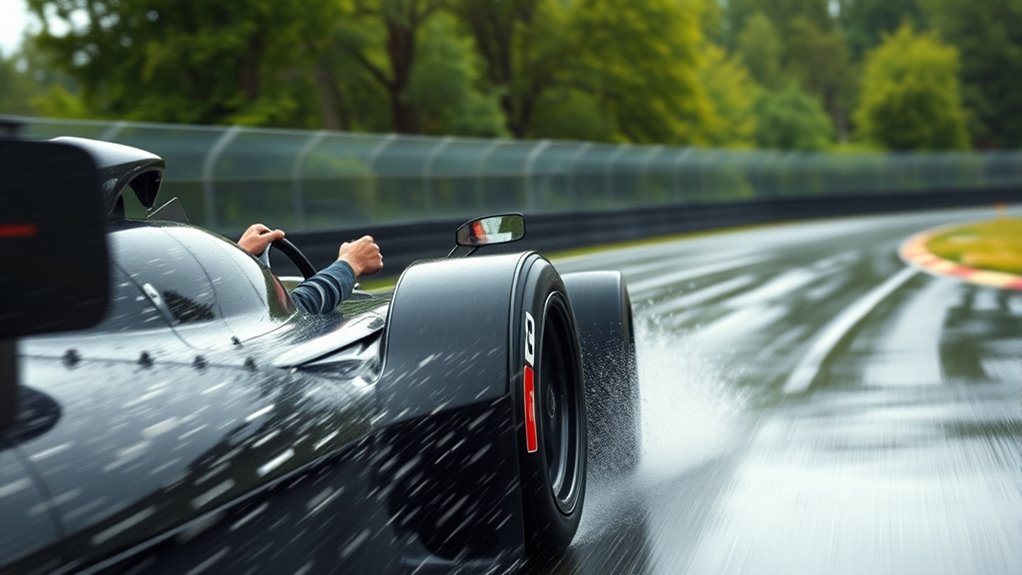
Driving on a wet track presents unique challenges that require focus and proper technique. The slick surface markedly increases hydroplaning risks, where a layer of water causes your tires to lose contact with the pavement, leading to a dangerous loss of control. To stay safe, you need to understand how to minimize these risks by employing effective tire grip techniques. Your primary goal is to maintain maximum contact between your tires and the road, which means adjusting your driving style to accommodate the reduced traction.
Driving on wet tracks requires smooth control to prevent hydroplaning and maintain tire grip.
One of the most important tire grip techniques is to avoid sudden movements. Sharp steering inputs or abrupt braking can upset your balance and trigger hydroplaning. Instead, aim for smooth, progressive actions. When approaching a corner or braking zone, ease into your steering and brake gently, allowing your tires to maintain traction. This approach helps prevent water from building up in front of the tires, which is the initial step toward hydroplaning. Keep your speed within safe limits, especially in heavy rain or when the track has standing water. Slower speeds give your tires a better chance to cut through water and maintain grip.
Maintaining proper tire pressure is another essential aspect of tire grip techniques. Under-inflated tires can increase hydroplaning risks because they have a larger contact patch but less effective water dispersion. Over-inflated tires, on the other hand, may reduce grip by creating a smaller contact patch. Check your tire pressure regularly and ensure it matches the manufacturer’s recommendations for wet conditions. Additionally, using tires with good tread depth and pattern designed for wet surfaces enhances water evacuation, reducing hydroplaning chances and improving overall grip. Proper tire maintenance plays a vital role in optimizing grip and safety.
Your positioning on the track also plays a part in maintaining traction. By choosing the most suitable racing line—typically the driest part of the track—you can minimize water accumulation under your tires. Avoid riding in the deepest water puddles, as they are more likely to cause hydroplaning. As you navigate curves, focus on your line to keep your tires on the most grip-friendly sections of the track.
Finally, stay alert to your vehicle’s feedback. If you feel the steering becoming light or notice a loss of responsiveness, it’s a sign to back off and reassess your technique. Trust your instincts and adjust your speed and inputs accordingly. Practicing these tire grip techniques and understanding hydroplaning risks will help you maintain control and confidence, even on the most challenging wet tracks. Being aware of tire-road contact and how it influences grip can greatly improve your safety and performance.
As an affiliate, we earn on qualifying purchases.
Frequently Asked Questions
How Do Tire Choices Affect Wet Track Performance?
Your tire choices greatly impact wet track performance. Opt for tires with a softer tire compound, as they provide better grip on wet surfaces. Additionally, a tread pattern with deeper grooves helps channel water away, reducing hydroplaning risk. By selecting tires with the right compound and tread pattern, you improve traction, control, and safety, allowing you to drive confidently even in challenging wet conditions.
What Are the Best Braking Techniques on Wet Surfaces?
When braking on wet surfaces, don’t just slam the pedal like you’re trying to start a car wash. Use ABS braking to prevent wheel lock-up, giving you control. Master threshold braking by gradually increasing pressure until just before lock-up, then ease off slightly. This combo keeps you stable, reduces stopping distances, and keeps you from doing an unintended aquatic ballet. Remember, smooth is fast—especially when the track’s wetter than your humor.
How Should Steering Inputs Be Adjusted in Wet Conditions?
In wet conditions, you should reduce steering sensitivity to prevent hydroplaning risks and maintain control. Make gentle, smooth steering inputs, avoiding sudden movements that could cause the tires to lose grip. Keep your hands steady on the wheel and steer gradually into corners. By adjusting your steering inputs, you enhance safety and stability, especially when the track is wet and the risk of hydroplaning is higher.
What Safety Equipment Is Essential for Wet Track Driving?
You need essential safety gear for wet track driving, like rain gear to stay dry and maintain visibility, and a helmet with proper safety features to protect your head. Wearing waterproof clothing prevents distractions caused by wet conditions, while a well-fitted helmet guarantees safety in case of an accident. Always double-check that your helmet meets safety standards, and don’t forget to wear rain gear to stay comfortable and focused on the track.
How Do Weather Changes Impact Track Driving Strategies?
Weather changes, especially rain impact and visibility challenges, markedly influence your track driving strategy. When rain begins, you need to reduce speed and increase following distances to prevent hydroplaning. Visibility challenges may force you to adjust your lines and brake earlier. Always stay alert for changing conditions, as wet surfaces can be unpredictable. Adapting your approach ensures safety and maintains control, turning weather obstacles into manageable aspects of your driving technique.
hydroplaning prevention tire products
As an affiliate, we earn on qualifying purchases.
As an affiliate, we earn on qualifying purchases.
Conclusion
Mastering wet track driving isn’t just about skill; it’s about respecting the physics of wet surfaces. Many believe slower speeds always mean safer, but truthfully, understanding how your car reacts in the rain is key. By studying traction and adjusting your approach, you can turn challenging conditions into opportunities to improve. Remember, trusting your instincts combined with knowledge makes you a safer, more confident driver—proving that preparation truly drives success on any wet track.
As an affiliate, we earn on qualifying purchases.
As an affiliate, we earn on qualifying purchases.
Fall Picks
fall essentials
As an affiliate, we earn on qualifying purchases.