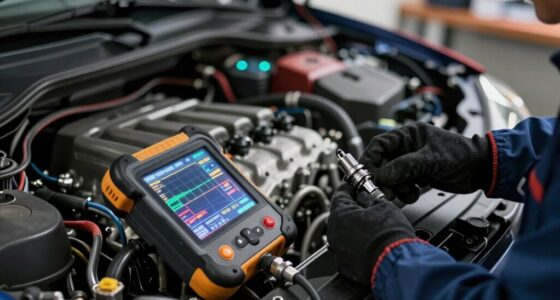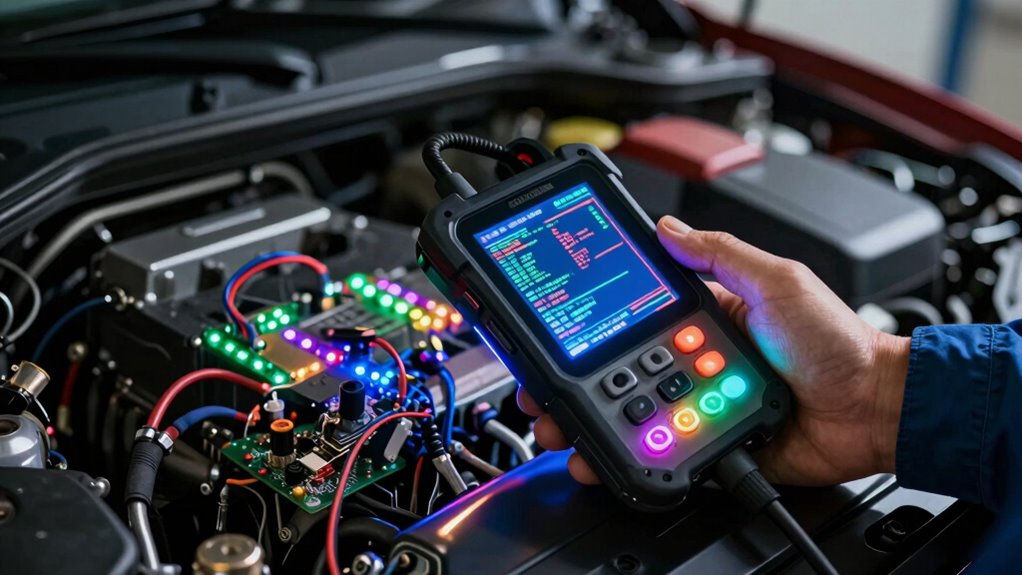

You should clear trouble codes only after fixing the problem and ensuring the issue has been resolved properly, such as after completing maintenance or repairs. Avoid clearing codes prematurely, as this can hide ongoing issues or erase critical data needed for accurate diagnosis later. Be cautious with critical or emissions-related codes; these should be fixed before clearing. If you keep exploring, you’ll discover more about proper timing and precautions when clearing codes.

Get business pricing on garage and car supplies
- Business-only prices and quantity discounts
- Tax-exempt purchasing
- Multiple users, one account, clear invoices
Key Takeaways
- Clear codes only after repairing the root cause to prevent hiding unresolved issues.
- Avoid clearing critical or emissions-related codes before ensuring safety and compliance.
- Use codes as diagnostic guides, not as final solutions, and clear them only after fixing problems.
- Clear codes post-maintenance to reset the system and verify repairs have resolved the issue.
- Do not clear codes prematurely, as it may erase data needed for accurate diagnosis later.
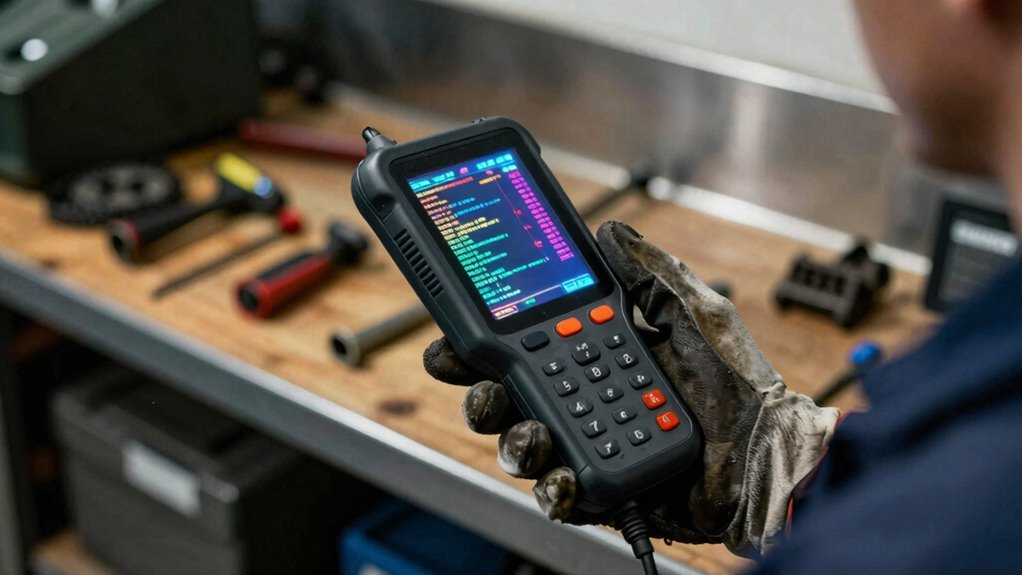
Have you ever wondered when it’s actually necessary to clear the trouble codes from your vehicle’s computer? Often, drivers think clearing codes is the first step to fixing issues, but it’s not always the best move. If your check engine light comes on, the car’s computer has stored a trouble code indicating a problem, such as a sensor malfunction or another system fault. Before clearing these codes, you should understand that doing so without addressing the root cause may only hide the problem temporarily. For example, if a sensor malfunction triggers the warning, clearing the code without fixing the sensor won’t make the issue go away; the code will likely return once the vehicle runs the diagnostics again.
Clearing trouble codes temporarily hides issues but doesn’t fix underlying sensor or system faults.
In many cases, it’s better to wait until you’ve performed proper maintenance or diagnosed the issue thoroughly. Clearing codes prematurely can erase valuable data that mechanics or diagnostic tools need to identify ongoing or intermittent problems. If your vehicle is due for a maintenance schedule check, it’s wise to address any pending issues during that process. Sometimes, clearing the codes after completing maintenance can reset the system, allowing you to verify if repairs were successful or if the problem persists. Just remember that if a sensor malfunction caused the code, replacing or repairing the sensor should come before clearing the trouble codes. Otherwise, the warning will likely reappear, signaling that the underlying problem remains unresolved.
You should also consider the type of trouble code stored. For example, if the code relates to emissions or safety systems, clearing it without fixing the issue isn’t advisable. Doing so might temporarily turn off the warning light but can lead to more significant problems later, including failing emissions tests or risking safety. On the other hand, if the trouble code was triggered by a minor glitch, and you’re confident the problem has been addressed, then clearing the codes can help reset the system and turn off the warning lights. Additionally, understanding the diagnostic trouble codes (DTCs) can help you determine whether the issue is minor or critical. Keep in mind that some codes may be affected by sensor malfunctions, which require specific repairs to ensure proper vehicle operation. It’s also important to remember that some codes may indicate critical safety issues, making it essential to seek professional help before attempting to clear the codes yourself. Recognizing the importance of proper diagnosis can save you time and money in the long run.
In general, it’s best to clear codes only after you’ve diagnosed and addressed the root cause, especially if your vehicle’s sensor malfunction or other critical systems are involved. Keep in mind that your vehicle’s onboard diagnostics system is designed to help you identify issues early. Ignoring or prematurely clearing trouble codes can lead to more costly repairs down the line. So, use the codes as a guide, follow your maintenance schedule, and only clear them once you’re sure the problem has been resolved.
OBD-II scanner for vehicle diagnostics
As an affiliate, we earn on qualifying purchases.
As an affiliate, we earn on qualifying purchases.
Frequently Asked Questions
Can Clearing Codes Cause Future Issues?
Clearing codes can cause future issues if you don’t address the underlying problem, especially with emissions compliance. If the problem isn’t fixed, the check engine light may come back, and you could face failed inspections or legal trouble. Additionally, clearing codes prematurely might affect warranty implications, as some manufacturers require unresolved issues to be diagnosed and repaired before clearing codes. Always make certain proper repairs before clearing codes to avoid these problems.
How Often Should I Clear Diagnostic Trouble Codes?
You should clear diagnostic trouble codes only after fixing the issue and ensuring warning lights are off. Think of diagnostic tools like reset buttons for your car’s health; clearing codes too often is like pressing snooze on a warning alarm. Typically, clear codes once you’ve repaired the problem and confirmed through diagnostic tools that the warning lights are gone. Doing this prevents masking ongoing issues and keeps your vehicle running smoothly.
Will Clearing Codes Erase All Vehicle Data?
Clearing codes doesn’t erase all vehicle data, but it resets the trouble codes and some sensor calibration settings. If you’re concerned about data recovery, keep in mind that some information, like freeze frame data, might be lost temporarily. Before clearing, make certain any necessary diagnostics are saved, as reset might affect sensor calibration and make future troubleshooting more difficult. Always consider whether clearing codes is necessary for accurate vehicle diagnosis.
Can I Clear Codes Without Fixing the Problem?
You can clear codes without fixing the problem, but it’s not recommended. Clearing codes resets the engine performance and emissions compliance data, hiding underlying issues. If you don’t address the root cause, the problem will likely recur, possibly causing further damage or failing emissions tests. Always diagnose and repair the issue first, then clear the codes to guarantee your vehicle runs at its best and stays compliant with emissions regulations.
Is It Safe to Clear Codes Myself?
Clearing codes yourself can be safe if you understand DIY risks, but it’s generally better to seek professional help. If you’re experienced and have the right tools, you might clear codes without issues. However, if the problem persists or you’re unsure, DIY risks include missing underlying issues that could worsen. Consulting a professional guarantees proper diagnosis and repair, preventing potential damage and keeping your vehicle safe and reliable.
As an affiliate, we earn on qualifying purchases.
Conclusion
Remember, sometimes it’s best to let the codes rest quietly, whispering their secrets until you’re ready to listen again. Clearing them prematurely might close the door on essential insights, like silencing a warning before it’s truly heard. Patience and understanding your vehicle’s story can lead to healthier decisions. When the time is right, you’ll know—sometimes, the most subtle signals deserve your gentle attention, allowing the true message to unfold in its own gentle way.
As an affiliate, we earn on qualifying purchases.
emissions system diagnostic tool
As an affiliate, we earn on qualifying purchases.
As an affiliate, we earn on qualifying purchases.
Halloween Picks
halloween
As an affiliate, we earn on qualifying purchases.