When the traction control system detects wheel slip, sensors monitor wheel speeds constantly and send signals to the vehicle’s ECU. If a wheel spins faster than others, the system quickly intervenes by adjusting engine power or applying brakes to regain traction, often resulting in the blinking light. External factors like mud or ice can affect sensor accuracy and trigger false signals. To understand how these signals work behind the scenes, keep exploring this topic.

Get business pricing on garage and car supplies
- Business-only prices and quantity discounts
- Tax-exempt purchasing
- Multiple users, one account, clear invoices
Key Takeaways
- Wheel speed sensors detect slipping by comparing rotation speeds and send signals to the ECU for quick traction adjustments.
- The blinking traction control light indicates system activation, triggered by sensor signals detecting wheel slip or external interference.
- External factors like mud, snow, or debris can obstruct sensors, causing false signals and the blinking light without actual slip.
- Faulty sensors or wiring issues can lead to system malfunctions, false activations, or disabling of traction control.
- The system responds by adjusting engine power or applying brakes, but external conditions may limit its effectiveness.
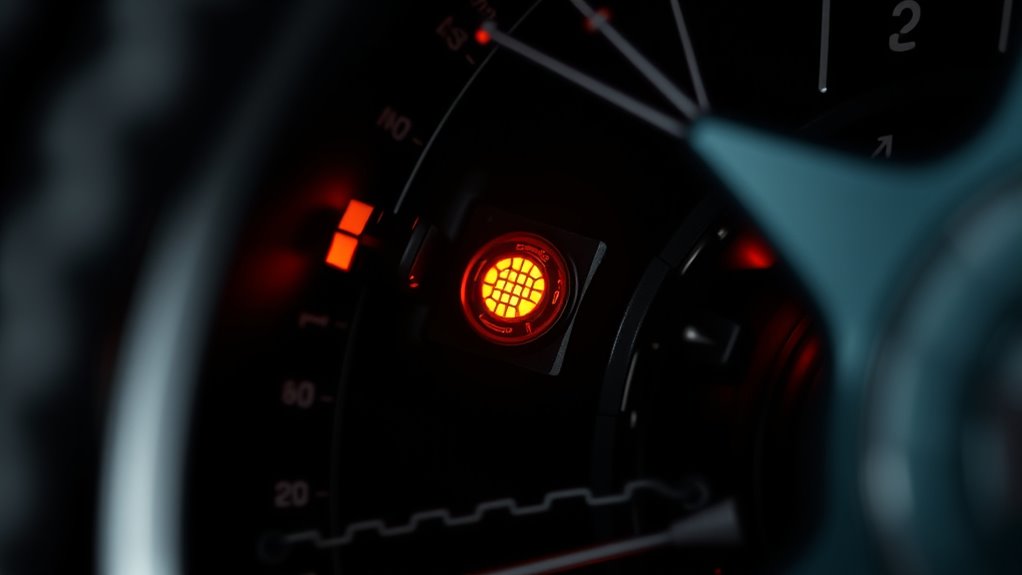
Traction control is a crucial safety feature that helps prevent your vehicle’s wheels from slipping or losing grip, especially on slippery or uneven surfaces. At the heart of this system are sensors that constantly monitor wheel speed and traction levels. These sensors operate by sending real-time data to the vehicle’s electronic control unit (ECU). When the system detects that one or more wheels are spinning faster than others—indicating slipping—the ECU responds by adjusting engine power or applying brakes to specific wheels. This rapid detection-and-response process keeps your vehicle stable and prevents you from losing control.
Traction control uses sensors to monitor wheel speed and prevent slipping, enhancing vehicle stability.
The sensors used in traction control are typically wheel speed sensors, which are magnetic or Hall-effect devices positioned near each wheel. They generate electrical signals proportional to the wheel’s rotation speed, relaying this information to the system continuously. When a wheel begins to spin faster than the others, the system interprets this as a loss of traction. The ECU then intervenes by either reducing throttle input or activating the brake on the slipping wheel, effectively restoring grip. This process happens so quickly that you usually don’t notice it, but if the system detects persistent slip, it may trigger a warning light or the familiar blinking of the traction control indicator on your dashboard.
However, it’s important to understand the system’s limitations. Sensor operation can sometimes be affected by external factors like mud, snow, ice, or debris, which can obstruct or interfere with accurate readings. If a wheel speed sensor malfunctions or becomes dirty, the traction control system might not respond correctly or could turn off altogether. Additionally, certain road conditions—such as loose gravel or icy surfaces—may reduce the system’s effectiveness because of the inherent difficulty in maintaining traction on these surfaces. Traction control isn’t a magic fix; it’s designed to assist, not replace, careful driving and appropriate vehicle handling.
Moreover, the system relies on precise sensor data to function properly. Faulty sensors or wiring issues can lead to false readings, causing the system to activate unnecessarily or not at all. This can be confusing or even dangerous, as you might see the blinking light without actually experiencing wheel slip. Regular maintenance and sensor checks are essential to ensure your traction control system works when you need it most. Understanding how wheel speed sensors operate and recognizing their limitations helps you appreciate how this safety feature works—and why sometimes, despite its benefits, it might not prevent every loss of traction.
As an affiliate, we earn on qualifying purchases.
Frequently Asked Questions
How Does Traction Control Differ From Electronic Stability Control?
You might think traction control and electronic stability control are the same, but they differ in vehicle dynamics management. Traction control focuses on preventing wheel spin during acceleration using sensor technology, ensuring grip on slippery surfaces. Electronic stability control, however, monitors and adjusts for skidding or loss of control, often applying brakes to individual wheels. Both systems enhance safety, but stability control provides broader vehicle stability management.
Can Traction Control Be Turned off Manually?
Yes, you can manually deactivate traction control through a system override or a dedicated button, often labeled “Traction Off” or similar. When you press this button, it temporarily disables the system, giving you more control, especially in situations like getting unstuck. Keep in mind, though, that some vehicles automatically reactivate traction control once you restart the engine or after a certain speed. Always consult your manual deactivación instructions for proper use.
What Are the Common Signs of Traction Control System Failure?
Think of your traction control system like a vigilant guardian. When it malfunctions, you might notice warning lights flickering on your dashboard, like a warning beacon. You could also feel a loss of stability during acceleration or cornering, or notice unusual sensor malfunction messages. These signs indicate your system isn’t working properly, and it’s essential to get it checked promptly to guarantee your vehicle’s safety and peak performance.
How Does Traction Control Affect Tire Wear Over Time?
Traction control helps prevent tire slippage, but if it malfunctions or is overused, it can cause uneven wear patterns on your tires. Over time, this leads to increased tire wear, especially if you don’t perform regular tire rotations. You might notice uneven tread depth or bald spots, which reduce grip and safety. To minimize uneven wear, get regular tire rotations and keep an eye on how your tires wear.
Is Traction Control Effective on All Types of Road Surfaces?
Traction control is effective on most road surfaces, but its performance can vary with road surface variability. It works well on dry and paved roads, providing better grip, but may have traction control limitations on snow, mud, or gravel where slip is unavoidable. Understanding these limitations helps you drive more safely, as the system isn’t foolproof and may struggle to maintain traction in extreme conditions.
traction control system sensor replacement
As an affiliate, we earn on qualifying purchases.
As an affiliate, we earn on qualifying purchases.
Conclusion
Understanding traction control helps you stay safer on the road, especially in slippery conditions. Did you know that vehicles equipped with advanced traction control systems can reduce wheel spin by up to 50%? That’s a significant boost in stability and safety. Next time you see that blinking light, remember it’s working hard behind the scenes to keep you in control. Embrace this technology and drive confidently, knowing your car’s sensors are actively protecting you.
As an affiliate, we earn on qualifying purchases.
car traction control warning light repair kit
As an affiliate, we earn on qualifying purchases.
As an affiliate, we earn on qualifying purchases.
Halloween Picks
halloween
As an affiliate, we earn on qualifying purchases.