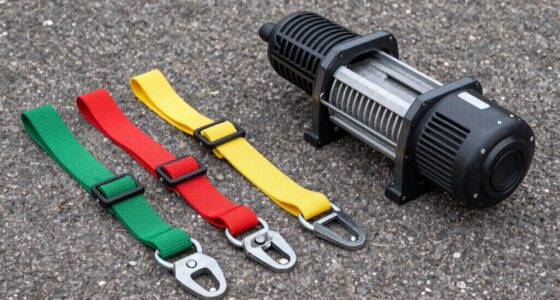
Kinetic ropes are designed to stretch at just the right moment to prevent breakage during falls or sudden loads. Their carefully engineered stretch timing absorbs and disperses shock, reducing the force transmitted to climbers and anchors. Made from durable materials like high-modulus polyester, these ropes maintain performance over time and harsh environments. By understanding how their stretch timing works, you can guarantee safer climbs. Keep exploring to learn how advances in materials and technology optimize your safety.

Get business pricing on garage and car supplies
- Business-only prices and quantity discounts
- Tax-exempt purchasing
- Multiple users, one account, clear invoices
Key Takeaways
- Proper stretch timing allows the rope to absorb shock loads gradually, preventing sudden stress that could cause breakage.
- Kinetic ropes are engineered to stretch at specific moments, optimizing safety during falls or sudden loads.
- Material selection, like high-modulus polyester, ensures consistent elasticity and durability for effective stretch timing.
- Advances in technology improve the rope’s ability to stretch reliably, reducing the risk of equipment failure.
- Correctly calibrated stretch timing distributes forces evenly, protecting both the rope and connected gear.

Have you ever wondered how kinetic ropes can handle such incredible forces? It’s fascinating how these specialized ropes absorb and disperse shock loads during activities like climbing, rescue operations, or high-intensity sports. When you’re climbing, safety is paramount, and understanding the role of a kinetic rope’s stretch timing is essential to guarantee your safety and the longevity of the equipment. These ropes are designed to stretch under load, which reduces the force transmitted to you and your anchors, making every climb safer. This stretch property isn’t random; it’s carefully engineered based on the rope’s material durability and the specific demands of climbing safety. By allowing the rope to elongate gradually, it prevents sudden shocks that could otherwise cause equipment failure or injury. Properly calibrated stretch timing ensures the rope performs optimally during a fall or sudden load, enhancing safety. Material durability plays a critical role in how well a kinetic rope performs under stress. The fibers used in these ropes—often high-modulus polyester or similar composites—are selected for their strength, elasticity, and resistance to wear and tear. The durability of these materials ensures that the rope maintains its stretchability over many uses without degrading prematurely. Additionally, high-quality materials contribute to the rope’s overall abrasion resistance, which is vital during outdoor climbs where exposure to rough surfaces is common. Understanding the material properties helps in selecting the right rope for different environments, ensuring consistent performance. When you choose a kinetic rope with high material durability, you’re investing in equipment that offers consistent performance and peace of mind during your climbs. Moreover, advances in material technology continue to improve the lifespan and safety features of these ropes, making them more reliable than ever.
As an affiliate, we earn on qualifying purchases.
Frequently Asked Questions
How Often Should Kinetic Ropes Be Inspected for Wear?
You should inspect your kinetic rope for wear at least once a month, especially if you use it frequently or in harsh conditions. Check the rope material for signs of fraying, cuts, or UV damage, and examine the connectors and stitching for integrity. Regular inspection frequency helps you catch early signs of damage, ensuring safety and preventing unexpected breakage during use. Always follow manufacturer recommendations for more specific inspection intervals.
Can Kinetic Ropes Be Used in Saltwater Environments?
Yes, you can use kinetic ropes in saltwater environments, but beware—saltwater corrosion is a relentless enemy that can weaken your rope faster than you’d think. To prevent this, you must commit to diligent rope maintenance, thoroughly rinsing and drying your rope after each use. Regular inspections are essential, especially in saltwater, to spot corrosion early and keep your kinetic rope strong and safe for every adventure.
What Is the Maximum Safe Stretch Percentage for a Kinetic Rope?
You should keep your kinetic rope’s stretch within 20-25% of its length to prevent damage. Exceeding these stretch limits risks weakening the fibers and causing breakage. Regularly check wear indicators on your rope—they’ll warn you if the rope’s approaching its safe stretch zone. Staying within these parameters guarantees your kinetic rope remains strong and reliable, especially in demanding environments like saltwater.
Are There Specific Storage Conditions for Prolonging Rope Lifespan?
You should store your kinetic rope in a cool, dry place away from direct sunlight to prolong its lifespan. Regularly clean the rope with mild soap and water to remove dirt and debris, which helps prevent wear. Applying UV protection spray can also shield it from sun damage. Keep the rope loosely coiled and avoid sharp edges or heavy weights during storage to maintain its integrity and flexibility.
How Does Temperature Affect the Rope’s Stretch and Strength?
Did you know that extreme temperatures can reduce a rope’s strength by up to 50%? Temperature effects markedly influence material flexibility, making ropes more brittle in cold or overly stretchable in heat. When exposed to high temperatures, the rope’s fibers become less stable, risking breakage, while cold makes them stiff. To guarantee safety and durability, always store your rope in moderate temperatures, maintaining ideal flexibility and strength.
As an affiliate, we earn on qualifying purchases.
Conclusion
Remember, understanding the stretch timing of kinetic ropes is key to preventing breakage and ensuring safety. Did you know that properly timed stretch can extend a rope’s lifespan by up to 30%? By paying attention to the stretch and following guidelines, you’re not only protecting your gear but also yourself. Keep practicing these basics, and you’ll maximize the rope’s performance while minimizing risks. Stay safe and enjoy your adventures with confidence!
high-modulus polyester climbing rope
As an affiliate, we earn on qualifying purchases.
As an affiliate, we earn on qualifying purchases.
As an affiliate, we earn on qualifying purchases.
Fall Picks
fall essentials
As an affiliate, we earn on qualifying purchases.