If your dash TPMS and manual gauge show different pressure levels, several factors could be at play. Variations stem from calibration issues, ambient temperature changes, and the different methods used for measurement. TPMS sensors can drift over time or be affected by environmental conditions, while manual gauges rely on consistent technique. To get the most accurate picture, consider calibration and measure when tires are cold. Keep reading to discover more about balancing these differences effectively.

Get business pricing on garage and car supplies
- Business-only prices and quantity discounts
- Tax-exempt purchasing
- Multiple users, one account, clear invoices
Key Takeaways
- Measurement conditions, such as temperature and whether tires are cold, affect pressure readings from TPMS and gauges.
- TPMS sensors may be miscalibrated or drift over time, causing discrepancies with manual gauge measurements.
- Different devices and methods used for measuring pressure can produce varying results.
- Environmental factors like heat from driving or ambient temperature changes influence tire pressure readings.
- Regular calibration and measuring tires when cold improve the accuracy and consistency between TPMS and manual gauges.
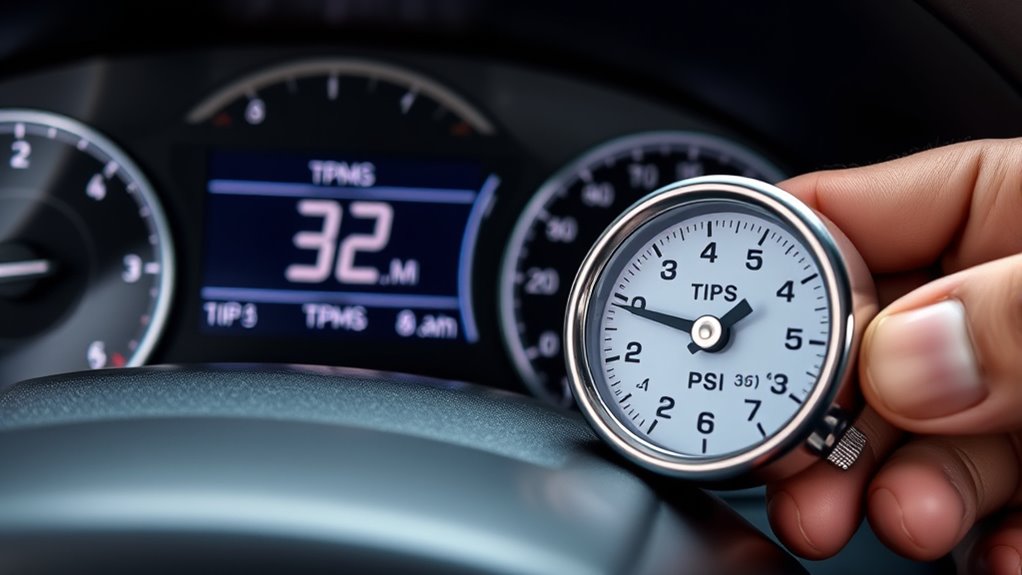
Tire pressure readings can vary considerably depending on the method and device used, which can lead to confusion when trying to assess your tires’ true condition. When comparing the readings from your dashboard’s Tire Pressure Monitoring System (TPMS) and a manual gauge, discrepancies often arise. These differences stem from several factors, including sensor calibration and temperature effects, which influence the accuracy of each measurement.
Sensor calibration plays a critical role in the reliability of your TPMS. Over time, sensors can drift from their original calibration, leading to inaccurate readings. Manufacturers calibrate these sensors to ensure accuracy within specific parameters, but environmental conditions and sensor aging can cause deviations. If the sensors are not properly calibrated, the system may display higher or lower pressures than what’s actually present in your tires. This discrepancy can make it seem like your tires are underinflated or overinflated, even when they’re within the proper range. Regular sensor calibration checks, especially after replacing sensors or tires, help maintain measurement accuracy and prevent misinterpretation of your tire’s condition.
Temperature effects profoundly impact pressure readings, whether you’re relying on a gauge or the TPMS. Air inside your tires expands when it gets warmer and contracts when it cools down. For example, if you measure your tire pressure in the morning when the temperature is cool, your readings will likely be lower than they would be during a hot afternoon. Similarly, if your vehicle has been driven recently and the tires are heated by friction, the pressure readings may be higher than they are in a cool, stationary state. This fluctuation can cause the TPMS to display different pressures compared to your manual gauge, especially if the measurements are taken under different conditions. To get the most accurate reading, it’s best to measure tire pressure when tires are cold—preferably after the vehicle has been parked for at least three hours—and then compare those readings to the TPMS data.
As an affiliate, we earn on qualifying purchases.
Frequently Asked Questions
How Often Should I Calibrate My Tire Pressure Gauge?
You should calibrate your tire pressure gauge at least once a year to maintain calibration frequency and verify gauge accuracy. Regular calibration helps catch any drift or inaccuracies that can develop over time. If you notice inconsistent readings or your gauge looks damaged, recalibrate it sooner. Using a properly calibrated gauge guarantees you’re inflating your tires to the correct pressure, improving safety and extending tire life.
Can Temperature Changes Affect TPMS Readings?
Temperature fluctuations can definitely affect your TPMS readings because sensors are sensitive to changes in temperature. As it gets colder, tire pressure drops, causing the TPMS to show lower readings, and vice versa in warmer conditions. This sensor sensitivity means you might see discrepancies between actual pressure and what the system reports. To verify accuracy, check your tire pressure when tires are at room temperature, ideally before driving or after they’ve been parked for a few hours.
Do Different Vehicle Brands Have Varying TPMS Accuracy?
Yes, different vehicle brands can have varying TPMS accuracy due to sensor calibration differences and brand variability. Some brands may use more precise sensors or calibration methods, resulting in more reliable readings. Others might have less accurate sensors that can lead to discrepancies. You should regularly check your TPMS and verify sensors are calibrated correctly, especially if you notice inconsistent readings across different vehicle brands.
Is It Safe to Drive With a TPMS Warning Light On?
You shouldn’t ignore a TPMS warning light; it’s telling you something’s wrong. The sensor calibration might be off, or pressure fluctuations could be causing the alert. Driving with the warning on risks tire failure or accidents. Check your tire pressures with a reliable gauge, then get your system calibrated if needed. Don’t delay—your safety depends on accurate readings and proper maintenance.
How Long Do Tire Pressure Sensors Typically Last?
Tire pressure sensors usually last between 5 to 10 years, depending on their sensor lifespan and usage conditions. You should check your vehicle’s manual for specific recommendations. Regular calibration is essential, especially after tire changes or repairs, to guarantee accurate readings. If your sensors start malfunctioning or giving inconsistent data, consider replacing or recalibrating them to maintain proper tire pressure monitoring and safety.
As an affiliate, we earn on qualifying purchases.
Conclusion
So, next time your dash TPMS and gauge don’t agree, remember that even in this digital age, traditional methods still have value. Don’t rely solely on your dashboard; check your tire pressure manually to avoid surprises. Just like the trusty old bicycle pump, sometimes old-school tools can save the day. Trust your instincts, stay attentive, and keep your tires properly inflated—because, as the saying goes, “a stitch in time saves nine.” Safe travels!
As an affiliate, we earn on qualifying purchases.
automotive tire pressure monitor
As an affiliate, we earn on qualifying purchases.
As an affiliate, we earn on qualifying purchases.
Evergreen bestsellers Picks
bestsellers
As an affiliate, we earn on qualifying purchases.