To read fuel trim like a pro, start by understanding short-term (STFT) and long-term (LTFT) adjustments, which show how your ECM tweaks fuel mixtures in response to sensor data. Look for values within ±5%; larger deviations can signal issues like leaks or sensor problems. For example, a +10% STFT indicates the system is adding fuel for a lean condition. Regularly monitor these figures and explore how sensor health affects accuracy to become more confident in diagnostics. Keep going to uncover more tips!

Get garage and car supplies delivered free — and shop member deals
- Fast, free delivery on millions of items
- Access to Prime Big Deal Days deals on October 6–7
- Prime Video, Amazon Music and more included
Key Takeaways
- Monitor both Short-term (STFT) and Long-term Fuel Trim (LTFT) values for comprehensive diagnosis.
- Recognize that +10% STFT indicates a lean condition; -10% suggests a rich mixture.
- Keep LTFT within ±5%; deviations may signal sensor issues or vacuum leaks.
- Ensure sensors are properly calibrated and healthy for accurate fuel trim readings.
- Use real-time data to identify early engine problems and verify corrective actions.
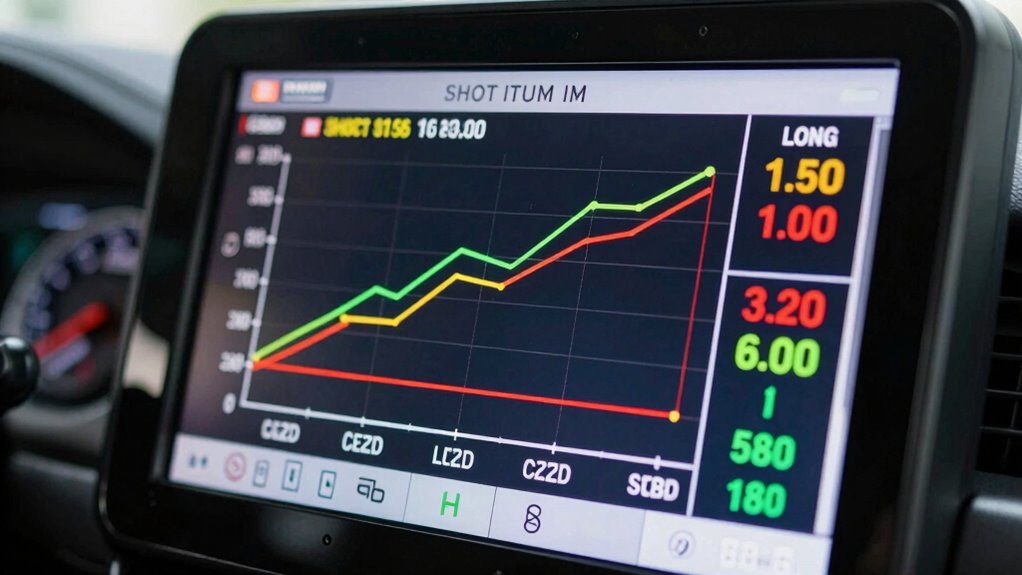
Have you ever wondered what your car’s fuel trims reveal about its engine performance? Fuel trims show how your engine management system adjusts the air-fuel mixture to keep your engine running smoothly. When you understand what these trims mean, you can diagnose issues early and maintain peak performance. To accurately interpret fuel trims, you need to use diagnostic tools that can display real-time data from your vehicle’s sensors. These tools connect to your car’s OBD-II port and provide detailed readouts of various parameters, including short-term and long-term fuel trims. Proper sensor calibration is essential because it ensures that the readings from sensors like the mass airflow sensor or oxygen sensors are accurate, preventing misinterpretations. Sensor calibration plays a vital role in accurate fuel trim readings. Over time, sensors like the mass airflow sensor or oxygen sensors can drift from their calibrated values, leading to incorrect fuel trim adjustments. If sensor calibration is off, the engine control module (ECM) might mistakenly compensate for faulty readings, making it seem like there’s a problem when there isn’t. Verifying your sensors are correctly calibrated and functioning properly is crucial because sensor accuracy directly impacts diagnostic reliability. Sometimes, replacing or recalibrating sensors with the right diagnostic tools can resolve issues without extensive repairs. When you look at the fuel trims displayed on your diagnostic tool, you’ll see two key figures: the short-term fuel trim (STFT) and the long-term fuel trim (LTFT). The STFT reacts quickly to changes in sensor data, adjusting the fuel mixture in real time. For example, if your STFT reads +10%, the engine is adding more fuel than the base setting to compensate for a lean condition. Conversely, a negative value like -10% indicates the engine is subtracting fuel because it detects a rich mixture. The LTFT is a more gradual adjustment based on the overall trend of the STFT. An LTFT of +5% or -5% is usually acceptable, but anything beyond that might suggest a problem. Understanding sensor drift and its impact on fuel trims can help you better diagnose engine issues early. Recognizing the importance of sensor calibration can help prevent unnecessary repairs and ensure your readings remain accurate. Additionally, awareness of potential vacuum leaks and their effect on fuel trim readings can aid in more precise diagnostics. Regularly checking sensor health and ensuring proper maintenance can extend the lifespan of your engine components and keep your fuel trims within optimal ranges.
As an affiliate, we earn on qualifying purchases.
Frequently Asked Questions
What Causes Consistently High Fuel Trim Readings?
Consistently high fuel trim readings often result from sensor calibration issues or fuel system diagnostics problems. When sensors, like the oxygen sensor, aren’t calibrated correctly, they send inaccurate data, causing your engine to overcompensate with higher fuel trims. Additionally, leaks, clogged injectors, or failing fuel pumps can disrupt the fuel system. Regularly performing fuel system diagnostics helps identify these issues early, ensuring your fuel trims stay within normal limits.
How Often Should I Check Fuel Trim Data?
You should check your fuel trim data regularly, ideally during routine maintenance or if you notice engine performance issues. This allows you to spot sensor calibration problems or faulty fuel injectors early. Monitoring every few thousand miles or during tune-ups helps guarantee your fuel system operates efficiently. Consistently checking these readings helps catch issues before they escalate, saving you money and preventing potential engine damage.
Can Fuel Trim Readings Indicate Impending Engine Failure?
Fuel trim readings can hint at impending engine issues, especially if they show persistent, abnormal values. Poor fuel efficiency often links to these readings, indicating the engine’s struggling to maintain proper air-fuel ratios. Keep in mind, sensor calibration errors can cause misleading data, so regularly check and calibrate sensors to guarantee accurate readings. Spotting these signs early helps prevent more severe engine failures down the line.
What Tools Are Best for Monitoring Fuel Trim Live?
To keep your engine running smoothly, you need the right tools to monitor fuel trim live. Start with diagnostic tools like an OBD-II scanner, which provides real-time data on sensor calibration and fuel trim adjustments. These tools act as your eyes on the road, helping you catch issues early. Invest in a reliable scanner, and you’ll be able to monitor fuel trim like a pro, saving time and money in the long run.
How Do Ambient Temperature Changes Affect Fuel Trim?
Ambient temperature changes impact fuel trim by causing temperature fluctuations that affect air density and sensor readings. When temperatures rise or fall, your vehicle’s engine control unit (ECU) makes calibration adjustments to maintain proper air-fuel ratios. These calibration adjustments help compensate for temperature fluctuations, ensuring ideal engine performance. Monitoring these changes allows you to better understand how ambient conditions influence fuel trim, giving you more control over your vehicle’s efficiency.
As an affiliate, we earn on qualifying purchases.
Conclusion
Think of reading fuel trim like tuning a musical instrument. When you listen closely, small adjustments reveal whether the notes are harmonious or need fine-tuning. Mastering fuel trim is your way of tuning your vehicle’s engine, ensuring it runs smoothly and efficiently. Just as a skilled musician knows when to tighten or loosen strings, you learn to interpret the signals and keep your engine in perfect harmony—making you the true maestro of your car’s performance.
As an affiliate, we earn on qualifying purchases.
As an affiliate, we earn on qualifying purchases.
Halloween Picks
halloween
As an affiliate, we earn on qualifying purchases.