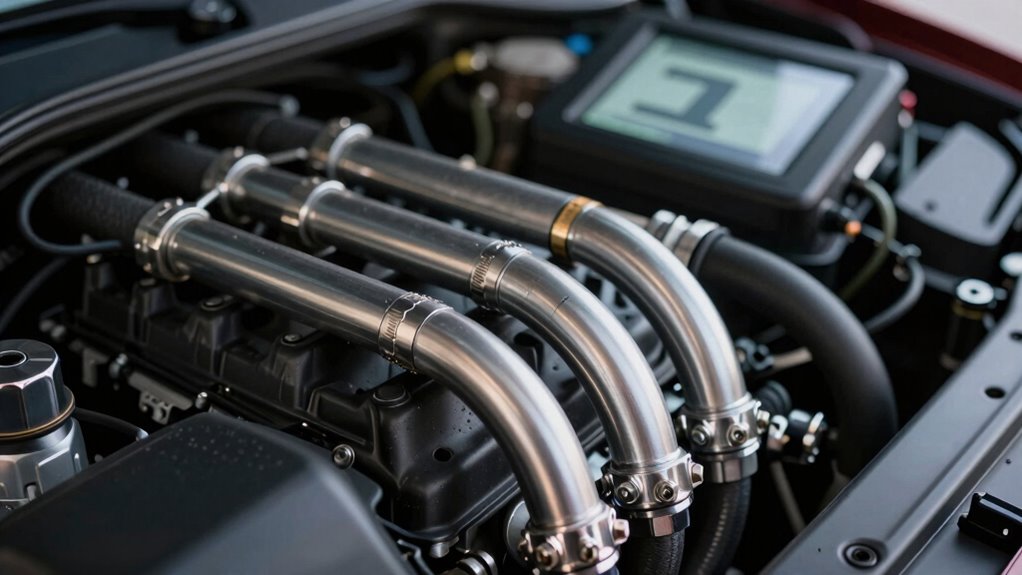

If you suspect a vacuum leak, look at your engine’s fuel-trim patterns. Typically, a leak causes the Short-Term Fuel Trim (STFT) to stay positive and fluctuate upward as the ECU tries to compensate for unmetered air. Over time, Long-Term Fuel Trim (LTFT) also increases. Recognizing this pattern can help you quickly identify a vacuum leak before it causes more damage—you’ll discover these clues and more as you continue.

Get business pricing on garage and car supplies
- Business-only prices and quantity discounts
- Tax-exempt purchasing
- Multiple users, one account, clear invoices
Key Takeaways
- Positive fuel-trim patterns, especially rising long-term trims, indicate unmetered air from vacuum leaks.
- Short-term fuel trim fluctuates sharply with leaks, showing quick adjustments by the ECU.
- Persistent positive fuel trims suggest the engine is compensating for ongoing unmetered air intake.
- Fuel-trim patterns detected via scan tools help easily identify and confirm vacuum leaks.
- Early detection of rising fuel trims prevents engine damage and maintains optimal airflow and performance.
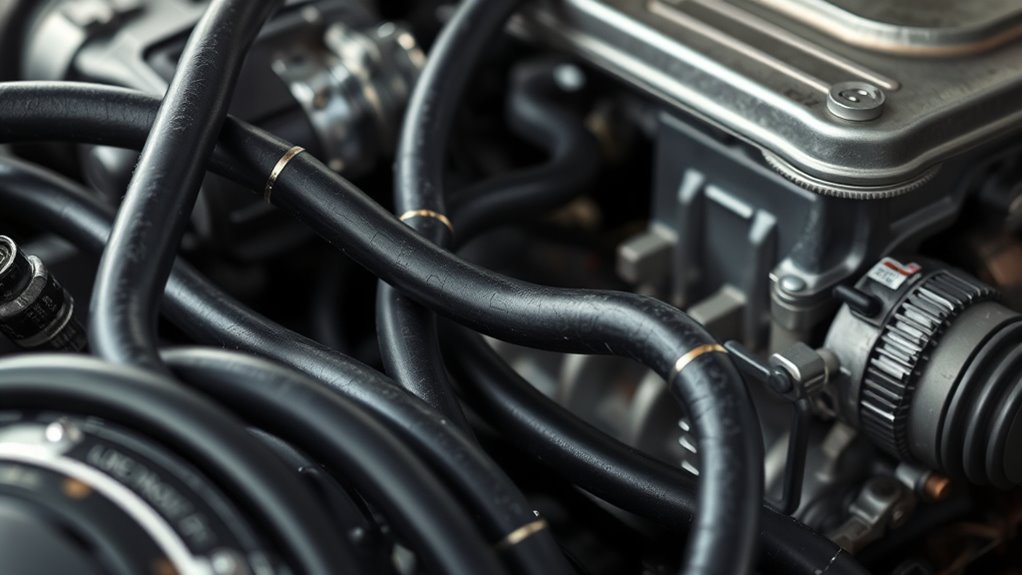
Have you ever wondered how a small vacuum leak can cause big problems in your vehicle or machinery? It’s surprising how something so minor can disrupt your engine’s smooth operation. When vacuum leaks occur, they throw off the delicate balance of the air-fuel mixture, leading to issues like rough idling, hesitation, or even stalling. Detecting these leaks early can save you time and money, and understanding the fuel-trim pattern is key. Your vehicle’s engine control unit (ECU) constantly monitors sensor diagnostics, especially the data from the mass airflow sensor and oxygen sensors, to keep the engine running efficiently. When a vacuum leak happens, these sensors pick up the discrepancy in air intake and fuel mixture, which causes the ECU to adjust the fuel trim. By analyzing the fuel-trim pattern, you can identify the presence of a vacuum leak.
Typically, when a leak is present, you’ll notice that the short-term fuel trim (STFT) will fluctuate markedly, often trending toward a positive value. This indicates that the ECU is adding more fuel to compensate for unmetered air entering the intake. Over time, if the leak persists, the long-term fuel trim (LTFT) may also increase, reflecting a sustained correction. These patterns are like a diagnostic fingerprint; a consistent positive fuel-trim pattern is a strong indicator of a vacuum leak. You can use scan tools to view these readings in real-time, making it easier to pinpoint the problem. When you see these fuel-trim patterns, it’s a clear sign that your engine’s air intake is compromised, and you should inspect hoses, intake manifold gaskets, and vacuum lines for leaks. Understanding sensor diagnostics can help you interpret the data more effectively.
Ignoring these signs can lead to degraded engine performance, increased emissions, and even damage to sensors. The vacuum leak causes the engine to run lean or rich unexpectedly, which affects engine power and responsiveness. Proper sensor diagnostics help you confirm the leak and prevent unnecessary parts replacement. Once identified, fixing the leak restores proper airflow, stabilizes fuel trims, and improves overall engine health. Remember, the key is paying attention to your vehicle’s sensor readings and understanding what fuel-trim patterns reveal. Small leaks may be easy to overlook, but with the right diagnostics, you can catch them early and ensure your engine runs like new. Don’t wait for your check engine light to come on—use the fuel-trim pattern as your early warning system to keep your vehicle performing ideally.
As an affiliate, we earn on qualifying purchases.
Frequently Asked Questions
How Can I Prevent Vacuum Leaks From Occurring?
To prevent vacuum leaks, you should regularly inspect hoses for cracks or deterioration and replace any damaged ones promptly. Confirm manifold sealing is tight and properly installed, checking for gaps or loose clamps. Keeping these components in good condition helps maintain a proper vacuum system, reducing the risk of leaks. Regular maintenance and proactive inspections are your best defense against vacuum leaks and related engine performance issues.
What Tools Are Best for Detecting Vacuum Leaks?
Imagine hunting down a tiny, sneaky ghost hiding in your engine—your tools are the only way to catch it! Leak detection tools like smoke machines or spray testers are perfect for revealing vacuum leaks quickly, while engine diagnostic devices help you monitor fuel trims and airflow changes. Use these tools together to pinpoint leaks with laser-like precision, saving you hours of guesswork and frustration.
Do Vacuum Leaks Affect Fuel Efficiency Significantly?
Yes, vacuum leaks can considerably impact your fuel efficiency. During vacuum leak diagnosis, you’ll notice the fuel trim analysis shows the engine running rich, as the ECU compensates for unmetered air. This extra air causes increased fuel consumption. Addressing the leak promptly improves fuel economy, reduces emissions, and keeps your engine running smoothly. Regularly performing fuel trim analysis helps catch leaks early, saving you money on fuel and repairs.
Can a Vacuum Leak Cause Engine Stalling?
Did you know that a small vacuum leak can cause your engine to stall? Yes, it can, especially if it’s linked to a faulty vacuum hose replacement or a damaged intake manifold gasket. When these components fail, they disrupt the air-fuel mixture, making your engine stall. Regularly inspecting and replacing vacuum hoses or gaskets helps prevent stalling and keeps your engine running smoothly.
How Often Should I Check for Vacuum Leaks?
You should check for vacuum leaks every 10,000 to 15,000 miles or when you notice issues like rough idling or poor acceleration. During an engine intake inspection, look for cracked or brittle vacuum hoses, and replace them as needed. Regular vacuum hose replacements help prevent leaks, maintaining engine performance. If you detect any signs of leaks, conduct a thorough inspection promptly to avoid further damage.
engine fuel trim diagnostic tool
As an affiliate, we earn on qualifying purchases.
As an affiliate, we earn on qualifying purchases.
Conclusion
Now that you know how to spot the fuel-trim pattern that reveals vacuum leaks, you’re better equipped to diagnose issues quickly. Remember, a small leak can cause big problems, so don’t ignore the signs. Can you picture your engine running smoothly, free of leaks and hesitation? By paying attention to these clues, you’ll keep your vehicle running efficiently and save money on costly repairs. Isn’t that a goal worth aiming for?
As an affiliate, we earn on qualifying purchases.
OBD2 scanner for fuel trim analysis
As an affiliate, we earn on qualifying purchases.
As an affiliate, we earn on qualifying purchases.
Halloween Picks
halloween
As an affiliate, we earn on qualifying purchases.