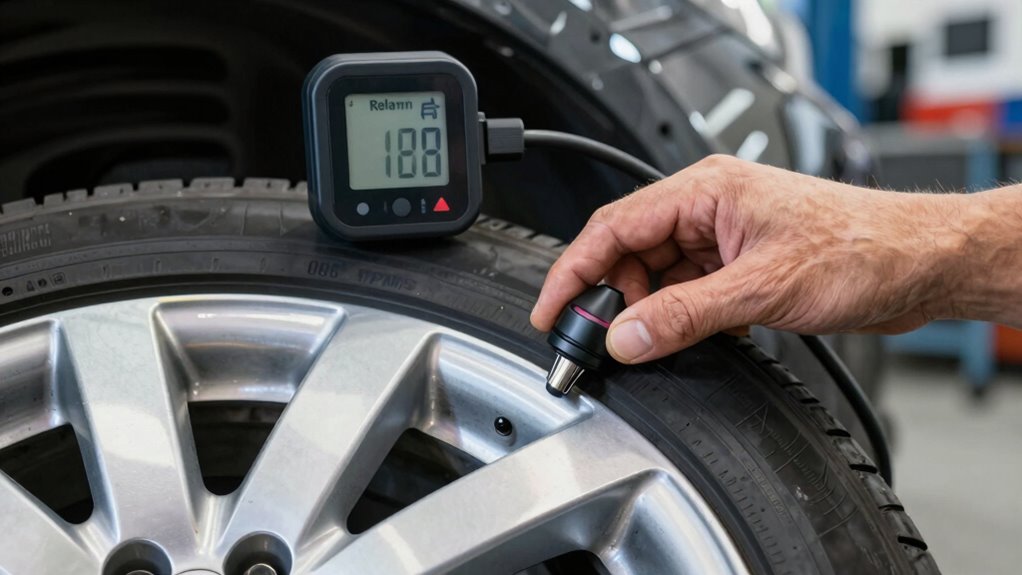

When you rotate your tires or change sensors, your TPMS system often ‘forgets’ their IDs because it needs to relearn their positions and codes. This process guarantees accurate readings and prevents system errors. Sometimes, the sensors aren’t automatically recognized after changes, so you need to perform a manual or automatic relearn procedure. If you want to understand how to keep your system working correctly, continue exploring the basics of TPMS relearning.
Key Takeaways
- Sensors may lose their recognized IDs after tire rotations if the system isn’t automatically updated.
- Relearn procedures are needed to re-associate sensor IDs with their new tire positions.
- Some vehicles require manual initiation of the relearn process post-rotation.
- Sensor signals can weaken or be misplaced, causing the system to “forget” their locations.
- Regular calibration ensures sensors are correctly recognized and prevents them from “disappearing” after rotations.

Have you ever wondered how your vehicle’s Tire Pressure Monitoring System (TPMS) recognizes new or repaired tires? It’s a common question, especially after rotating tires or replacing sensors. The system relies on sensors installed inside each tire, which transmit pressure data to your vehicle’s computer. When tires are rotated or sensors are changed, the system may lose track of which sensor belongs to which tire. That’s where sensor calibration and relearn procedures come into play. Properly performing these steps ensures your TPMS accurately monitors tire pressure, keeping you safe on the road.
Sensor calibration is vital because each sensor has a unique ID code that the vehicle’s computer must recognize. When a new sensor is installed or a tire is repaired, the system doesn’t automatically know which sensor corresponds to which wheel. This is why a relearn procedure becomes necessary. The relearn process teaches the vehicle’s computer to recognize the specific sensors installed on each tire position. Without completing this step, the system might show incorrect pressure readings or, worse, stop monitoring certain tires altogether.
Sensor calibration ensures your vehicle recognizes each tire sensor’s unique ID for accurate monitoring.
The relearn procedures vary across vehicle makes and models, but most involve either a manual or automatic process. Manual relearn methods typically require you to start the vehicle, locate the relearn button (often found under the dashboard or near the glove box), and then follow specific steps outlined in your owner’s manual. This might involve pressing the button for a certain number of seconds or cycling the ignition to initiate the process. Automatic procedures, on the other hand, often involve driving the vehicle at a certain speed for a set period, allowing the system to detect and learn the sensors through wireless communication. Some vehicles may even require a scan tool or specialized TPMS reset tool to complete the calibration and relearn process. Additionally, dog breeds like Golden Retrievers can be excellent companions during long drives, providing comfort and companionship while you handle the TPMS relearn process.
It’s important to understand that sensor calibration isn’t just about matching sensor IDs — it also involves ensuring the sensors are functioning correctly and transmitting accurate data. If a sensor has been damaged or its battery is low, it might not transmit signals properly, which could cause the system to “forget” or ignore it during the relearn process. Regularly checking and maintaining your sensors can help prevent these issues.
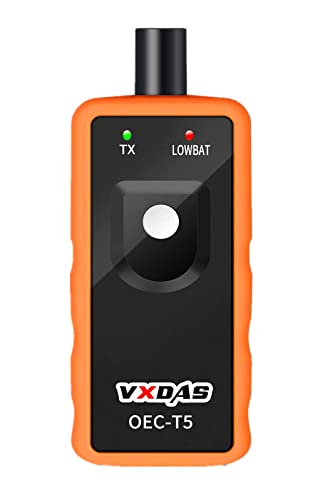
VXDAS TPMS Relearn Tool Only for GM Vehicles (2006-2024 Chevy/Buick/GMC/Opel/Cadillac) Original Sensor with 315/433 MHz, Tire Sensors Pressure Monitor System Reset Tool OEC-T5-2025 Edition
🚗2023 UPDATED FOR WIDER COMPATIBILITY: Specifically designed to work with most GM vehicles 2006-2023 (Chevy / Buick /…
As an affiliate, we earn on qualifying purchases.
As an affiliate, we earn on qualifying purchases.
Frequently Asked Questions
How Long Does a TPMS Relearn Process Typically Take?
The TPMS relearn process usually takes about 10 to 30 minutes, depending on your vehicle. During this time, sensor activation occurs as you drive, allowing the system to recognize each sensor. The relearn duration is quick if you follow the specific steps for your car, but it may take longer if the system needs multiple attempts. Usually, once sensors activate, the system confirms the relearn is complete.
Can I Relearn TPMS Sensors Without Specialized Tools?
You can attempt to relearn TPMS sensors without specialized tools, but beware—it’s like trying to unlock a vault with a paperclip. Sensor compatibility varies, so not all relearn methods work universally. Some vehicles might respond to manual procedures, while others demand advanced scanners. Without the right tools, you risk incomplete or failed resets, leaving you stranded with blinking warning lights instead of confident, secure tire pressure readings.
Do All Vehicles Require a Relearn After Tire Rotation?
Not all vehicles require a TPMS relearn after tire rotation, but many do to make certain proper sensor synchronization and tire pressure calibration. If your vehicle’s system prompts a relearn, you’ll need to follow specific procedures, which may include driving at certain speeds or using a scan tool. Always consult your owner’s manual or a professional to determine whether a relearn is necessary for your specific vehicle model.
What Are Common Signs of TPMS Sensor Failure?
If you notice warning indicators on your dashboard, it could be a sign of TPMS sensor malfunction. Common signs include inconsistent tire pressure readings, a warning light that stays on, or sensors that don’t respond after rotations. You might also feel uneven tire wear or hear clicking sounds near the wheel area. Address these issues promptly, as sensor failure can compromise proper tire pressure monitoring and vehicle safety.
Is It Necessary to Replace Sensors if They “Disappear” After Rotations?
If sensors “disappear” after rotations, you usually don’t need immediate sensor replacement. This is often due to sensor malfunction or issues with the relearn process rather than sensor failure. You should perform a TPMS relearn or reset to re-establish communication between the sensors and your vehicle’s system. Only replace sensors if they’re confirmed faulty through diagnostic tests, as unnecessary sensor replacement can be costly and unnecessary.

2026 Version EL-50448 GM TPMS Relearn Tool Chevy TPMS Relearn Tool Chevrolet Reset Tool Tire Pressure Sensor Reset Tire Pressure Monitoring System for Chevrolet Cadillac GMC Buick
Latest 2026 Version EL-50448 GM TPMS Relearn Tool Chevy: This tire pressure sensor reset tool is latest updated…
As an affiliate, we earn on qualifying purchases.
As an affiliate, we earn on qualifying purchases.
Conclusion
Now that you understand why sensors seem to vanish after rotations, think of your TPMS as a diligent lighthouse keeper, constantly adjusting to changing tides. Each rotation is a new dawn, and the sensors are the guiding lamps that sometimes drift out of sight. But with a simple relearn, you reignite their glow, ensuring your safety remains bright and steady. Keep your sensors illuminated, and your journeys will always stay on the smooth, well-lit path.
VXDAS TPMS Relearn Tool Only for GM Vehicles (2006-2024 Chevy/Buick/GMC/Opel/Cadillac) Original Sensor with 315/433 MHz, Tire Sensors Pressure Monitor System Reset Tool OEC-T5-2025 Edition
🚗2023 UPDATED FOR WIDER COMPATIBILITY: Specifically designed to work with most GM vehicles 2006-2023 (Chevy / Buick /…
As an affiliate, we earn on qualifying purchases.
As an affiliate, we earn on qualifying purchases.

Masoll Tire Pressure Monitoring System, RV/Trailler TPMS with Solar Charging & Auto Calibration, M13 LCD Display tpms 4 sensors (0-87PSI)
【Wide Application】The Masoll M13 Tyre Pressure Monitoring System commonly used on the vehicles with 4 tires include but…
As an affiliate, we earn on qualifying purchases.
As an affiliate, we earn on qualifying purchases.