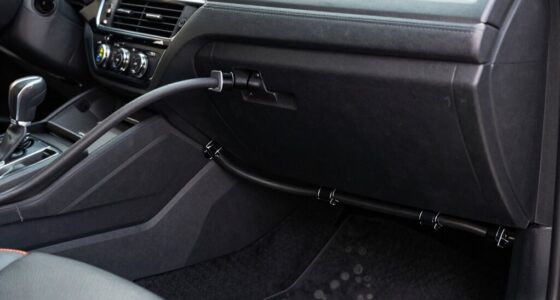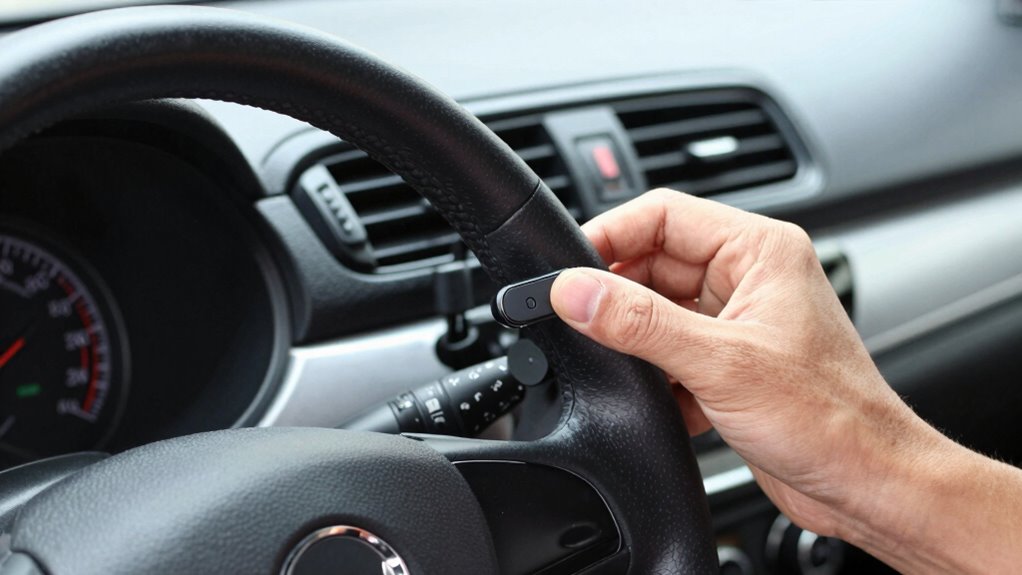

To mount devices safely without blocking airbags or sensors, start by carefully choosing locations away from airbag deployment zones and sensor pathways. make certain the dashboard surface is suitable for adhesive or mounting brackets and avoid obstructing vents or controls. Use high-quality, vehicle-specific adhesives, pressing firmly without overapplication. Regularly check the mount to prevent damage or loosening. If you keep these tips in mind, you’ll better protect your safety features and optimize device placement for easy access and minimal distraction.

Get business pricing on garage and car supplies
- Business-only prices and quantity discounts
- Tax-exempt purchasing
- Multiple users, one account, clear invoices
Key Takeaways
- Mount devices away from airbag deployment zones to prevent obstruction and ensure safety during deployment.
- Use dashboard surfaces compatible with adhesives or select alternative mounting options like vents or brackets.
- Verify that mounting does not cover sensors, controls, or vents critical for vehicle operation and safety.
- Avoid placing devices in areas prone to heat, moisture, or excessive movement that could weaken adhesion.
- Regularly inspect mounted devices to ensure they remain secure without interfering with safety features.
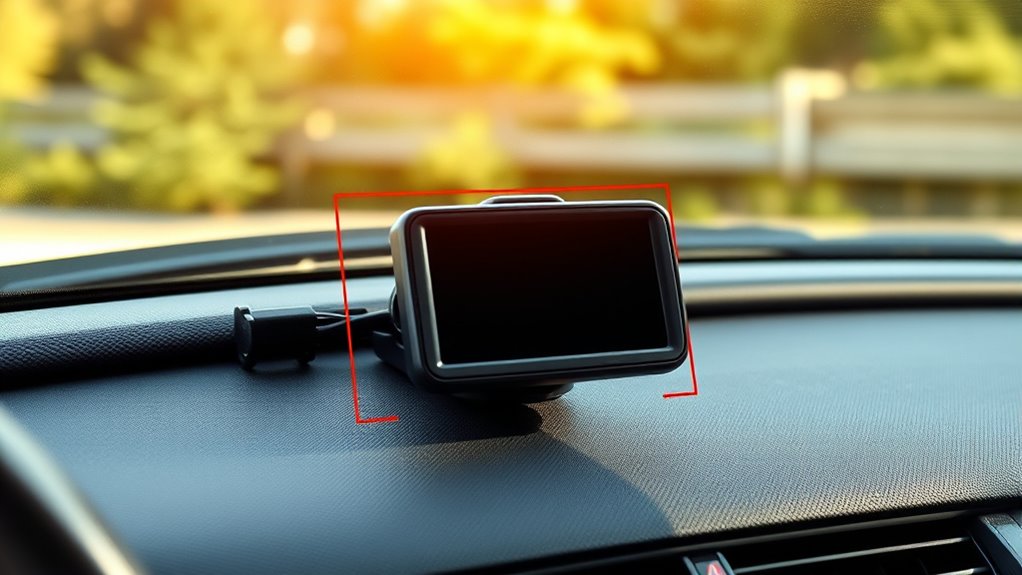
Mounting devices safely is vital to guarantee their proper function. When installing a GPS, phone holder, or any electronic accessory in your vehicle, it’s essential to consider how you attach it. Proper adhesive placement ensures that the device stays secure during driving without interfering with the vehicle’s safety features. If you opt for adhesive mounts, make sure the surface is clean and dry before application. Use a high-quality adhesive designed for automotive use, and press firmly for a few seconds to promote a strong bond. Avoid overusing adhesive, as excess can spread into areas that might obstruct sensors or airbags. Remember, the goal is to secure the device without compromising the vehicle’s safety systems or dashboard compatibility.
Dashboard compatibility plays a significant role in mounting devices safely. Not all surfaces are suitable for adhesive or suction mounts; some dashboards are made of materials that don’t bond well or might be too textured. Before mounting, check whether your dashboard surface is compatible with the device’s mounting system. If it’s not, consider alternative options like vent mounts or adjustable brackets that can attach without adhesive. When choosing an adhesive-based mount, ensure it won’t interfere with critical sensors or airbags located behind the dashboard. This means avoiding areas where airbags deploy or where sensors for safety systems are concentrated. Placing a device in a way that blocks airbag deployment zones can be dangerous and compromise your safety in an accident.
Additionally, consider the overall layout of your dashboard and the placement of controls, vents, and sensors. The device should not obstruct your view of the road or access to essential controls. If you’re unsure about dashboard compatibility, consult your vehicle’s manual or manufacturer guidelines. Proper placement not only keeps your device secure but also prevents accidental interference with safety features. For example, mounting a device too close to the airbag compartment could hinder proper deployment or even cause injury during inflation. To avoid this, position your device away from the deployment zones, and double-check that the adhesive or mounting method won’t damage or weaken the dashboard surface over time. Being aware of vehicle safety features and their placement is crucial when mounting any device to ensure your safety is not compromised.
As an affiliate, we earn on qualifying purchases.
Frequently Asked Questions
Can I Install Devices Near the Vehicle’s Airbag System Without Professional Help?
You can attempt DIY installation near your vehicle’s airbag system, but you need to be very cautious. Carefully read the manufacturer’s instructions to prevent sensor interference, which could prevent airbags from deploying correctly. Keep devices away from airbag modules and sensors, and use mounting locations that don’t obstruct critical components. When in doubt, consult a professional to ensure safety and avoid accidental damage or deployment issues.
Are There Specific Materials Recommended for Mounting Devices to Avoid Sensor Interference?
Think of your vehicle’s sensors as delicate musical instruments that need harmony. Use mounting materials like plastic or foam that are lightweight and non-conductive to guarantee sensor compatibility. Avoid metals or dense materials that could block or interfere with sensors and airbags. Carefully select mounts designed for automotive use, and always test your setup. This way, you keep your device secure without disrupting essential safety features.
How Do I Know if a Mounted Device Is Blocking an Airbag Sensor?
You can tell if a mounted device is blocking an airbag sensor by checking sensor placement guidelines and observing warning indicators. If the device is near the dashboard or steering column, it might interfere. Look for warning lights on your dashboard—if they turn on or blink, it indicates sensor issues. Always verify that the device isn’t obstructing critical sensor areas and follow manufacturer instructions to guarantee proper placement.
What Are the Legal Implications of Improper Device Mounting in a Vehicle?
If you ignore proper mounting, you’re gambling with legal liability and insurance claims. Improperly installed devices that block airbags or sensors can lead to hefty fines, lawsuits, or your insurance denying coverage after an accident. You might think it’s just a minor inconvenience, but authorities take safety violations seriously. So, avoid costly legal trouble—mount devices correctly and guarantee airbags and sensors work as intended, keeping everyone safer and your wallet intact.
Can Mounting Devices Affect the Vehicle’s Safety Ratings or Warranty?
Mounting devices improperly can negatively impact your vehicle’s safety and void warranties. If a device isn’t compatible with your vehicle, it may interfere with safety features like airbags or sensors, reducing overall vehicle safety. Always confirm your device compatibility and follow manufacturer instructions for proper mounting. This way, you maintain your vehicle’s safety ratings and protect your warranty coverage, ensuring safe, reliable driving.
As an affiliate, we earn on qualifying purchases.
Conclusion
So, next time you’re tempted to slap that gadget onto your dashboard or stick it by the airbag, remember—you’re not just risking a dented device, but your own safety too. Think of it as a fun game of “Will My Airbag Deploy or Not?” Spoiler: nobody wins. Play it safe, keep sensors clear, and leave the airbags happy. After all, your car’s safety features aren’t just decoration—they’re your best friends in a crash.
As an affiliate, we earn on qualifying purchases.
As an affiliate, we earn on qualifying purchases.
Fall Picks
fall essentials
As an affiliate, we earn on qualifying purchases.