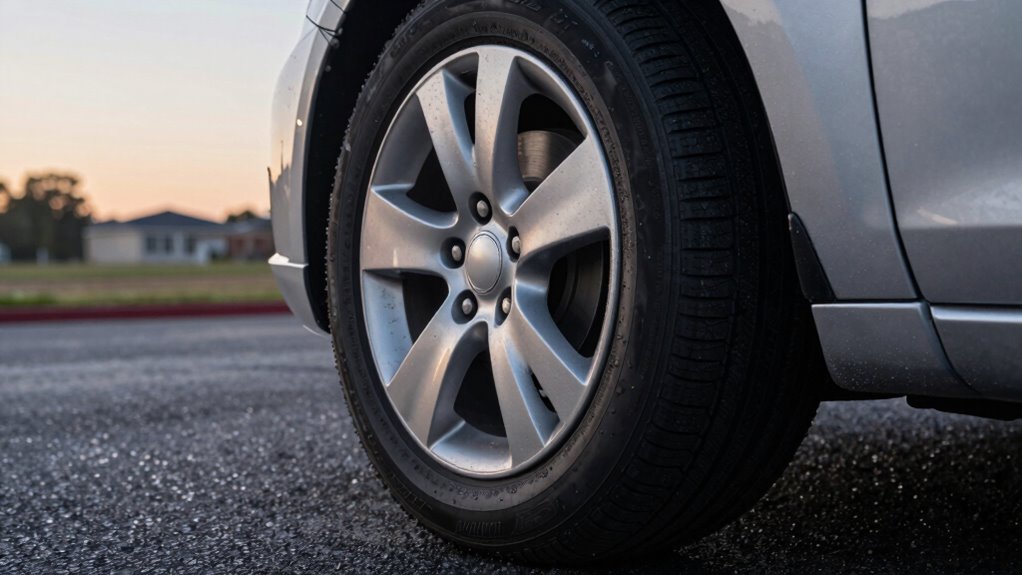

When temperatures drop overnight, the air inside your tires cools, causing molecules to slow down and occupy less space, which lowers the tire pressure. This effect follows the Ideal Gas Law, meaning for every 10°F decrease, expect about 1-2 PSI loss. Understanding this simple temperature pressure relationship can help you keep your tires safe and properly inflated, so keep going to learn how to manage these changes effectively.
Key Takeaways
- Cold overnight temperatures cause air inside tires to contract, reducing pressure due to decreased molecular activity.
- For every 10°F temperature drop, tire pressure typically decreases by about 1-2 PSI.
- Morning tire pressure readings are often lower because of overnight cooling effects.
- Seasonal and environmental temperature changes directly influence tire pressure through air expansion and contraction.
- Regularly monitoring and adjusting tire pressure helps account for these predictable temperature-driven fluctuations.

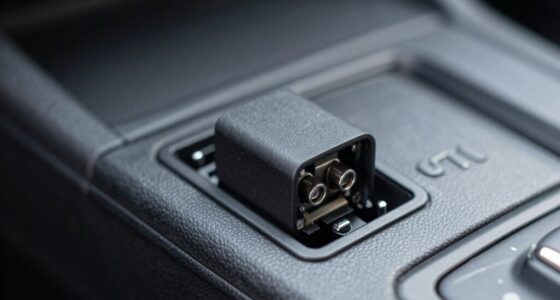
ETENWOLF T300 Digital Tire Pressure Gauge 3-200 PSI, Industrial Tire Gauge Calibrated to ANSI B40.7 Grade 2A(Plus-Minus 0.5%), Replaceable AAA Batteries (Vivid Orange)
PROCESS LEVEL ACCURACY: Each ETENWOLF’s digital tire pressure gauge is calibrated manually to ANSI B40.7 Grade 2A(plus-minus 1…
As an affiliate, we earn on qualifying purchases.
As an affiliate, we earn on qualifying purchases.
The Science Behind Tire Pressure and Temperature
Understanding how temperature affects tire pressure starts with the physics of gases. When the temperature drops, air molecules slow down and contract, reducing pressure inside your tire. Conversely, warmer air causes molecules to move faster and expand, increasing pressure. Since your tire is a sealed system, volume stays constant, so pressure changes directly with temperature. According to the ideal gas law, a 10°F decrease can drop your tire pressure by about 1-2 PSI, depending on the tire type. This relationship explains why overnight temperature drops lead to noticeable pressure loss. The physics behind this is straightforward: colder temperatures cause a contraction of air molecules, and warmer temperatures cause expansion, making tire pressure sensitive to ambient temperature fluctuations**. Additionally, temperature fluctuations are a common reason for these pressure changes, especially in outdoor environments. Recognizing the impact of temperature variations can help you better monitor and maintain proper tire pressure throughout the year. Regularly checking your air pressure levels can prevent unsafe driving conditions and improve fuel efficiency, as proper inflation is crucial for optimal vehicle performance. Proper air pressure maintenance** ensures safety and prolongs tire life, especially when considering these natural temperature effects.

AstroAI L7 Tire Inflator Portable Air Compressor Cordless Mini Bike Pump with Digital Dual Values Display, 150 PSI Car Tires Air Pump with LED Lights&Pressure Gauge for Auto, Motorcycles, Bikes, Balls
ADVANCED TRUEGAUGE SCREEN: This battery tire inflator includes updated sensor technology, capable of collecting pressure data from tire…
As an affiliate, we earn on qualifying purchases.
As an affiliate, we earn on qualifying purchases.
How Cold Temperatures Affect Air Molecules in Tires
When temperatures drop, the air molecules inside your tires slow down and move closer together. This contraction reduces the space between molecules, decreasing tire pressure. As molecules cluster tighter, they exert less force on the tire walls, leading to lower pressure readings. Here’s how temperature impacts pressure:
| Temperature Change | Effect on Molecules | Resulting Pressure Change |
|---|---|---|
| Drop of 10°F | Molecules slow, contract | ~1 PSI pressure drop |
| Drop of 30°F | Molecules considerably slow | ~3 PSI loss |
| Rise of 10°F | Molecules speed up, expand | ~1 PSI increase |
| Rise of 50°F | Molecules expand considerably | ~5 PSI increase |
Understanding this helps you see why cold nights cause tire pressure to fall, affecting safety and performance. Additionally, temperature-related pressure changes can vary based on factors like tire volume and initial pressure, and the rate of change may differ depending on the initial tire pressure. Also, the air compression inside tires follows the ideal gas law, which explains why pressure varies with temperature. For example, variations in ambient temperature can have a significant impact on tire pressure overnight. So, it’s wise to check your tires regularly in different weather conditions. Being aware of pressure fluctuations due to temperature can help you maintain optimal tire safety.

Tymate TM7 Tire Pressure Monitoring System, Wireless TPMS with 4 External Sensors & 6 Alarm Modes, Colorful Display, Real-time Tire Pressure Monitor System, Ideal for RV SUV MPV Truck Sedan(0-144 PSI)
[Accurate Real-time Monitoring & Multi-Alert System]: Tymate TM7 tpms sensor can be used to monitor your tires’ pressure…
As an affiliate, we earn on qualifying purchases.
As an affiliate, we earn on qualifying purchases.
The Ideal Gas Law and Its Impact on Tire Inflation
The ideal gas law explains how temperature directly influences tire pressure by describing the relationship between pressure, volume, and temperature. Since your tires are sealed, volume stays constant, so any change in temperature impacts pressure directly. When temperatures drop, air molecules move slower and cluster closer together, reducing pressure. Conversely, warmer air speeds up molecules, increasing pressure. For example, a 10°F decrease typically causes a 1-2 PSI drop, depending on tire type. This law clarifies why overnight cold spells lead to lower tire pressure, even without leaks. Additionally, pressure fluctuations are predictable based on temperature changes, emphasizing the importance of regular monitoring. Understanding this correlation helps you see that pressure variations aren’t random but predictable, based on temperature changes. This knowledge highlights the importance of thermal expansion in maintaining proper tire pressure. Regularly monitoring and adjusting your tire pressure ensures safety and peak performance, especially during seasonal transitions. Recognizing the temperature-pressure relationship can help prevent underinflated tires and extend their lifespan. Moreover, awareness of environmental factors can aid in better managing tire maintenance over time. Recognizing how pressure changes respond to temperature shifts can also improve your ability to predict and prepare for seasonal tire adjustments.
AstroAI L7 Tire Inflator Portable Air Compressor Cordless Mini Bike Pump with Digital Dual Values Display, 150 PSI Car Tires Air Pump with LED Lights&Pressure Gauge for Auto, Motorcycles, Bikes, Balls
ADVANCED TRUEGAUGE SCREEN: This battery tire inflator includes updated sensor technology, capable of collecting pressure data from tire…
As an affiliate, we earn on qualifying purchases.
As an affiliate, we earn on qualifying purchases.
Quantifying Pressure Loss During Overnight Cold Spells
Overnight cold spells can cause measurable drops in tire pressure, and quantifying this loss helps you anticipate when to check and adjust your tires. Typically, for every 10°F temperature decrease, your tire pressure drops by about 1 to 2 PSI, depending on tire type. For example, a 30°F drop can lead to a 3-6 PSI loss. To estimate your pressure loss, note the overnight temperature change and multiply by the rule of thumb—1 PSI per 10°F for light-duty tires or up to 2 PSI for heavier-duty tires. This calculation helps you decide whether to add air in the morning or if your pressure remains within safe limits. Regular checks guarantee peak performance, safety, and tire longevity during seasonal temperature fluctuations. Understanding Gold IRA Markets can also help diversify your investments during economic shifts. Additionally, being aware of temperature math helps you better grasp how environmental factors impact vehicle maintenance. Recognizing how thermal expansion and contraction affect tires can further improve your maintenance routine, especially when considering how pressure changes are influenced by ambient temperatures. Furthermore, understanding the relationship between temperature and pressure can help you predict and manage seasonal variations more effectively.
Real-World Examples of Temperature-Induced Tire Pressure Changes
You’ve probably noticed your tire pressure changing after cold nights. For example, a 30°F drop can reduce pressure by over 3 PSI by morning. These real-world shifts highlight how temperature swings directly impact your tires’ performance. Understanding the science of temperature effects can help you better anticipate and manage these fluctuations, especially since gas laws explain why pressure varies with temperature changes. Recognizing how air expands and contracts with temperature shifts can make it easier to predict and maintain optimal tire pressure. Additionally, proper tire maintenance involves regularly checking pressures to ensure safety and efficiency.
Overnight Temperature Drops
When temperatures drop sharply overnight, tire pressure can decrease noticeably, affecting your vehicle’s performance and safety. For example, a 30°F temperature drop can cause over 3 PSI of pressure loss in your tires. If you wake up in the morning after a cold night, you might notice your tire pressure reading lower than the previous day. In Burbank, where temperatures fall from 75°F to 55°F overnight, your tires could lose about 2-3 PSI, potentially leading to underinflation. Tires exposed to shade often experience a lower temperature, resulting in a pressure decrease of around 1.5 PSI, while sun-exposed tires might see a rise of 5 PSI during the day. These fluctuations are normal but highlight the importance of checking and adjusting your tire pressure regularly, especially after cold nights.
Morning Pressure Variations
Morning pressure variations are a common occurrence due to temperature fluctuations overnight. As temperatures drop, your tire pressure decreases, sometimes by over 3 PSI. Here’s what you might notice:
- Tires inflated in the afternoon might read 2-5 PSI lower the next morning due to cooling.
- A shade-covered tire can gain about 1.5 PSI overnight as temperatures fall from 85°F to 67°F.
- Sun-exposed tires may increase pressure by up to 5 PSI after warming from night to morning.
These changes happen because cooler air contracts, reducing pressure, while warmer air expands it. Checking your tires in the morning ensures accurate readings. Adjustments might be needed to compensate for natural temperature shifts.
Practical Rules of Thumb for Monitoring Tire Pressure
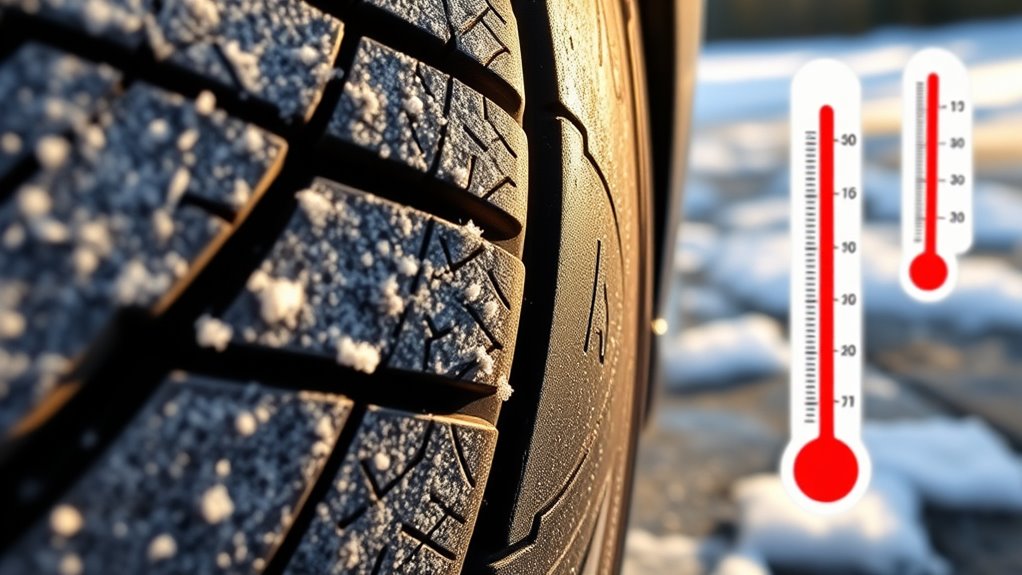
Monitoring your tire pressure effectively requires understanding some simple rules of thumb that account for temperature fluctuations. For every 10°F change in air temperature, expect about 1-2 PSI variation in your tires. In general, a 30°F overnight drop can lead to a 3 PSI decrease, so check pressures in the morning when tires are cold. Use this table to guide your adjustments:
| Temperature Change | Approximate PSI Change |
|---|---|
| 10°F increase | +1 to 2 PSI |
| 10°F decrease | -1 to 2 PSI |
| 30°F decrease | -3 to 6 PSI |
| Seasonal swing | 5 to 10 PSI |
Regular monitoring helps catch leaks early, ensuring safety and efficiency. Adjust inflation accordingly, especially during temperature shifts.
Risks of Ignoring Cold-Related Tire Underinflation
Ignoring cold-related tire underinflation can lead to serious safety and performance issues. When your tires are underinflated, your vehicle’s handling, braking, and traction suffer, especially on wet or icy roads. Plus, the increased rolling resistance reduces fuel efficiency. Here are key risks:
- Higher blowout risk: Underinflated tires generate excess heat, increasing the chance of a blowout.
- Uneven tire wear: Cold-induced underinflation causes edges to wear faster, shortening tire lifespan.
- Longer stopping distances: Lower pressure diminishes grip, delaying braking response and risking accidents.
Failing to address these issues compromises your safety and can lead to costly repairs. Monitoring and maintaining proper tire pressure, especially during temperature drops, is essential for safe driving.
Best Practices for Maintaining Proper Tire Pressure Across Seasons
To keep your tires properly inflated year-round, you need to adjust for seasonal temperature changes and check your pressure regularly. Be aware that colder months can cause pressure drops, while warmer seasons may increase it, so seasonal adjustments are essential. Make it a habit to measure your tire pressure in the morning and follow manufacturer recommendations for peak performance.
Seasonal Pressure Adjustments
Seasonal temperature fluctuations can considerably impact your tire pressure, so adjusting for these changes is essential to maintain ideal performance and safety. To manage this effectively, follow these best practices:
- Regularly check your tire pressure at consistent times, ideally in the morning when temperatures are cooler.
- Adjust the pressure based on seasonal changes, adding a few PSI in winter to compensate for cold-induced pressure drops.
- Keep an eye on ambient temperatures; for every 10°F decrease, expect about 1-2 PSI loss, and increase pressure accordingly before long drives.
Regular Pressure Checks
Regularly checking your tire pressure is the most effective way to guarantee your tires stay properly inflated throughout the year. Consistent inspections help you catch pressure drops caused by temperature changes or slow leaks before they become serious issues. Perform these checks when tires are cold, ideally in the morning, to get accurate readings. Use a reliable gauge and compare your measurements to the manufacturer’s recommended pressure. Adjust your tires as needed, especially after significant temperature shifts or seasonal changes. Keep a record of pressure levels over time to identify patterns or leaks. Regular checks ensure maximum fuel efficiency, tire longevity, and safety, no matter the season. Making this a routine saves you money and reduces the risk of accidents caused by underinflated tires.
Why Regular Checks Are Essential for Safe Driving
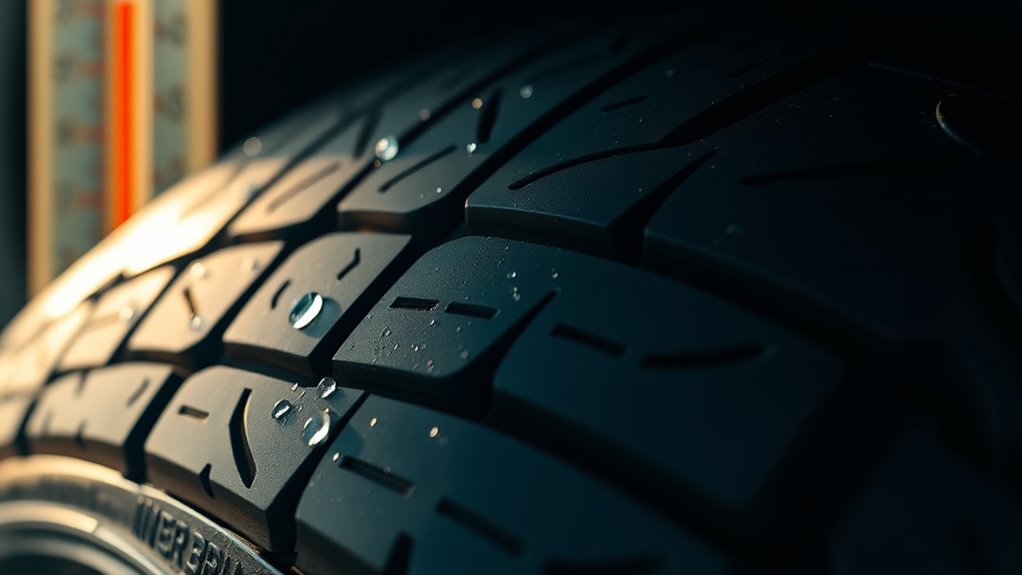
Since tire pressure naturally fluctuates with temperature changes, checking your tires regularly is essential for safe driving. When you don’t monitor pressure, you risk driving with underinflated or overinflated tires, both of which compromise safety. Regular checks help you:
Regularly check your tire pressure to ensure safety and optimal performance.
- Detect pressure drops caused by overnight temperature dips, preventing underinflation.
- Maintain ideal tire pressure, ensuring better fuel efficiency and tire longevity.
- Identify leaks or damage early, avoiding sudden blowouts.
Frequently Asked Questions
How Does Altitude Change Affect Tire Pressure Overnight?
Altitude changes can affect your tire pressure overnight because higher elevations have lower air density, causing pressure to decrease. When you ascend in altitude, expect your tire pressure to drop slightly, roughly 1 PSI for every 1,000 feet gained. Conversely, descending raises pressure. Always check your tires after altitude changes, especially if overnight camping or traveling, and adjust the pressure to maintain ideal safety and performance.
Can Cold Weather Cause Tire Pressure to Drop Below Recommended Levels?
You might wake up to underinflated tires, especially if cold weather hit overnight. When temperatures drop 10°F, your tire pressure can decrease by about 1-2 PSI. So, if it’s chilly outside, your tires could fall below the recommended levels without you noticing. That’s why it’s smart to check your tire pressure in the morning when it’s cold, ensuring ideal safety and performance.
Does Using Nitrogen Inflation Prevent Pressure Fluctuations From Temperature?
Using nitrogen inflation helps reduce pressure fluctuations caused by temperature changes. Since nitrogen molecules are larger and less permeable than oxygen, they expand and contract less with temperature swings. You’ll notice more stable tire pressure over time, especially during seasonal shifts. While it doesn’t completely eliminate pressure changes, nitrogen minimizes the effects, helping you maintain consistent tire performance and safety with less frequent adjustments.
How Quickly Does Tire Pressure Recover When Temperatures Rise Again?
When temperatures rise, your tire pressure bounces back like a rubber ball, often within a few hours. As the air warms, molecules expand, restoring pressure quickly—usually within 1 to 3 hours after exposure to higher temps. If your tires are cold in the morning, they’ll regain ideal pressure as daytime heat hits. Regularly check and top off your tires, especially during seasonal shifts, to keep them safe and efficient.
Are Certain Tire Types More Sensitive to Temperature-Induced Pressure Changes?
Certain tire types are more sensitive to temperature-induced pressure changes, especially heavy-duty and Class A tires. You’ll notice these tires experience a 2 PSI drop per 10°F shift, doubling the effect seen in light-duty tires. This heightened sensitivity is due to their larger volume and construction, making temperature fluctuations more impactful. To keep them safe, check and adjust their pressure more frequently, especially during seasonal changes or extreme weather.
Conclusion
Remember, your tires are like silent messengers, revealing the story of the changing seasons through their pressure. As temperatures drop, so does the air inside, whispering warnings you can’t ignore. Regularly checking your tire pressure keeps you in control and safe on the road. Don’t wait for a flat to listen—heed the silent language of your tires, for in their quiet shifts lies your journey’s true safety.