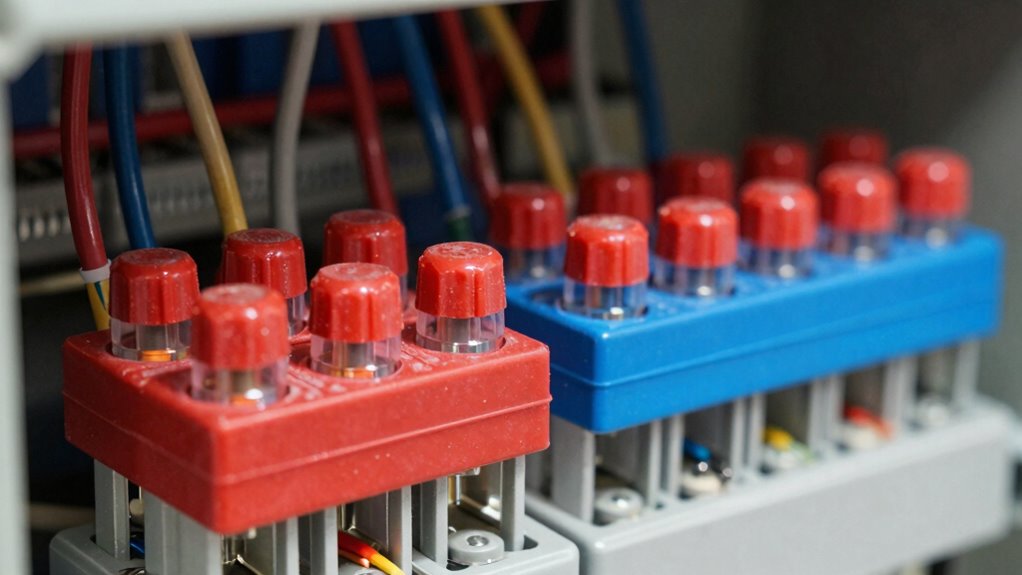

When choosing fuses to tap into, make certain the fuse’s rating matches or exceeds the load of the new device without being too high, which can compromise safety. Avoid tapping into fuses rated far below your device’s requirements, as this causes frequent blowouts, or those rated much higher, risking overloads and fires. Always verify the fuse type and system compatibility. Keep safety in mind, and you’ll find out more about which fuses are safe to tap into.
Key Takeaways
- Only tap into fuses rated appropriately for the circuit’s load and device specifications.
- Avoid tapping into fuses with ratings significantly higher than the original circuit to prevent overloads.
- Use fuse types compatible with your system, such as automotive blade or glass tube fuses, based on application.
- Verify fuse ratings, type, and manufacturer guidelines before tapping to ensure safety and proper protection.
- Consult a professional if unsure about fuse compatibility or circuit requirements to prevent safety hazards.

Choosing the right fuse to tap into is essential for guaranteeing your electrical system’s safety and reliability. When you’re working with hardwired fuse setups, selecting the correct fuse isn’t just about convenience—it’s about proper circuit protection and safety considerations. A fuse that’s too small might blow prematurely, cutting power unexpectedly and possibly damaging connected devices. Conversely, a fuse that’s too large can fail to protect your wiring and components from overloads, risking fire hazards or equipment failure. Thus, understanding which fuses are safe to tap and which aren’t is crucial for maintaining a secure and efficient electrical system.
Selecting the correct fuse ensures safety, prevents damage, and maintains reliable circuit protection.
In general, it’s safest to tap into fuses that are rated appropriately for the circuit’s load. This means matching the fuse’s amperage rating to the maximum current your devices and wiring can handle safely. When you tap into a fuse with a lower rating than the circuit requires, you risk frequent blowouts, which can be inconvenient and potentially dangerous if you’re not present to reset or replace the fuse. On the other hand, tapping into a fuse rated considerably higher than the circuit’s needs defeats the purpose of circuit protection altogether. It leaves your wiring vulnerable to overloads, increasing the risk of overheating, short circuits, or fires.
Safety considerations also involve understanding the type of fuse you’re working with. Standard blade fuses, glass tube fuses, and automotive fusible links have different characteristics. For instance, automotive blade fuses are designed for specific voltage and current levels, and tapping into a fuse outside its intended application can compromise safety. When you decide to tap into an existing fuse, always verify its rating, type, and compatibility with your system. Using the wrong fuse, or tapping into one not meant for your load, can create dangerous situations.
Furthermore, it’s important to think about the overall circuit design. If you’re adding a new device or component, ensure that your wiring and fuse choices align with the current capacity of the circuit. Overloading a circuit—even with a fuse rated for a higher amperage—can lead to overheating and pose safety hazards. Always follow manufacturer guidelines and electrical codes, and when in doubt, consult a professional. Remember, the goal is to maintain a safe, reliable, and properly protected electrical system, so choosing the correct fuse and understanding safety considerations should always be your top priorities.
Frequently Asked Questions
Can I Upgrade a Fuse Without Changing the Wiring?
Yes, you can upgrade a fuse without changing the wiring if the new fuse matches the wiring compatibility and current ratings. Just make certain the fuse’s amperage and type align with your vehicle’s specifications. Using an incompatible fuse can cause electrical issues or damage. Always check your vehicle’s manual or consult a professional to confirm the upgrade is safe and appropriate for your wiring setup.
What Signs Indicate a Fuse Needs Replacing?
Imagine a fuse as a delicate bridge, and when it’s weakened, cracks show. You’ll notice a blown fuse by a visual inspection—look for a broken filament or discoloration. Signs you need to replace it include frequent tripping, burns, or a fuse that’s visibly damaged. Always check the fuse rating to make certain you’re replacing it with the correct one; using the wrong rating can cause more harm than good.
Are There Specific Tools for Testing Fuse Safety?
Yes, you should use testing equipment like a multimeter or a fuse tester to check fuse safety. These tools help you determine if a fuse is functioning properly without risking electrical shock. Always follow safety protocols, such as turning off power before testing and wearing insulated gloves. Proper testing equipment guarantees accurate results and keeps you safe while inspecting fuses, preventing potential electrical hazards.
How Do Environmental Factors Affect Fuse Safety?
Environmental factors like corrosion impact and temperature effects can jeopardize fuse safety. Corrosion can weaken the fuse or cause poor connections, increasing the risk of failure. Extreme temperatures, whether hot or cold, can alter the fuse’s performance, making it more prone to blowing or failing prematurely. You should regularly inspect fuses for corrosion and avoid tapping into fuses exposed to harsh environmental conditions to ensure safety and reliability.
Is It Safe to Bypass a Blown Fuse Temporarily?
It’s generally unsafe to do a temporary bypass of a blown fuse, as it can create safety concerns and potential damage. Bypassing might restore power temporarily, but it risks overloads or short circuits, which could cause fires or equipment failure. Always replace blown fuses promptly and avoid shortcuts. If you’re unsure, consult a professional to ensure safety and proper handling, rather than risking dangerous temporary fixes.
Conclusion
Think of your vehicle’s wiring as a delicate garden — each fuse is a watering can, carefully chosen to nourish without overdoing it. Tapping into the right fuse is like watering the right plant, ensuring healthy growth without drowning the roots. But if you pick the wrong one, it’s like overwatering or choking the plant. Stick to the safe options, and your electrical system will flourish just like a well-tended garden.