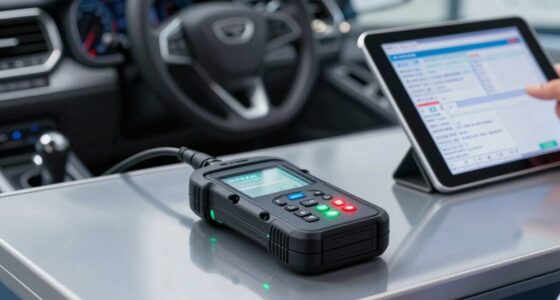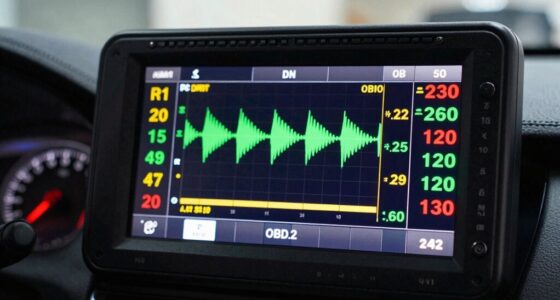
Your ECU detects misfires by monitoring fluctuations in crankshaft speed signals from the sensor and analyzing patterns to identify abnormal engine behavior. It stores specific fault codes like P0301 to P0308 to pinpoint affected cylinders and tracks misfire frequency and counters to determine severity. Freeze-frame data captures engine conditions during misfires, offering clues about when issues happen. If you keep exploring, you’ll discover how to interpret this data accurately and troubleshoot effectively.
Key Takeaways
- The ECU detects misfires by analyzing crankshaft speed fluctuations using signals from the crankshaft position sensor.
- Misfire codes like P0300 or P0301 indicate specific cylinder issues, which the ECU logs with detailed data.
- Misfire counters and frequency data reveal how often misfires occur, helping identify transient or persistent problems.
- Freeze-frame and fail-record data capture engine conditions at misfire moments, aiding in diagnosing root causes.
- Proper interpretation of ECU data involves verifying sensor signals and combining it with physical tests for accuracy.
Understanding How the ECU Detects Misfires
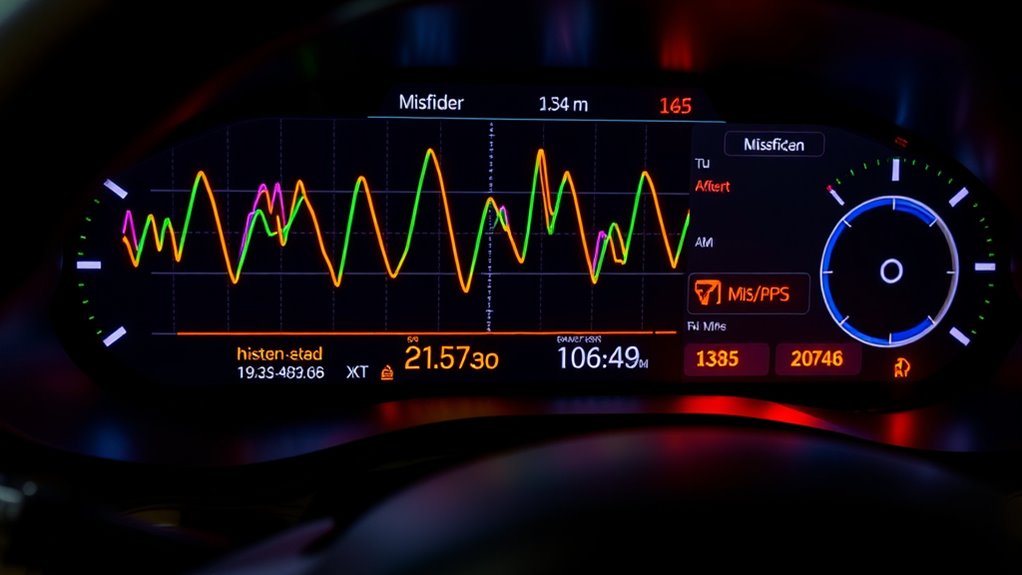
Understanding how the ECU detects misfires begins with recognizing that it primarily monitors crankshaft speed fluctuations. When a cylinder misfires, it produces less power during the combustion cycle, which slows the crankshaft’s rotation momentarily. The ECU uses signals from the crankshaft position sensor, which tracks the teeth on the timing wheel, to measure instantaneous RPM. It converts these signals into data that reveal tiny speed changes. By analyzing these fluctuations across multiple engine revolutions, the ECU can identify abnormal patterns indicative of misfires. It applies engine-specific baselines and correction factors to distinguish normal variations from true misfire events. When certain thresholds are exceeded, the ECU logs a misfire and may trigger diagnostic trouble codes, helping you pinpoint issues more efficiently. Additionally, understanding engine timing and how it affects combustion can further improve diagnostics. Recognizing engine load variations can also assist in more accurate misfire detection and diagnosis. Moreover, advancements in sensor technology enable more precise detection of subtle engine irregularities, enhancing diagnostic accuracy.
Deciphering Misfire Codes and Their Meanings
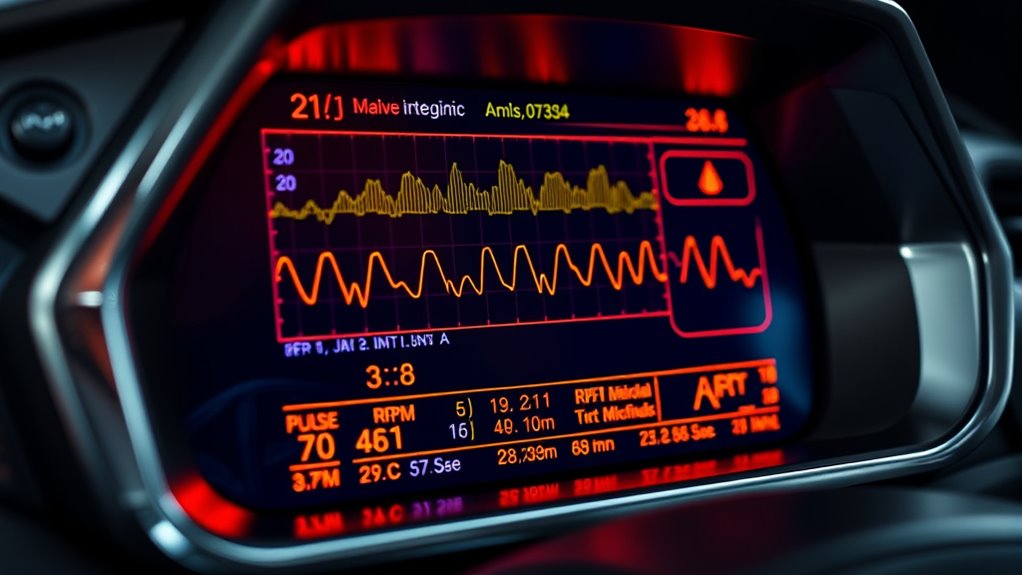
Deciphering misfire codes is key to pinpointing the specific causes behind engine performance issues. When you see a code like P0300, it indicates random or multiple misfires, while codes like P0301 through P0308 specify individual cylinders. These codes help you identify whether the problem is isolated or widespread. For example, a consistent P0301 suggests a cylinder-specific issue, such as a faulty spark plug or coil. Intermittent misfire codes point towards fuel delivery, vacuum leaks, or sensor errors. Cross-referencing these codes with freeze-frame data—like engine RPM or load—helps narrow down root causes. Recognizing the importance of wave and wind in relation to engine performance and diagnostics can offer additional insights into external factors influencing engine behavior. Remember, codes alone don’t tell the full story; they’re clues guiding your diagnostics toward the actual issue. Additionally, understanding the role of contrast ratio can assist in diagnosing issues with visual indicators or display screens used during diagnostics. Recognizing the importance of comprehensive vehicle data analysis, including both codes and physical tests, ensures a more accurate diagnosis. Incorporating sensor data correlations can further enhance the accuracy of your troubleshooting process. Moreover, considering environmental conditions can be crucial, as external factors like temperature and humidity often impact engine performance and diagnostic results.
Interpreting Misfire Counters and Frequency Data
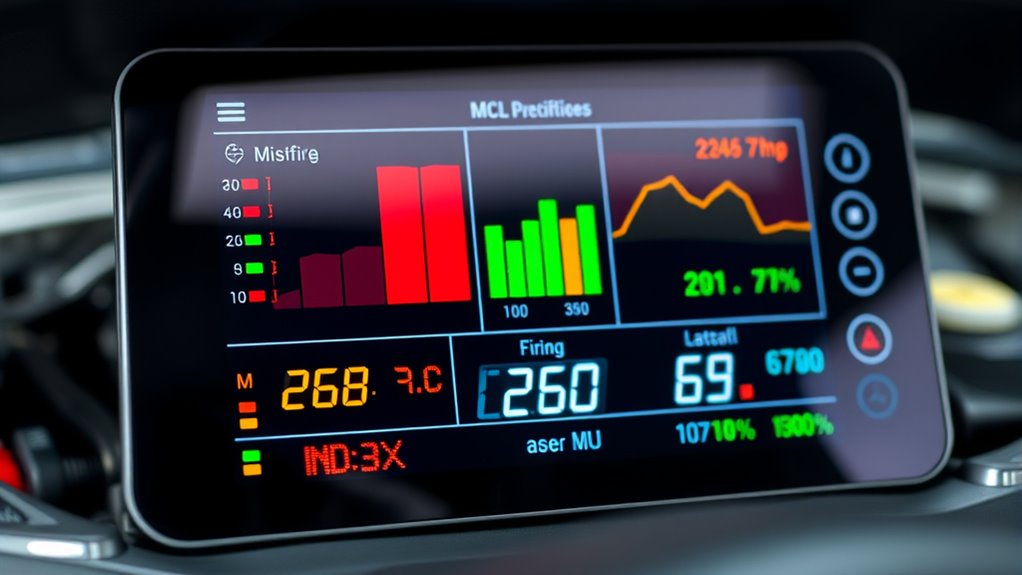
Interpreting misfire counters and frequency data is essential for pinpointing the nature and severity of engine misfires. Misfire counters track how often misfires occur within a specific time frame or engine cycle, helping you identify persistent issues versus sporadic ones. A high count with consistent timing points to a specific cylinder or hardware fault, while sporadic counts may suggest transient conditions like fuel starvation or vapor lock. Frequency data shows how often misfires happen during operation, revealing whether the problem is worsening or stabilizing. When analyzing this data, look for patterns—steady misfire counts in one cylinder suggest a mechanical issue, while scattered misfires across multiple cylinders often indicate fuel or ignition problems. Combining counts with engine parameters helps you assess whether misfire severity warrants immediate repair or monitoring. Additionally, understanding the common repairs associated with misfires can guide effective troubleshooting and maintenance. Regularly reviewing your diagnostic data ensures timely detection of developing issues before they lead to more significant engine damage. Proper interpretation of these metrics can also help identify ignition system issues that may be contributing to misfires. Using advanced engine diagnostics tools can further enhance your ability to accurately interpret complex misfire data and improve your troubleshooting efficiency. Recognizing patterns in misfire data can also assist in diagnosing underlying engine performance issues that may not be immediately apparent.
Analyzing Freeze-Frame and Fail-Record Information
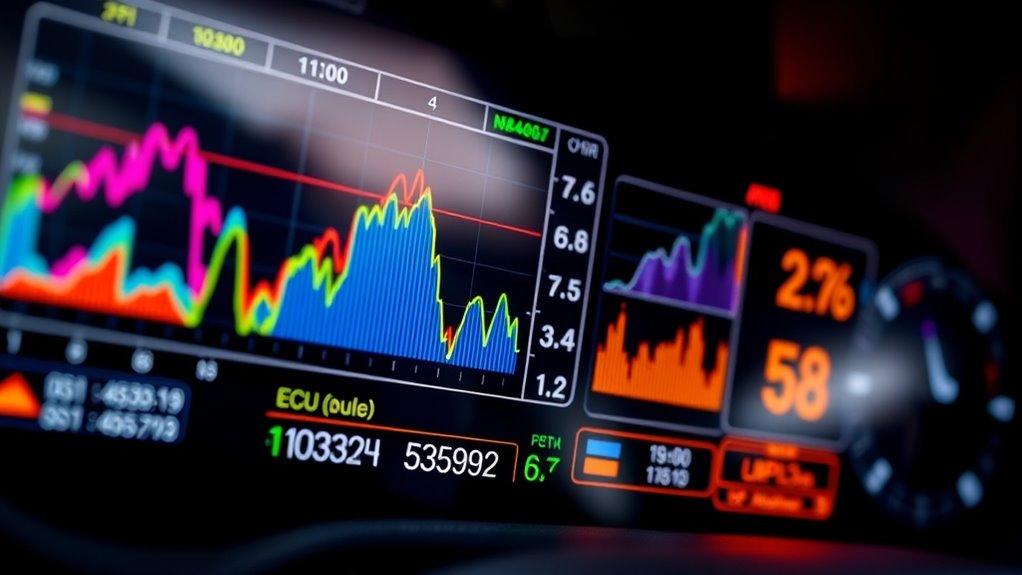
Analyzing freeze-frame and fail-record information provides critical context for diagnosing misfires. Freeze-frame data captures engine parameters at the moment a misfire is detected, including RPM, load, fuel trims, and sensor signals. This snapshot helps you understand the engine conditions during the fault, revealing whether misfires occur under specific loads, speeds, or temperatures. For example, a high load combined with a misfire may indicate fuel delivery issues. Fail-records, on the other hand, log multiple events, storing engine parameters at different times, which can highlight patterns or recurring issues. By comparing these records, you can identify if misfires happen consistently at certain RPM ranges or during particular operating conditions. This insight allows you to differentiate between transient problems, like vapor lock, and persistent faults, such as ignition or fuel delivery issues. Proper interpretation streamlines pinpointing the root cause and supports creating calm, organized diagnostic workflows. Additionally, understanding sensor signals and other related concepts can help refine your troubleshooting approach, ensuring you consider all relevant data points. Recognizing diagnostic data patterns can further improve your ability to identify underlying causes efficiently, especially when combined with insights from vehicle history and other contextual factors.
Common Pitfalls and Best Practices in Misfire Data Analysis
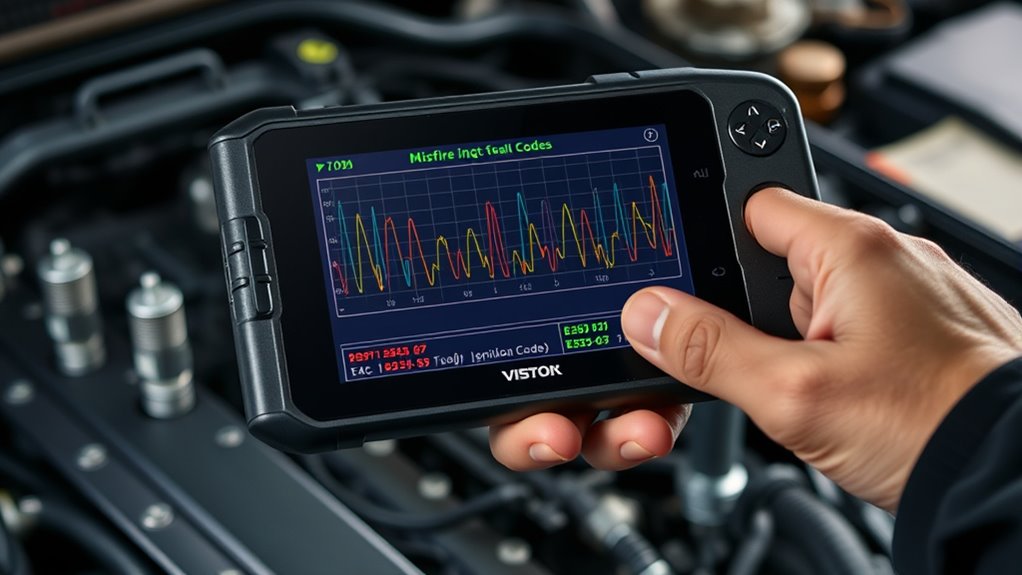
Misfire data can be tricky to interpret correctly, especially if you’re not aware of common pitfalls. One major mistake is jumping to conclusions without verifying sensor signals. Faulty crank or cam sensors, for example, can produce false misfire codes, leading you to replace parts unnecessarily. Another pitfall is ignoring the importance of baseline resets after component replacements; outdated learned data can skew misfire counts and diagnoses. Be cautious about transient conditions like fuel starvation or vapor lock that temporarily cause misfires but aren’t hardware issues. Additionally, relying solely on ECU data without physical tests can mislead you—ECU indicates symptoms, not root causes. Best practice is to combine ECU readings with waveform analysis, component testing, and understanding of specific vehicle conditions for accurate diagnosis.
Frequently Asked Questions
Can Misfire Data Indicate the Exact Root Cause of a Problem?
Misfire data alone can’t pinpoint the exact root cause of a problem. It shows you which cylinder misfires and how often, but identifying the root requires further testing. You need to interpret this data alongside physical inspections, such as checking spark plugs, fuel injectors, compression, or sensor signals. Combining ECU info with mechanical tests helps you accurately diagnose whether the issue stems from ignition, fuel, or internal engine components.
How Reliable Are ECU Misfire Readings Compared to Physical Component Testing?
ECU misfire readings are useful but not entirely reliable compared to physical component testing. They can detect misfire patterns and fault codes, but sensor errors, false positives, or transient conditions may skew results. Always verify ECU data with physical tests like compression checks, spark testing, or fuel flow analysis. Combining both approaches guarantees accurate diagnosis, preventing unnecessary part replacements and ensuring you address the true root cause effectively.
Do All Vehicles Store Detailed Misfire History in Their ECU?
Not all vehicles store detailed misfire history in their ECU. Some modern cars log misfire counts, freeze-frame data, and fail records, which help in diagnosing issues. However, many older or basic models only record trouble codes when thresholds are exceeded, without detailed event history. To access extensive misfire data, you might need manufacturer-specific tools or advanced diagnostic equipment, especially for complex or intermittent misfire problems.
What Are Signs of False Misfire Detection Caused by Sensor Issues?
You’ll notice false misfire detections if your ECU shows misfire codes without corresponding drivability issues. Common signs include erratic or fluctuating engine speed, inconsistent ignition or injector signals, or sensor error codes like crank or cam sensor faults. If the vehicle runs smoothly but the ECU reports misfires, it’s likely sensor problems. Always check sensor wiring, alignment, and signal integrity before assuming cylinder or ignition faults are to blame.
How Do Ambient Conditions Affect ECU Misfire Monitoring Accuracy?
Ambient conditions can throw a wrench in your ECU’s misfire monitoring, like fog blurring a clear road. High temperatures, humidity, or moisture can cause sensor signals to drift or become noisy, leading to false misfire detections. Cold starts or rapid temperature shifts can also delay sensor stabilization. These factors may cause the ECU to misinterpret normal conditions as misfires, so always consider environmental impacts when diagnosing engine trouble.
Conclusion
Now that you’ve learned to read your ECU’s misfire data, you’re like a modern-day detective with a digital magnifying glass, uncovering hidden issues before they escalate. Just remember, don’t get lost in the forest of numbers—trust your intuition and keep a checklist handy, like a trusty compass guiding you through the fog. With patience, you’ll navigate misfire mysteries as smoothly as a vintage car cruising down a sunset highway.