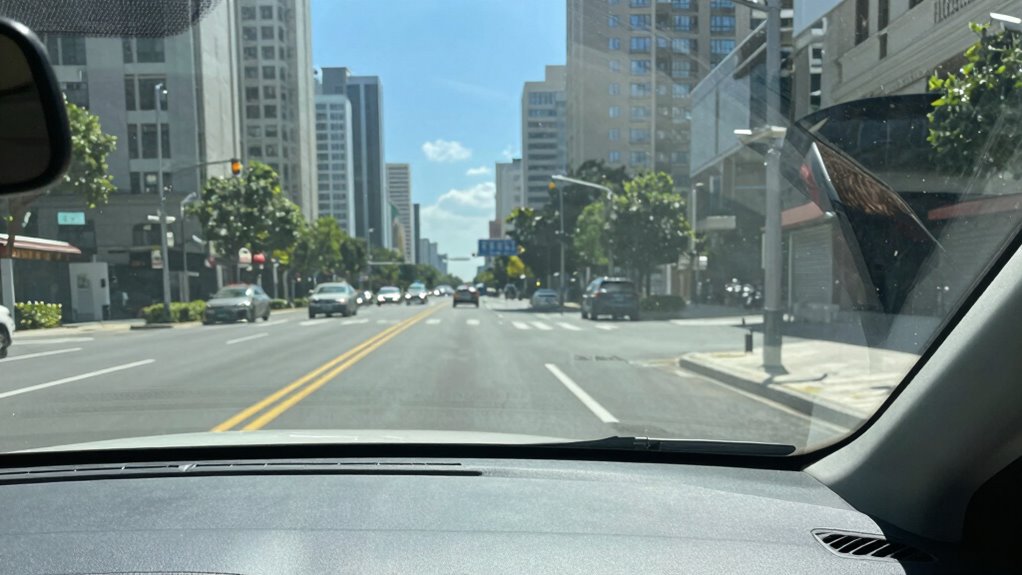

To reduce windshield reflections in your video without editing, try using polarized filters on your camera lens to cut glare. Adjust your camera angles—tilt slightly up or down and find positions that minimize reflections. Pay attention to light conditions and shoot when natural light causes less reflection. Keep the camera position behind the light source and experiment with different spots. If you want to learn more effective techniques, you’ll find tips that can help you improve footage right away.

Get business pricing on garage and car supplies
- Business-only prices and quantity discounts
- Tax-exempt purchasing
- Multiple users, one account, clear invoices
Key Takeaways
- Use polarized filters attached to the camera lens to minimize glare and reflections in real-time.
- Adjust camera angles to shoot from positions that avoid direct reflections on the windshield.
- Position the vehicle and camera so light sources are behind the camera, reducing glare.
- Choose filming times and environments with favorable lighting to minimize reflections naturally.
- Experiment with different camera heights and tilts to find angles that lessen windshield reflections.
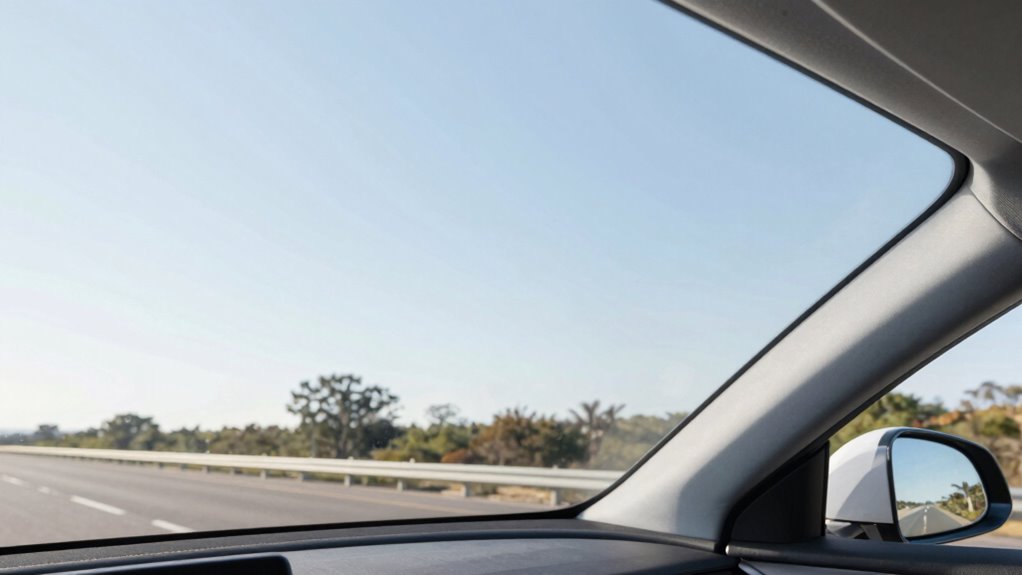
When filming through a windshield, reflections can often obscure your footage and detract from its clarity. These reflections come from light bouncing off the glass surface, creating glare and unwanted images that interfere with your shot. To combat this, you need to be strategic with your equipment and approach. Using polarized filters is one of the most effective methods. These filters attach directly to your camera lens and work by filtering out polarized light, which is the primary cause of reflections. When you turn the polarized filter, you can reduce or eliminate glare from the glass, allowing your footage to appear clearer and more professional. Keep in mind that the effectiveness of a polarized filter depends on the angle of the light and the position of your camera relative to the windshield. Additionally, understanding how polarized light interacts with the glass can help you optimize your filming strategy for better results. Adjusting your camera angles is another critical step. Instead of shooting directly through the glass, try to find angles that minimize the reflection. For example, if you tilt your camera slightly downward or upward, you may reduce the amount of reflected light entering the lens. Shooting from an angle where the glass isn’t directly facing the sun can *substantially* cut down on glare. Experimenting with different camera positions can also reveal optimal spots where reflections are less noticeable or eliminated altogether. Positioning yourself so that the light source is behind the camera can make a noticeable difference, as it reduces the chance of reflections bouncing into your lens. Recognizing how the orientation of the glass influences reflections can further improve your filming outcomes. Being mindful of the angle of incidence can also help you better predict and control reflections during shooting. Additionally, paying attention to the lighting conditions around the vehicle will help you choose the best time and environment for filming.
As an affiliate, we earn on qualifying purchases.
Frequently Asked Questions
Can Windshield Reflections Be Reduced Using Special Camera Filters?
Yes, you can reduce windshield reflections using special camera filters. A polarizing filter is especially effective, as it blocks polarized light that causes reflections, giving you clearer footage. Additionally, anti-reflective coatings on filters help minimize glare and reflections further. By using these filters, you can considerably improve your video quality without editing, capturing cleaner scenes through the windshield even in challenging lighting conditions.
Do Specific Times of Day Help Minimize Reflections in Videos?
Sure, shooting during midday can help minimize reflections, ironically the time when the sun’s glare is most intense. Natural lighting from early morning or late afternoon often offers softer, more diffuse light, reducing unwanted reflections. However, road conditions and your angle matter even more—aim for overcast days or cloudy skies, where diffused light and calmer road conditions work together to keep reflections at bay, making your footage clearer and more professional.
How Does Windshield Tinting Impact Reflection Visibility?
Windshield tinting considerably reduces reflection visibility by blocking some of the light that causes glare. When you tint your windows, it minimizes window glare, making reflections less noticeable and improving overall visibility. This means you can see more clearly through your windshield, especially during bright or sunny conditions. Tinting not only enhances safety but also helps create a clearer, less distracting view, making your driving experience more comfortable and safer.
Are There Recommended Camera Angles to Avoid Reflections?
You should avoid camera angles that directly face the windshield, as reflections will betray your shot. Instead, experiment with camera positioning—angle it slightly to the side or higher, where interior lighting creates fewer reflections. This subtle shift can make all the difference, revealing a clearer view. Be cautious—small adjustments in your camera angle can dramatically reduce glare, transforming your footage from distracting to professional.
Can Post-Production Techniques Completely Eliminate Windshield Reflections?
Post-production techniques like digital enhancement and reflection suppression can considerably reduce windshield reflections, but they might not completely eliminate them. You can improve the footage by carefully applying these methods, especially with advanced editing tools. However, some reflections may still be visible, depending on their intensity and the quality of the original shot. For the best results, combining good filming practices with post-production adjustments offers the most effective solution.
windshield reflection reduction filter
As an affiliate, we earn on qualifying purchases.
As an affiliate, we earn on qualifying purchases.
Conclusion
Now that you know how to tame those pesky windshield reflections, you’re like a skilled captain steering through stormy waters without leaving the wheel. With a few simple techniques, you can clear the fog and let your footage shine bright like a lighthouse guiding ships safely home. Think of it as revealing a secret window to crystal-clear views, making your videos as smooth as a calm sea. So go ahead, take control and let your visuals sparkle without a single edit!
As an affiliate, we earn on qualifying purchases.
As an affiliate, we earn on qualifying purchases.
Columbus Day / Indigenous Peoples' Day Picks
long weekend sales
As an affiliate, we earn on qualifying purchases.