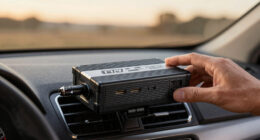
When you’re on a mountain, direct sunlight heats your phone quickly, and combining that with charging further raises its temperature. High-altitude conditions also stress the device’s internal cooling systems, causing it to overheat faster. This intense heat can weaken your battery and disrupt signal stability. If you keep using your phone this way, the effects worsen over time. To learn how to better protect your device in these conditions, continue exploring the details.
Key Takeaways
- Direct sunlight and high-altitude conditions cause rapid temperature increases in your phone.
- Charging while outdoors adds heat, creating a cycle that accelerates overheating.
- Overheating damages internal components and reduces battery lifespan over time.
- Excess heat weakens signal strength and causes connectivity issues on mountains.
- Proper device management, like avoiding charging in the sun, helps prevent overheating.
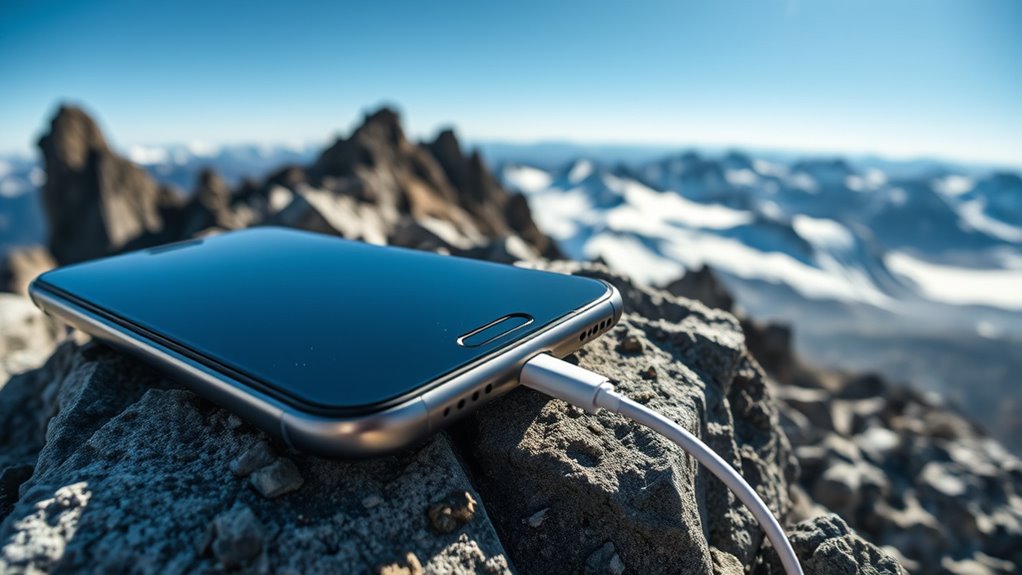
When you’re hiking or climbing on a mountain, your phone can unexpectedly overheat, especially under direct sunlight or in high-altitude conditions. This overheating isn’t just uncomfortable; it can also cause significant issues like battery degradation and signal loss. As your device gets hotter, the internal components work harder to keep up, which accelerates battery wear and reduces its overall lifespan. Over time, this means your phone won’t hold a charge as well, forcing you to recharge more frequently or replace the battery sooner than expected. Plus, high temperatures can cause your phone’s signal to weaken or cut out entirely, making it harder to stay connected when you need it most.
One major factor that contributes to overheating is the combination of charging your phone while using it outdoors. When you plug in your device to boost its battery life, the charging process generates heat. If you’re simultaneously exposed to the sun or high-altitude conditions, the extra heat from both the environment and charging can push your phone’s temperature past safe limits. This creates a cycle where the device heats up quickly, leading to faster battery degradation and increased risk of signal loss. The heat can interfere with how your phone’s antennas operate, making it harder to maintain a stable connection, especially in remote mountain areas with poor reception. As a result, you might find your messages delayed or calls dropping unexpectedly.
Additionally, high temperatures cause your phone’s processor and other internal components to work harder to manage temperature regulation, which consumes more power and generates even more heat. This feedback loop exacerbates overheating issues, putting your device under stress. The more you use your phone in such conditions, the faster these problems escalate. Over time, repeated exposure to these heat cycles can weaken internal parts, decreasing overall performance and reliability. It’s essential to recognize that the combined effects of sunlight and charging not only make your device uncomfortable to handle but also accelerate long-term damage, including battery degradation and signal instability. Proper device management can help mitigate these risks and keep your phone functioning well during your outdoor adventures.

Phone Cooler with Semiconductor Refrigeration,.Phone Cooler Fan for Tiktok Live Streaming, Outdoor Vlog, for Gaming This Works Phenomenal, Keeps Your Phone Cool While Keeping Speed Normal.
The cell phone cooler uses semiconductor refrigeration technology, and the heat dissipation effect on the back of the…
As an affiliate, we earn on qualifying purchases.
As an affiliate, we earn on qualifying purchases.
Frequently Asked Questions
Can Overheating Damage My Phone Permanently?
Yes, overheating can damage your phone permanently. When your device gets too hot, it accelerates battery degradation, affecting battery health over time. Excess heat also triggers thermal throttling, which slows down your phone to prevent damage but can impair performance. Consistent overheating may weaken internal components, leading to potential malfunctions or reduced lifespan. Keep your phone cool to protect its longevity and maintain ideal performance.
Are Some Phone Models More Susceptible to Overheating?
Like a delicate butterfly, some phone models, especially those with lower battery capacity, are more prone to overheating. You’ll find that phones with poor humidity effects management struggle in hot, humid environments, making them more susceptible. High-end models often have better heat dissipation, but no device is completely immune. So, when you’re on a mountain, your phone’s design influences how well it handles the sun and charging stress.
How Quickly Does a Phone Overheat on a Mountain?
On a mountain, your phone can overheat within 15 to 30 minutes, especially if it has a smaller battery capacity or is exposed to direct sunlight. Altitude effects cause lower air density, reducing cooling efficiency and increasing heat buildup. When you’re charging your device in these conditions, overheating happens even faster. To prevent this, keep your phone shaded, avoid charging unnecessarily, and limit usage to reduce heat generation.
Does Using a Phone Case Affect Overheating Risk?
Using a phone case can act like a cozy blanket, trapping heat and increasing overheating risk. Cases made from thick or insulated materials reduce heat transfer, making it harder for your device to cool down. If you’re on a mount, opt for a case with good ventilation or minimal insulation. This helps prevent your phone from overheating by allowing heat to escape more easily.
Are There Safe Ways to Cool My Phone Quickly?
Yes, you can cool your phone quickly by stopping its use and removing it from direct sunlight. Use thermal management techniques like turning on airplane mode to reduce heat-generating activity. Cooling accessories, such as a portable fan or a cooling pad, help dissipate heat faster. Keep your phone in a shaded area and avoid charging while hot, as it can worsen overheating. These steps help protect your device from damage.

ERRBBIC Solar Charger Power Bank 49800mAh, 22.5W Portable Charger, 15W Wireless Charging, Solar Panel Charger, Built-in Four Cable, with USB C for Cell Phones, with Dual Flashlight for Camping
【High Capacity & Multi-Device Charging】: This portable power bank is equipped with an ultra-high-capacity 49,800mAh battery, capable of…
As an affiliate, we earn on qualifying purchases.
As an affiliate, we earn on qualifying purchases.
Conclusion
So, next time your phone feels like it’s melting on that mountain, remember it’s the sun and charging combo at play—like a modern-day alchemy experiment gone wrong. Even with your trusty device, keep it shaded and unplugged when possible. Don’t let it turn into a tragic hero of the digital age, overheating in the wilderness. As the wise said in olden days, “A stitch in time saves nine,” so nip the heat in the bud before it turns into a tech tragedy.
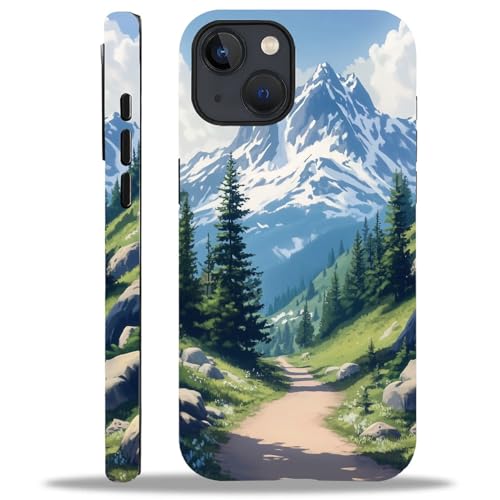
Yesad Case for iPhone 15, Hybrid 2-Layer Case, Shockproof Military-Grade Protection Durable Anti-Scratch Phone Case for Woman Man Boy Girl, Mountain Tree Landscape
[Dual Protection for Durability] The outer layer is made of high-elastic TPU silicone material, offering excellent resistance to…
As an affiliate, we earn on qualifying purchases.
As an affiliate, we earn on qualifying purchases.

TUNISE Portable Fan with 5-Speed Settings, Dual-Sided Clip on Wearable Belt Waist Fan for 8000mAh, 2 Settings including Flashlight,Travel Essential for Outdoor Camping as Power Bank
ALL IN ONE: This fan can be used as a neck fan, waist fan, desk fan, shirt fan,…
As an affiliate, we earn on qualifying purchases.
As an affiliate, we earn on qualifying purchases.