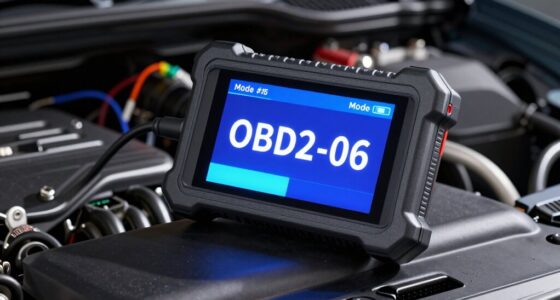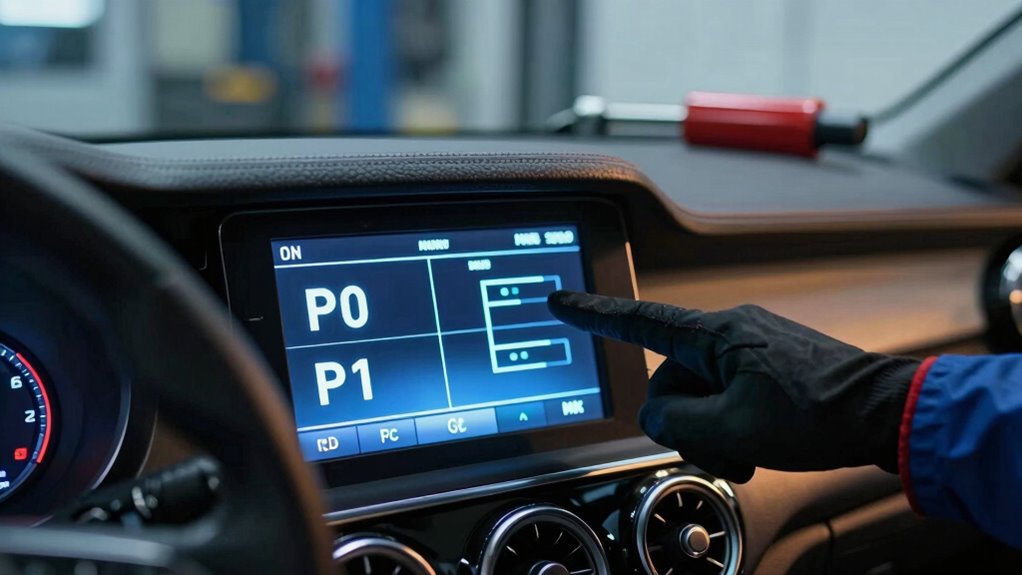

P0 codes are universal, indicating common issues like misfires or sensor faults, and are generally more urgent and easier to fix. P1 codes are manufacturer-specific, involving proprietary systems or calibration problems, which tend to be more complex and costly. Recognizing the difference helps you prioritize repairs and understand their severity. If you want to get a clearer picture of what each code means and how to approach them, there’s more to learn below.

Get business pricing on garage and car supplies
- Business-only prices and quantity discounts
- Tax-exempt purchasing
- Multiple users, one account, clear invoices
Key Takeaways
- P0 codes are universal and indicate widespread, often critical issues; P1 codes are manufacturer-specific and typically relate to proprietary systems.
- Standard scan tools easily read P0 codes with consistent formats; P1 codes may require OEM tools for accurate diagnosis.
- P0 codes usually signify urgent problems like misfires or emissions faults; P1 codes often involve subtle or complex system-specific issues.
- Repairs for P0 codes are generally straightforward and cost-effective; P1 codes can involve higher costs due to proprietary parts and diagnostics.
- Recognizing code types helps prioritize repairs, with P0 codes needing immediate attention and P1 codes requiring deeper OEM support.
Understanding the Basics of P0 and P1 Codes

To understand P0 and P1 codes, it’s essential to recognize that they both relate to vehicle diagnostics but serve different purposes. P0 codes are universal powertrain Diagnostic Trouble Codes (DTCs) standardized by SAE/OBD-II, meaning they apply to all makes and models. They identify common issues like misfires or sensor faults. P1 codes, however, are manufacturer-specific, created by individual automakers for unique systems or components. The second character in the code indicates if it’s generic (0) or proprietary (1). P0 codes help technicians quickly identify widespread problems, while P1 codes require OEM-specific knowledge. Recognizing the role of contrast ratio in image quality is also crucial for accurate diagnostics, as it impacts the visibility of subtle issues in visual displays. Understanding the diagnostic trouble code structure is vital for correctly interpreting the codes and determining the severity of the problem. Having a clear coding hierarchy can assist technicians in prioritizing repairs and troubleshooting steps effectively. Additionally, understanding the diagnostic trouble code severity helps determine the urgency of repairs and ensures proper resource allocation. Knowing the difference guarantees accurate diagnostics, avoiding misinterpretations that could lead to unnecessary repairs or overlooked issues. This distinction helps streamline troubleshooting and repair processes across different vehicles.
How to Recognize a P0 Code on Your Scan Tool
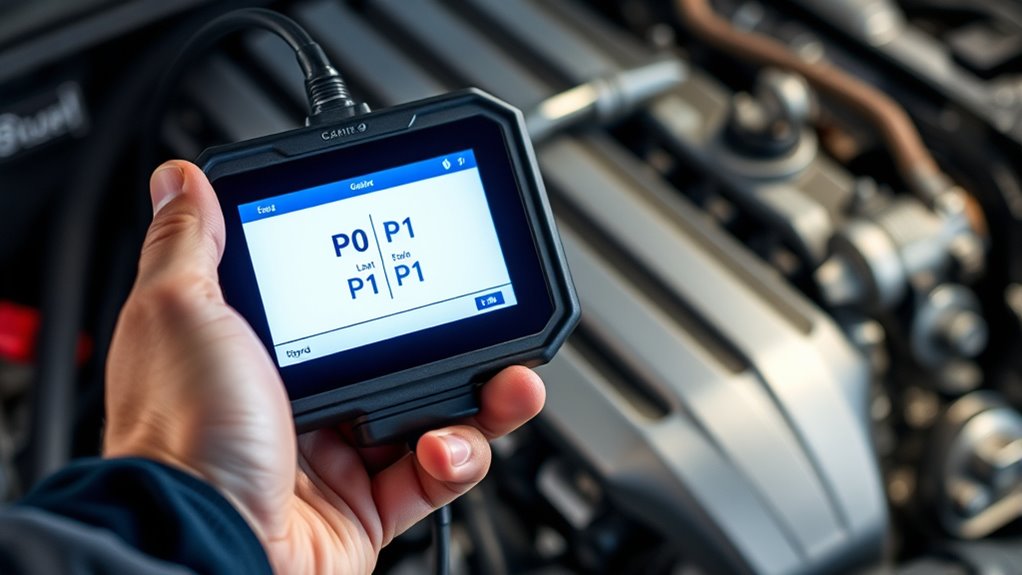
How can you quickly identify a P0 code on your scan tool? First, look at the code itself. P0 codes always start with a “P0,” followed by three digits, such as P0300 or P0133. Many scan tools display the code’s number and often include a brief description; if it begins with “P0,” it’s a generic powertrain code. Check the code list or database on your scanner if available—most aftermarket tools categorize codes by P0 (generic) and P1 (manufacturer-specific). Additionally, some scanners highlight or color-code P0 codes for easy recognition. Remember, P0 codes are standardized across makes and models, so their format remains consistent. Recognizing this pattern helps you quickly determine whether a code is universal or manufacturer-specific, guiding your diagnostic approach. Being aware of code categorization improves diagnostic efficiency and helps you prioritize repairs effectively.
The Significance of P1 Codes and When They Matter
Understanding when P1 codes matter is vital because they add diagnostic complexity and often require manufacturer-specific information. These codes can reveal detailed system issues that generic codes miss, but they also vary in repair procedures depending on the make and model. Recognizing their significance helps you avoid misdiagnosis and guarantees you follow the correct repair steps for each vehicle. Proper diagnostic procedures are essential to accurately interpret and address P1 codes effectively. Additionally, understanding vehicle-specific information can greatly enhance troubleshooting accuracy, especially since existential themes influence how we approach complex diagnostic scenarios. Knowing how essential oils support various health concerns can also be useful when considering holistic approaches to vehicle-related stress or discomfort during repairs. Moreover, familiarity with water-related vehicle issues can assist in diagnosing problems related to leaks or corrosion that may trigger certain codes.
Diagnostic Complexity Increase
Diagnosing vehicle issues becomes markedly more complex when P1 codes appear alongside or instead of generic P0 codes, because manufacturer-specific data often isn’t readily accessible or easily interpretable. P1 codes require OEM documentation, specialized tools, or dealer support to decode accurately. Without this, you risk misdiagnosing problems, leading to unnecessary repairs or overlooked safety concerns. Standard scanners often identify P0 codes easily, but P1 codes demand deeper OEM knowledge. The table below summarizes key differences:
| Aspect | P0 Codes | P1 Codes |
|---|---|---|
| Code origin | Standardized (SAE) | Manufacturer-specific |
| Diagnostic tools | Common OBD-II scanners | OEM tools or subscriptions |
| Interpretation | Widely understood | Varies by manufacturer |
| Repair complexity | Straightforward | Requires OEM procedures |
| Diagnostic time | Short | Longer, due to specialized data |
Manufacturer-Specific Details
Manufacturer-specific (P1) codes are critical because they reveal issues unique to your vehicle’s make and model, often involving proprietary sensors, modules, or calibration settings. Unlike generic codes, P1 codes require OEM-specific knowledge and tools to interpret correctly. They often point to problems with specialized components or software that aren’t covered in standard diagnostics. When you see a P1 code, it signals that the fault might relate to unique features only your vehicle’s manufacturer understands, like calibration parameters or manufacturer-specific modules. Diagnosing these codes usually involves accessing factory service information or using dealer-level scan tools. Ignoring the manufacturer-specific details can lead to incorrect repairs, missed issues, or increased costs, especially since P1 codes frequently impact vehicle performance or safety features.
Repair Procedure Variability
Because P1 codes often involve proprietary systems and calibration settings, their repair procedures can vary markedly between manufacturers and even specific vehicle models, making standard approaches insufficient. You can’t rely solely on generic scan tools; OEM-specific software or dealer support is often necessary. Here’s a quick comparison:
| Aspect | P0 Codes | P1 Codes |
|---|---|---|
| Repair Approach | Standardized, cross-model fixes | Manufacturer-specific, calibration-dependent |
| Diagnostic Tools | Common OBD-II scanners | OEM software and proprietary tools |
| Information Access | Widely available | Often behind paywalls or dealer-only |
| Repair Complexity | Lower, routine repairs | Higher, requiring special procedures |
Understanding this variability helps you avoid misdiagnoses, reduces repair time, and controls costs.
Common Examples of P0 Codes and Their Implications

You’ll find that common P0 codes, like misfire or oxygen sensor faults, are standardized across vehicles and point to specific issues. These diagnostic trouble codes provide clear indicators for repairs, helping you prioritize fixes and estimate costs. Understanding these typical diagnostic codes guarantees you can efficiently address problems and avoid unnecessary repairs. Additionally, many Vetted diagnostic codes are associated with specific vehicle systems, making troubleshooting more straightforward. Recognizing the diagnostic trouble code patterns can also assist in identifying underlying causes that may stem from broader system malfunctions, such as systemic failures affecting multiple components, which can be revealed through comprehensive system diagnostics.
Standardized Diagnostic Codes
Standardized P0 diagnostic codes serve as a universal language for identifying common powertrain issues across different vehicle brands. These codes help you quickly pinpoint problems without needing brand-specific software. For example, misfire codes like P0300 indicate engine misfires, affecting performance and emissions. Oxygen sensor faults such as P0131 signal fuel mixture issues that can damage the catalyst if ignored. Here’s a quick overview:
| Code Range | Common Issue |
|---|---|
| P0300–P0306 | Cylinder misfire |
| P0131, P0133 | Oxygen sensor malfunction |
| P0700 | Transmission control fault |
| P0420 | Catalyst system efficiency |
Using these codes streamlines diagnostics, allowing you to prioritize repairs and understand the severity quickly. Recognizing the importance of proper maintenance routines can prevent many of these issues from occurring in the first place.
Typical Repair Indicators
When a P0 diagnostic trouble code appears, it provides a clear indicator of a potential issue that can affect your vehicle’s performance or emissions. Common P0 codes include misfire codes like P0300–P0306, which signal irregular combustion that can cause rough running or engine damage if disregarded. O2 sensor faults such as P0131 or P0133 point to problems with fuel/air mixture regulation, risking increased emissions and potential catalyst damage. Transmission codes like P0700 indicate transmission system issues that may lead to shifting problems. These codes often trigger emissions tests or driveability concerns, prompting immediate or scheduled repairs. Recognizing these typical indicators helps you prioritize repairs, avoid costly damage, and ensure your vehicle remains compliant with emissions standards. Additionally, understanding the diagnostic trouble codes can help you interpret the severity and necessary repairs more effectively. Being familiar with repair indicators allows you to act quickly to prevent further complications, and knowing the severity levels of codes can guide your response to repairs.
Typical P1 Codes and What They Indicate

What do manufacturer-specific P1 codes reveal about your vehicle’s health that generic codes might miss? P1 codes point to unique systems, sensors, or modules that aren’t covered by standard OBD-II lists. They often indicate model-specific issues, calibration faults, or proprietary features like advanced driver-assistance systems or specialized transmission controls. For example, a P1 code might highlight a problem with a manufacturer-only sensor or a calibration error in a specific module. These codes can signal subtle issues that may not trigger generic codes but could affect performance, fuel economy, or drivability. Because P1 codes are tailored to each OEM’s design, they often require dealership-level diagnostics, OEM software, or factory service information for accurate interpretation and repair.
Differentiating Between Universal and Manufacturer-Specific Codes

How can you tell if a diagnostic trouble code is universal or manufacturer-specific? Look at the second character after the “P.” If it’s a “0,” the code is a P0, meaning it’s a universal, standardized code recognized across all makes and models under SAE/OBD-II. These codes cover common issues like misfires or oxygen sensor faults, making them easy to interpret with generic scan tools and repair procedures. If the second character is a “1,” it’s a P1, a manufacturer-specific code. These codes aren’t standardized and vary by brand, often referencing unique sensors, modules, or specific system faults. Diagnosing P1 codes typically requires OEM-specific tools, software, or dealer information, complicating repairs and increasing costs. Recognizing the difference helps you determine whether standard or specialized diagnostics are needed. Understanding diagnostic codes can help you better grasp the severity and necessary steps for repairs, especially when considering the support available from different manufacturers. Knowing the diagnostic code formats can further streamline your troubleshooting process and reduce guesswork.
Diagnostic Strategies for P0 Versus P1 Codes

Diagnostic strategies differ markedly between P0 and P1 codes because their origins and complexity influence the approach you take. For P0 codes, start with a standard scan tool to identify the code and use generic troubleshooting procedures. Focus on common causes like sensor faults, wiring issues, or mechanical failures, and verify with live data and freeze-frame info. P0 codes are consistent across vehicles, so troubleshooting is straightforward. For P1 codes, you need OEM-specific data. Begin by consulting manufacturer service information or contacting the dealer for detailed diagnostics. These codes often involve proprietary sensors, modules, or calibration faults. You may require specialized tools or software to interpret and resolve them. Prioritize safety and driveability issues first, then follow OEM procedures for precise diagnostics and repairs. Additionally, understanding the origin of the codes can help determine the appropriate diagnostic approach, especially when considering the effectiveness of home security systems and their impact on overall safety.
Tools and Resources Needed for P1 Code Troubleshooting
Troubleshooting P1 codes demands specialized tools and resources beyond standard OBD-II scanners. You’ll need OEM-specific scan tools that can communicate with the manufacturer’s modules and access proprietary data. These tools often include manufacturer software, calibration files, and firmware updates necessary to interpret complex P1 codes accurately. Access to OEM Technical Service Bulletins (TSBs) and repair databases is vital for understanding model-specific diagnostics, procedures, and calibration adjustments. Sometimes, reprogramming tools or flash software are required to update or reset modules. Dealer-level diagnostic equipment may also be necessary for advanced troubleshooting. Without these resources, you risk misdiagnosing or missing critical details, which can lead to incorrect repairs and increased costs. Proper tools streamline diagnostics, reduce guesswork, and guarantee accurate resolution of manufacturer-specific issues.
How P0 and P1 Codes Impact Repair Costs and Time
P0 codes typically lead to lower repair costs and quicker resolution because they can be diagnosed with standard OBD-II tools and common replacement parts. Since these codes are universal, you can often identify issues like misfires or oxygen sensor faults without specialized equipment. Repairs tend to be straightforward, and parts are readily available, reducing labor and part costs. In contrast, P1 codes often require OEM-specific diagnostic tools, proprietary software, or unique calibration procedures, which can drive up expenses. Diagnosing P1 codes may take more time, especially if you need dealer assistance or factory documentation. Overall, P0 codes streamline repairs and minimize costs, while P1 codes can extend repair times and increase expenses due to their proprietary nature.
Frequently Asked Questions
Can a P1 Code Be Safely Ignored Compared to a P0 Code?
You shouldn’t ignore a P1 code more than a P0 code. While P0 codes are generally standard and easier to diagnose, P1 codes are manufacturer-specific and may indicate critical issues unique to your vehicle. Ignoring a P1 can lead to more severe damage or costly repairs down the line. Always verify the code with a technician familiar with your make, especially before postponing repairs, to guarantee safety and proper vehicle functioning.
Are P1 Codes Always More Severe Than P0 Codes?
Is a P1 code always the darker shadow over a P0? Not necessarily. You might think manufacturer-specific codes are always more severe, but that’s not the case. P1 codes often indicate proprietary issues that may be less urgent but harder to diagnose and repair. Conversely, some P0 codes, like misfire or emissions faults, can threaten engine health or compliance. So, severity depends on the specific code, not just its classification.
How Do I Access Oem-Specific Data for P1 Codes?
To access OEM-specific data for P1 codes, you need manufacturer-level scan tools or software. You can subscribe to OEM diagnostic platforms, such as Ford IDS, GM Tech 2, or BMW ISTA, which provide detailed code explanations, test procedures, and calibration data. Alternatively, contact the dealer or use factory service information systems. These tools give you the precise, model-specific info required to accurately diagnose and repair P1 codes efficiently.
Do All Scan Tools Reliably Differentiate Between P0 and P1 Codes?
Think of scan tools as maps guiding you through a dense, unfamiliar forest. Not all maps mark every trail clearly; some miss hidden paths. Similarly, not all scan tools reliably distinguish P0 from P1 codes. Basic scanners may only point to the general area, while advanced OEM tools reveal detailed, specific routes. To navigate accurately, invest in high-quality, manufacturer-specific tools that can differentiate codes with precision.
Can P0 and P1 Codes Appear Simultaneously on the Same Vehicle?
Yes, P0 and P1 codes can appear simultaneously on your vehicle. When you scan, you’ll often see both generic (P0) and manufacturer-specific (P1) codes listed together. This combination helps you identify common issues quickly while also highlighting unique, model-specific problems. Addressing both types guarantees a thorough diagnosis, saving you time and potentially avoiding misdiagnosis. Always note which codes are P0 or P1 for accurate repairs.
Conclusion
Understanding P0 and P1 codes is like having a map to your car’s health, guiding you through the twists and turns of repairs. Recognizing their significance helps you act swiftly and confidently, saving time and money. Think of these codes as your vehicle’s heartbeat—when you know what they mean, you can keep your car running smoothly and avoid bigger breakdowns ahead. Stay informed, and your ride will thank you for it.
Halloween Picks
halloween
As an affiliate, we earn on qualifying purchases.