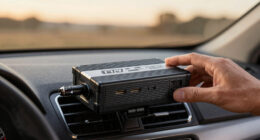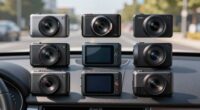
The best spot for your dash cam is behind the rearview mirror, where it offers an unobstructed, wide view without blocking your vision. Position it at the center of your windshield, just below the tinted area, to cover forward and side views effectively. Keep cables tucked along the headliner or A-pillar for a clean look. Want to guarantee perfect angles and safety? Keep exploring for more practical tips.
Key Takeaways
- Mount behind the rearview mirror, aligned with the center of the windshield for an unobstructed, wide field of view.
- Position on the driver’s side below tinted areas, avoiding blind spots and glare.
- Use adjustable mounts to tilt the camera upward or downward for optimal horizon coverage.
- Route cables neatly along A-pillars or headliner to keep the view clear and prevent distractions.
- Ensure the mount is secure, discreet, and compliant with safety regulations to prevent obstructions or legal issues.
VANMASS【85+LBS Strongest Suction & Military-Grade 2026 Ultimate Car Phone Mount【Patent & Safety Certs】 Cell Phone Holder Truck for Dash Windshield Vent for iPhone 17 Pro Max Automobile Accessory Kits
【𝐁𝐄𝐒𝐓 𝐂𝐡𝐨𝐢𝐜𝐞: 𝐇𝐢𝐠𝐡-𝐄𝐧𝐝 𝐂𝐚𝐫 𝐌𝐨𝐮𝐧𝐭 𝐓𝐫𝐮𝐬𝐭𝐞𝐝 𝐛𝐲 𝟗,𝟗𝟎𝟎,𝟎𝟎𝟎+𝐔𝐬𝐞𝐫𝐬 𝐨𝐯𝐞𝐫 𝟏𝟎 𝐘𝐞𝐚𝐫𝐬】VANMASS Car holder accessory kits is certified by...
As an affiliate, we earn on qualifying purchases.
Optimal Placement Behind the Rearview Mirror
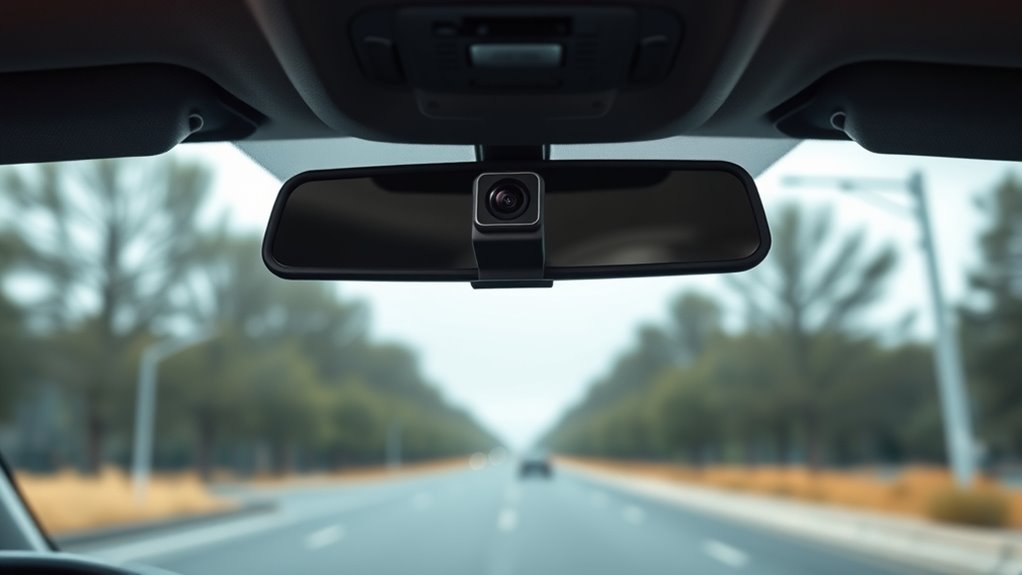
Positioning your dash cam behind the rearview mirror is ideal because it provides a clear, unobstructed view of the road ahead. This placement keeps the camera high enough to capture the entire lane, traffic signs, and oncoming vehicles without blocking your sightline. Slightly below the tinted section prevents glare and avoids obstructing your view. Placing it on the driver’s side offers a wide forward perspective, ensuring you don’t miss important details. A centered position ensures balanced coverage of lanes and the horizon. Additionally, a high mount optimizes the camera’s GPS, motion detection, and parking mode functions. Proper placement also considers navigation and mapping features to enhance accuracy during recordings. Ensuring your dash cam is mounted at the correct height and angle can also help reduce glare and improve image clarity in various lighting conditions. Proper placement can also help comply with legal safety regulations and prevent potential distractions. Moreover, choosing the right spot can help prevent damage from debris or accidental bumps, prolonging the device’s lifespan. Overall, this spot combines legal safety, effective coverage, and minimal distraction, making it the best choice for a reliable, clear recording.
Kaistyle for Magsafe Car Mount【20 Strong Magnets】Magnetic Phone Holder for Car Phone Holder Mount Dash Mounted Holders Cell Phone Holders for Your Car Accessories for Women Men for iPhone 17 16 15 14
✅【Designed for Magsafe】 - The most fashionable iphone car mount in 2026 Magsafe is designed for iphone 17/16/15/14/13/12...
As an affiliate, we earn on qualifying purchases.
Advantages of Center Windshield Mounting

Mounting your dash cam at the center of the windshield offers a balanced and unobstructed view of the road ahead. This position ensures you capture a wide, clear perspective of traffic, road signs, and lane markings. You also benefit from a stable footage feed, reducing shake and blur caused by vehicle movement. Additionally, a center mount minimizes glare and reflections from the dashboard, improving recording quality. Finally, it keeps your dash cam within legal limits, avoiding obstruction of your view and glare issues. Proper placement also helps preserve color accuracy and image clarity, ensuring detailed footage in various lighting conditions.
Here are some key advantages:
- Provides even lane and horizon coverage for thorough recording.
- Reduces the chance of glare interfering with footage.
- Maintains a stable, vibration-free view.
- Ensures compliance with legal safety standards.
Miracase Phone Holders for Your Car with Metal Hook Clip, Air Vent Cell Phone Stand Car Mount, Universal Automobile Cradle for Garmin GPS Fit iPhone Android and All Smartphones, Dark Black
Never Fall Off-Metal Hook Design: Miracase car phone holder adopts simplified locking design. The steel metal hook(with silicone...
As an affiliate, we earn on qualifying purchases.
Positioning for Clear Forward and Side Views
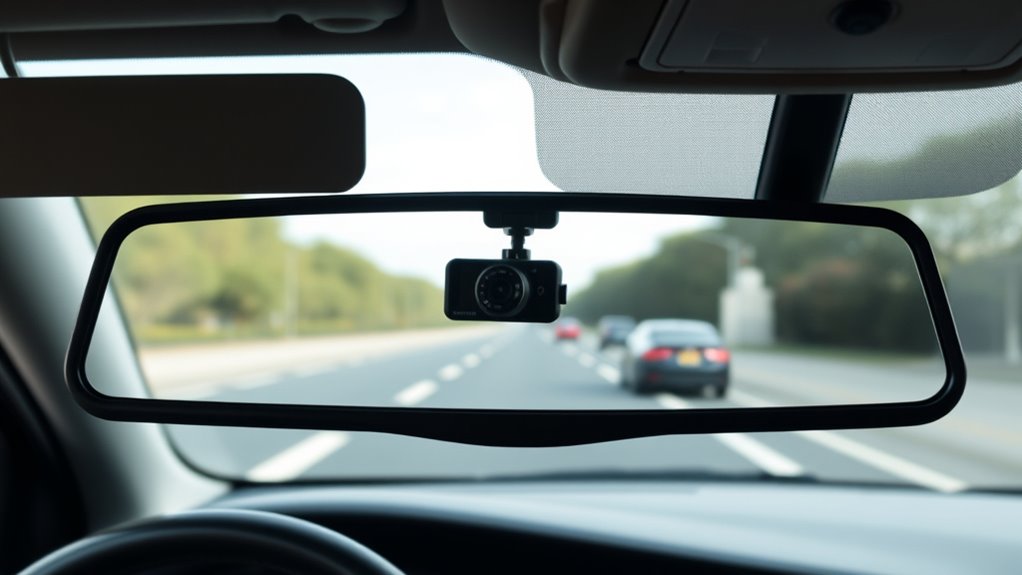
To achieve a clear forward and side view, place your dash cam slightly below the tinted section of the windshield, guaranteeing it doesn’t obstruct your sightline or cause glare. This position provides an unobstructed horizon and captures side lanes without interference. Imagine the following placements:
| Position | Effect |
|---|---|
| Slightly below tinted area | Avoids glare, maintains forward clarity |
| Center of windshield | Balances side-to-side coverage |
| Near driver’s line of sight | Minimizes distraction while recording |
| Slightly to the left or right | Captures side views without blocking view |
| Tilt lens upward slightly | Enhances horizon and lane visibility |
Additionally, adjusting the lens angle can significantly improve your recording quality. Proper mounting position ensures your dash cam records a broad, stable view while keeping your sightline clear. Regularly checking the camera’s orientation helps maintain optimal footage quality and safety. Using the appropriate mounting spot also reduces vibrations and movement, resulting in clearer recordings during drives. Moreover, selecting a mounting location with minimal exposure to vibrations can extend your camera’s lifespan and improve overall footage stability.

VIRROW Dash Cam Front and Rear: 4K+2.5K Dash Camera for Cars with Touch Screen 3.39" - Dashcam with WiFi APP Control 64GB Parking Mode Night Vision Loop Recording Emergency Lock (X5)
[4K+2.5K Dual Dash Cam Front and Rear] - The front dash cam records stunning 4K videos, while the...
As an affiliate, we earn on qualifying purchases.
Ensuring Legal Compliance and Visibility
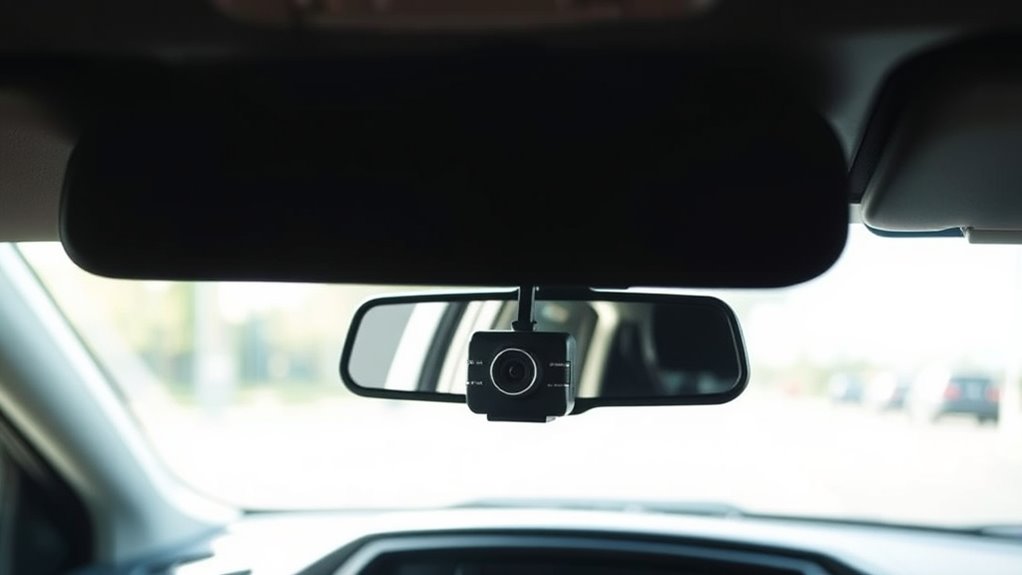
Ensuring your dash cam complies with legal standards is essential to avoid fines or having footage dismissed in disputes. You need to position the camera high on the windshield behind the rearview mirror to keep your line of sight clear. Mastering R sounds can improve communication about your device if questioned by authorities. Avoid tinted areas, airbags, or sensors to prevent obstruction and interference. Keep the device discreet, so it doesn’t distract you or violate visibility laws. Route cables securely along the A-pillar or headliner to prevent interference with airbags or sensors. Considering the electric power capabilities of modern vehicles, ensure your dash cam has a reliable power source that doesn’t drain the battery or interfere with other electronic systems. Additionally, evaluate the security of your installation to prevent tampering or theft, especially if your dash cam is easily accessible. Proper placement can also help protect the device from damage due to weather or accidental impacts. Being aware of regulations related to dash cam placement can help you avoid unintentional violations.
Avoiding Common Mounting Mistakes
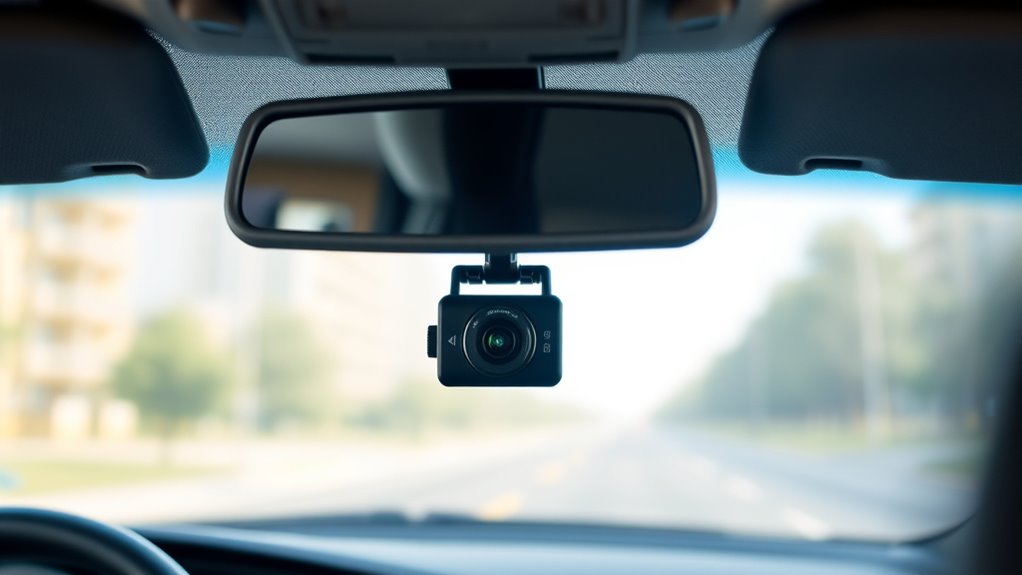
Mounting your dash cam too low can block your main view and cause glare issues. Be careful not to place it where it obstructs your line of sight or gets caught in tinted areas. Proper positioning helps you avoid common mistakes that can compromise footage quality and safety. Additionally, ensuring the camera is mounted at an appropriate height can help prevent obstructed views, enhancing overall driving safety. Using necessary cookies to optimize your experience can also ensure that your dashboard camera operates smoothly without interruptions. Remember to consider ventilation considerations to prevent overheating of the device, especially during long drives. Proper mounting techniques can also contribute to a more stable and clear video capture, which is essential for reliable footage. Paying attention to trusted resources for guidance can further improve your mounting setup and overall camera performance.
Low Mounting Risks
Low mounting positions can substantially hinder your dash cam’s effectiveness and lead to legal issues. When mounted too low, your camera may block your view of the road, miss important details, or produce shaky footage. To avoid these risks, keep these points in mind:
- Avoid mounting below the level of the rearview mirror, which can obstruct your forward view.
- Don’t place the camera near the dashboard edge, as this limits horizon capture and increases vibration.
- Stay clear of low spots that might cause glare or reflections, reducing video clarity.
- Ensure the mount is high enough to prevent vibration and shaky footage, especially on rough roads.
- Proper height ensures clear footage, legal compliance, and safe driving, similar to how proper camera placement in your outdoor kitchen setup guarantees optimal performance and safety.
Obstructive Placement Pitfalls
Obstructive placement mistakes often occur when dash cams are positioned in spots that block your view or interfere with vehicle sensors. Placing the camera too low or too close to the center mirror can create blind spots or cause glare, reducing visibility. Mounting behind tinted areas or near airbags risks obstructing critical sensors or causing reflections that impair footage quality. Avoid attaching the camera where it blocks your line of sight to the road or traffic signals. Secure the device away from areas that may vibrate or shake excessively, which can blur recordings. Also, don’t conceal the camera behind interior elements like sun visors or steering wheels. Proper placement ensures you capture clear footage without compromising safety or violating legal regulations. Additionally, verifying your dash cam’s placement aligns with regulatory guidelines can help prevent legal issues and ensure your footage remains admissible if needed. Being aware of vehicle sensor placement can further help in choosing an unobstructed mounting spot that maintains your vehicle’s safety features.
Tips for Secure and Discreet Installation
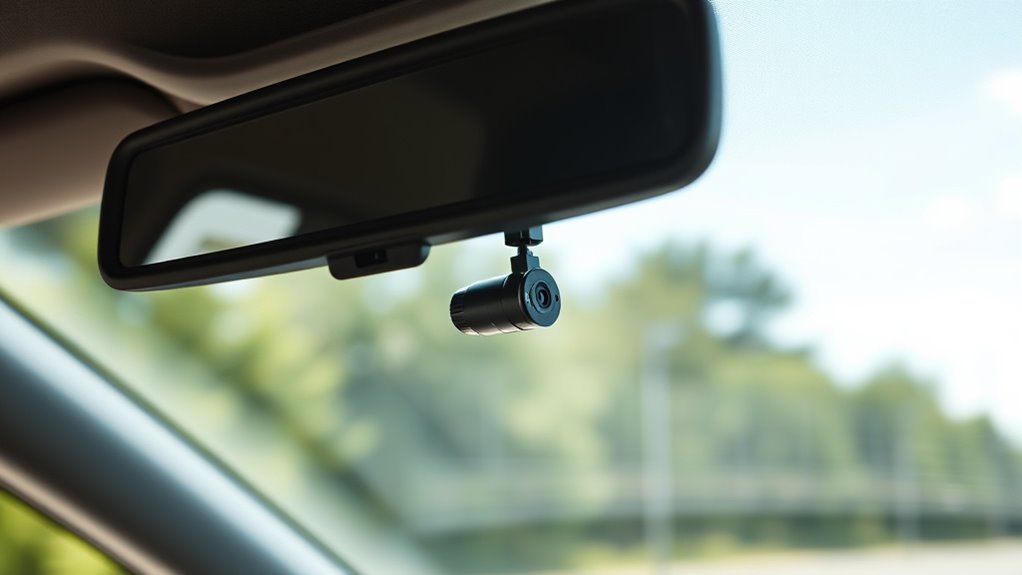
To guarantee your dash cam stays secure and discreet, focus on proper mounting techniques that prevent movement and vibrations. Manage cables neatly along the A-pillar or headliner to keep them out of sight and avoid distractions. Finally, choose a placement that blends seamlessly with your vehicle’s interior, balancing visibility with minimal intrusion.
Secure Mounting Techniques
Securing your dash cam firmly is essential for capturing clear, stable footage and maintaining a discreet appearance. A loose mount can cause shaky videos or accidental falls, compromising both safety and recording quality. To guarantee a secure setup, consider these techniques:
- Use high-quality adhesive pads or brackets designed for automotive use to prevent slipping.
- Clean the mounting surface thoroughly with alcohol wipes to enhance adhesion.
- Press firmly for at least 30 seconds to maximize grip and avoid air bubbles.
- Check the mount regularly to confirm it stays tight, especially after rough driving or temperature changes.
Properly securing your dash cam not only improves footage stability but also keeps it discreet without drawing unnecessary attention. Following these tips guarantees a safe, effective installation.
Cable Management Strategies
Effective cable management guarantees your dash cam stays secure and discreet. To achieve this, route cables along existing vehicle panels like the A-pillar or headliner, keeping them out of sight. Use adhesive clips or cable ties to secure wires firmly, preventing any slack that could interfere with driving or sensors. Tuck excess cable behind trim pieces to avoid dangling or snagging. Avoid running cables across the windshield or dashboard surface, as this can cause glare or distraction. When routing, ensure cables don’t block airbags or sensors, and test the setup for movement or noise during driving. Proper cable management not only keeps your installation tidy but also reduces wear and tear, ensuring your dash cam functions reliably over time.
Discreet Placement Tips
Achieving a discreet dash cam setup involves thoughtful placement that blends seamlessly with your vehicle’s interior. To keep your camera hidden yet effective, consider these tips:
- Mount behind the rearview mirror, slightly below the tinted section, to avoid glare and obstruction.
- Position the camera on the driver’s side for a wide view without blocking your sightline.
- Use the center of the windshield for balanced coverage of lanes and horizon.
- Route cables along the A-pillar or headliner to keep them out of sight and prevent interference.
These strategies help your dash cam stay discreet, secure, and compliant with legal standards, while still capturing clear footage. Experiment with angles to find the perfect balance between visibility and concealment.
Rear Camera Placement for Maximum Coverage
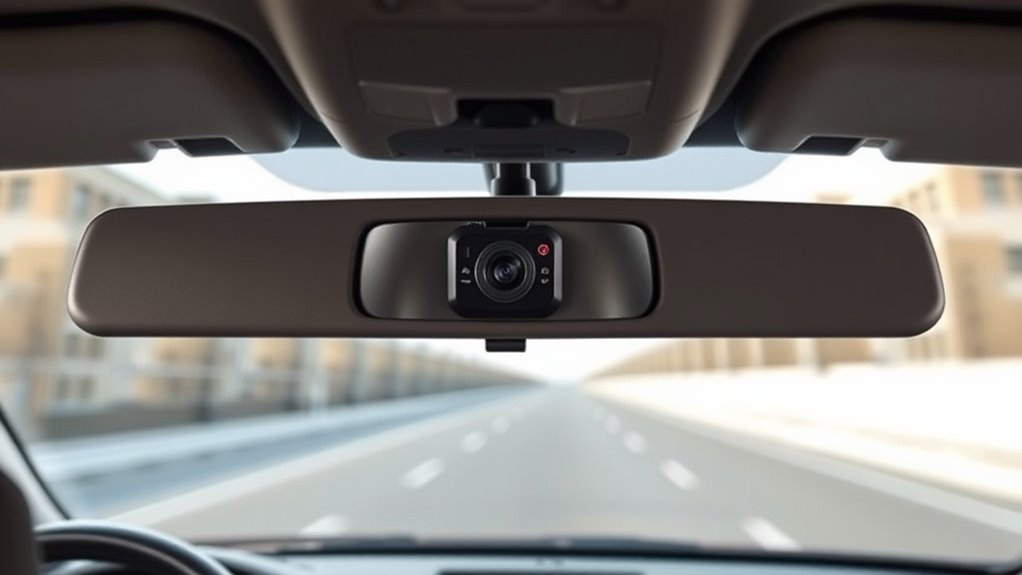
Placing your rear camera in the right spot is essential for maximum coverage. For sedans, mount it at the top center of the rear windshield to capture traffic clearly and avoid blind spots. If you drive an SUV, position the camera higher on the rear glass to get a downward view of traffic and parking areas. Alternatively, mounting near or above the license plate can provide effective rear coverage without blocking your view. Guarantee the camera is securely attached to prevent vibrations or interference with sensors. Avoid obstructing the rear window’s visibility or the driver’s mirror line. Proper placement offers a wide field of view, capturing both lanes, traffic signs, and oncoming vehicles, while maintaining a clear, stable image.
Balancing Field of View and Glare Reduction
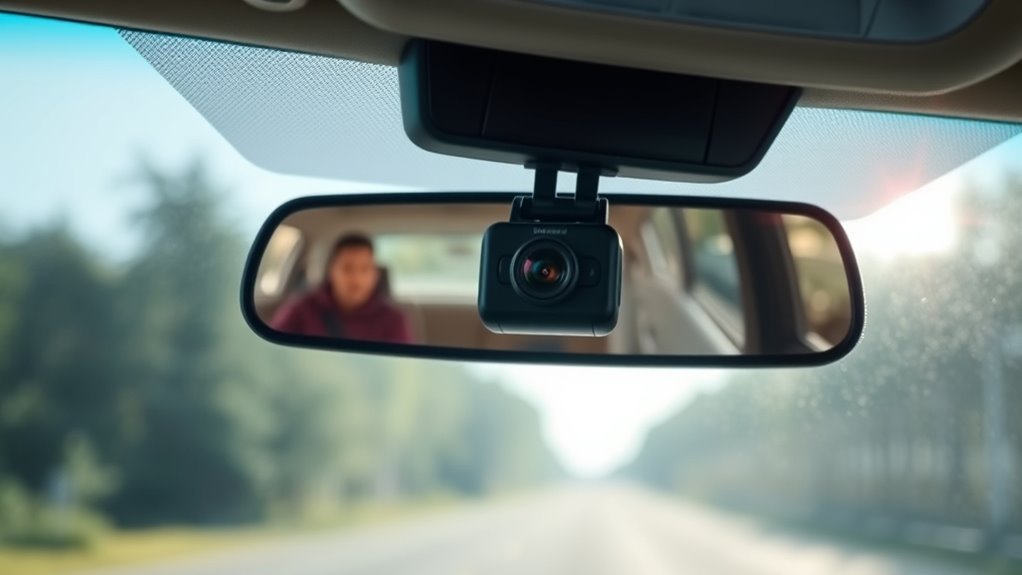
Balancing a wide field of view with glare reduction is crucial for clear and safe dash cam footage. You want enough coverage to monitor the road while minimizing sun glare that can obscure details. To achieve this, consider these tips:
- Position the camera slightly below the tinted section of the windshield to reduce glare but still capture a broad view.
- Tilt the lens upward just enough to avoid direct sunlight reflections.
- Use a mount that allows fine adjustments for ideal angle, balancing horizon and lane visibility.
- Avoid mounting too low, which can cause shaky footage and block essential sights.
Adjusting the Angle for the Perfect Shot
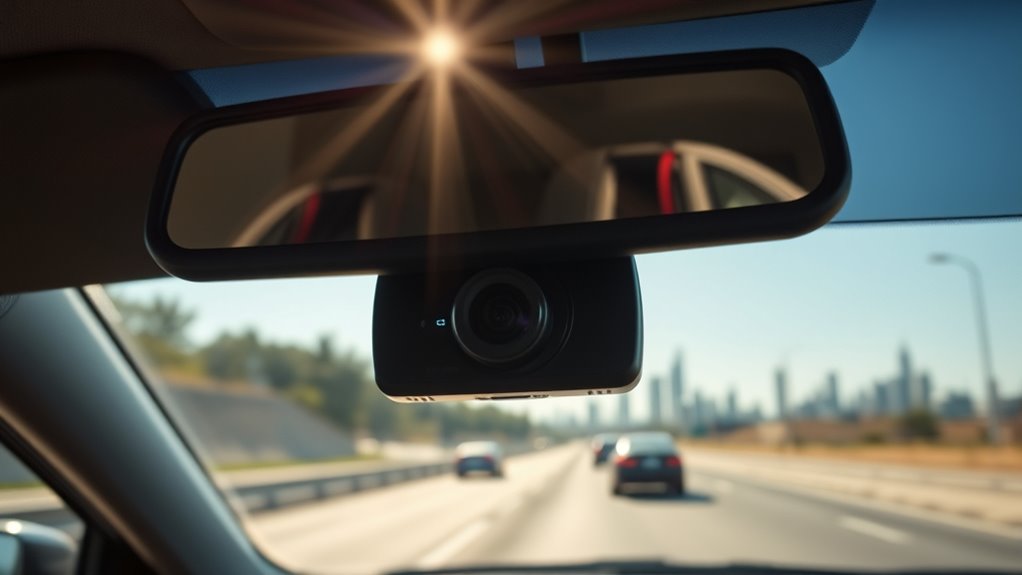
Adjusting the angle of your dash cam is essential for capturing clear footage and avoiding glare. Start by tilting the lens slightly upward or downward to find the perfect horizon line. Aim for a balanced view that captures the entire road ahead without cutting off important details. Make small adjustments to guarantee the camera isn’t pointed directly at the sun, which can cause glare and wash out footage. Check the field of view by sitting in the driver’s seat and reviewing test recordings. Ensure the camera captures both lanes, road signs, and distant objects. Keep the lens aligned with the center of your windshield for the best coverage. Regularly recheck the angle after any vehicle vibrations or minor impacts to maintain ideal positioning.
Frequently Asked Questions
Can I Install the Dash Cam Without Drilling or Damaging the Windshield?
Yes, you can install your dash cam without drilling or damaging the windshield. Use a strong adhesive pad or a suction cup mount designed for cars. Choose a spot behind the rearview mirror, slightly below the tinted area, for a secure and unobstructed view. Make sure to clean the surface thoroughly before attaching, and test the placement to verify it doesn’t interfere with your view or vehicle sensors.
How Do I Hide or Manage the Dash Cam Cables Discreetly?
A stitch in time saves nine, so start by tucking your dash cam cables neatly along the A-pillar, roof liner, or door frame. Use cable clips or adhesive-backed organizers to keep them secure and out of sight. Route the wires behind trim panels if possible, avoiding moving parts or hot areas. This way, you’ll maintain a clean look and prevent any distraction while driving.
Will Mounting Behind the Mirror Affect My Vehicle’s Sensors or Airbags?
Mounting behind the mirror usually won’t affect your vehicle’s sensors or airbags if you choose the right spot. You should avoid placing the camera directly over or near airbags, sensors, or embedded safety features. Keep it slightly below or to the side of the mirror, ensuring it doesn’t obstruct or interfere with these components. This placement helps maintain safety, complies with legal standards, and keeps the sensors and airbags functioning properly.
Is It Legal to Have a Dash Cam Visible Inside the Vehicle?
Yes, having a dash cam visible inside your vehicle is generally legal in most areas. You can usually keep it in plain sight without issues, as long as it doesn’t obstruct your view or interfere with safety features. Make sure to check local laws, especially regarding recording devices, but in most cases, a visible dash cam is perfectly acceptable and can provide valuable evidence if needed.
How Do Temperature Changes Affect the Dash Cam’s Mounting and Stability?
You might notice your dash cam shifting or losing stability during temperature swings, and that’s because extreme heat or cold can cause mounting adhesives to weaken or plastic components to contract. To keep it secure, make sure you use high-quality mounts designed for temperature variations, and periodically check the attachment. Proper installation and choosing durable materials help your dash cam stay stable, no matter how the weather changes outside.
Conclusion
Choosing the right dash cam mounting spot is like finding the perfect vantage point in a battle—your view must be clear, unobstructed, and legal. By following these tips, you’ll guarantee your camera captures every detail without blocking your line of sight. Remember, a well-placed dash cam isn’t just about safety; it’s your silent witness in the chaos of the road. So, position wisely—your peace of mind depends on it.