
To prevent wiring harness abrasion, use loom to bundle wires securely and avoid sharp bends. Install grommets where wires pass through metal panels to cushion against sharp edges and reduce wear. Route wires away from hot surfaces and moving parts, securing them with clips or zip ties at regular intervals. Properly applied connectors and correct routing techniques ensure longevity. Continue exploring these best practices to safeguard your wiring system effectively.
Key Takeaways
- Use loom or conduit to bundle wires, preventing friction and reducing abrasion risks.
- Install grommets at metal openings to cushion wires and prevent insulation damage.
- Route wiring away from sharp edges, hot surfaces, and moving parts for enhanced protection.
- Secure wiring with clips or zip ties at regular intervals to avoid unnecessary movement.
- Avoid tight bends and maintain slack at connection points to reduce stress and wear on wires.

Wiring harness abrasion is a common issue that can lead to electrical failures and costly repairs if not properly addressed. When protecting your wiring, understanding connector types and installation techniques is essential. Different connector types serve specific purposes, and choosing the right ones can substantially reduce wear. For example, waterproof connectors are ideal for outdoor or moisture-prone environments, while quick-connects simplify installation and removal. Selecting the appropriate connector type ensures a snug fit that minimizes movement, which is a key factor in preventing abrasion over time.
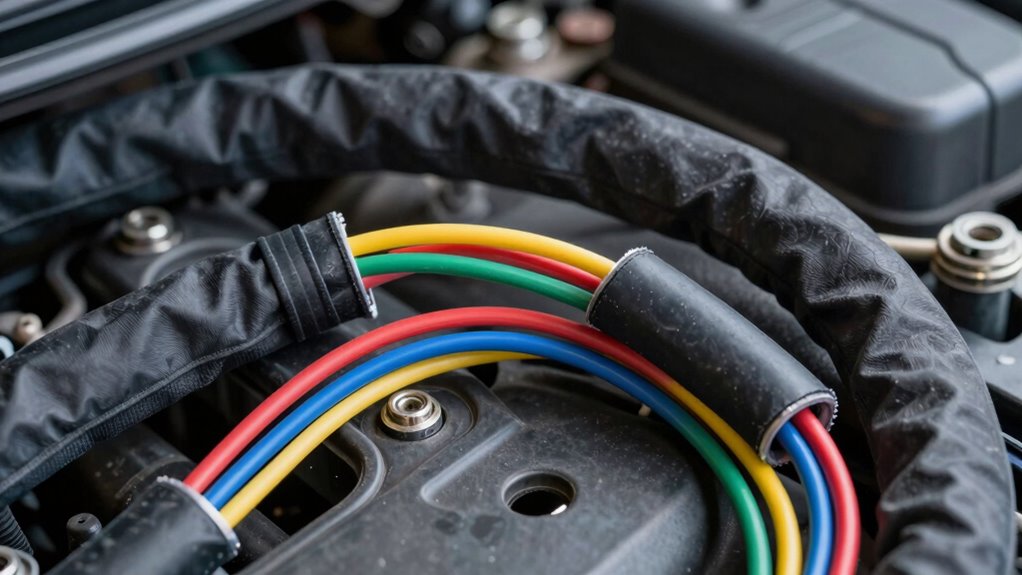
Once you’ve chosen the right connector types, your focus should shift to proper installation techniques. Proper routing is critical; you want to keep wiring away from sharp edges, hot surfaces, and moving parts that could cause friction. Use loom or conduit to bundle wires neatly, providing an extra layer of protection against abrasion. When routing, avoid tight bends or kinks that can stress the wires, and ensure that the harness is secured at regular intervals with clips or zip ties. This reduces unnecessary movement and prevents wires from rubbing against other components.
Grommets are another indispensable element in abrasion prevention. When wires pass through metal panels or bulkheads, always use properly fitted rubber grommets. These act as a cushion, reducing the chances of wires chafing against sharp edges. Make sure to select grommets that match the wire diameter, as ill-fitting ones can still allow abrasion or cause damage to the insulation. Proper installation of grommets involves inserting them before routing wires through openings, then ensuring the wires sit comfortably within the grommet without excessive tension. This simple step can extend the lifespan of your wiring considerably.
Looms, in particular, are effective for bundling multiple wires together, preventing individual wires from moving independently and rubbing against each other or surrounding surfaces. When installing loom, leave some slack at connection points to accommodate vibrations and thermal expansion. Secure the loom firmly but not overly tight, as excessive tension can cause compression and damage to the wires inside. Following best practices for loom installation, such as avoiding sharp bends and keeping the harness away from heat sources, will help maintain the integrity of your wiring system. Additionally, understanding connector types and their specific applications can further enhance your wiring protection strategy.
Frequently Asked Questions
How Often Should Wiring Harness Inspections Be Performed for Abrasion?
You should perform wiring harness inspections for abrasion at least every 6 months or during scheduled maintenance intervals. Regular inspections help identify early signs of wear, loose connections, or damage caused by abrasion. By staying on top of these checks, you can address issues promptly, preventing costly repairs and ensuring safety. Adjust inspection frequency based on environmental conditions or if you notice any unusual signs during routine checks.
Are There Specific Materials Best Suited for Extreme Environmental Conditions?
You should use marine-grade materials like corrosion-resistant compounds to guarantee durability in extreme environments. These materials are specifically designed to withstand moisture, salt, and high temperatures. Marine-grade wiring insulation and connectors form a reliable barrier against corrosion and abrasion, making them ideal for harsh conditions. Incorporating these materials into your wiring harnesses guarantees better longevity and performance, so you can confidently operate equipment even in the most demanding environments.
Can DIY Solutions Effectively Prevent Wiring Harness Abrasion?
Yes, DIY maintenance can effectively prevent wiring harness abrasion when you use cost-effective solutions. You can wrap vulnerable areas with electrical tape or affordable tubing, and make certain proper routing to avoid sharp edges. Implementing simple, low-cost fixes like grommets or protective sleeves helps reduce wear and tear. With careful attention and basic tools, you’ll extend the life of your wiring harness, saving money and avoiding costly repairs down the line.
What Are the Signs Indicating an Abrasion Issue in Wiring Harnesses?
You might notice subtle hints during a visual inspection that suggest an abrasion issue, such as worn or frayed insulation, small sparks, or melted areas. Early warning signs include chafed wires or discoloration, which indicate the harness is experiencing friction or damage. Paying close attention to these visual clues helps you catch problems early, preventing further wear or potential electrical failures down the line.
How Does Temperature Affect the Choice of Abrasion Prevention Methods?
Temperature influences your choice of abrasion prevention methods because thermal expansion can cause movement and stress in wiring harnesses. You need insulation materials that withstand temperature fluctuations without cracking or degrading. When temperatures are high, opt for durable, heat-resistant materials to prevent abrasion from expansion. Conversely, in colder environments, select flexible insulation to accommodate contraction. Proper routing also minimizes exposure to heat sources, protecting the harness from thermal stress.
Conclusion
By following proper loom selection, using grommets, and adhering to routing rules, you can effectively prevent wiring harness abrasion. These simple steps protect your wires from damage, ensuring longevity and safety. Don’t you want your wiring system to stay intact and reliable over time? Taking a proactive approach now saves you from costly repairs later. Keep these best practices in mind, and your wiring harness will stay protected against wear and tear for years to come.