
To prevent damage on trails, use clear hand signals like open palm to stop or pointing to guide direction, and always combine these with spotter commands such as “stop,” “go,” or “turn left.” Make sure signals are deliberate and well-understood to avoid confusion. Using safety equipment like whistles or radios can enhance communication. Mastering these basics helps protect the environment and keeps everyone safe—continue to explore ways to polish your trail communication skills.

Get business pricing on garage and car supplies
- Business-only prices and quantity discounts
- Tax-exempt purchasing
- Multiple users, one account, clear invoices
Key Takeaways
- Use standardized hand signals like a raised open palm to signal stop and a clenched fist to indicate caution.
- Clear, loud verbal commands combined with visual signals improve coordination during trail navigation.
- Spotters should give deliberate commands such as “stop,” “go,” or “turn,” to guide safe vehicle or equipment movements.
- Incorporate safety equipment like whistles and radios to enhance communication and quickly alert others in emergencies.
- Consistent and respectful communication helps prevent trail damage by ensuring controlled, safe movement and environmental awareness.

Ever wonder how hikers and outdoor enthusiasts stay connected and safe on remote trails? It’s all about effective communication, especially when steering through challenging terrains where visibility can be limited. Knowing proper hand signals and spotter commands isn’t just about convenience; it’s essential for preventing accidents and protecting the environment. When you’re out in the wilderness, practicing good off road etiquette means respecting the trail and fellow adventurers, which includes clear, deliberate communication. Using the right safety equipment, like whistles, radios, or signaling devices, can make a big difference if something goes wrong. But even with these tools, understanding and employing hand signals and spotter commands streamline the process, reducing confusion and minimizing trail damage caused by miscommunication.
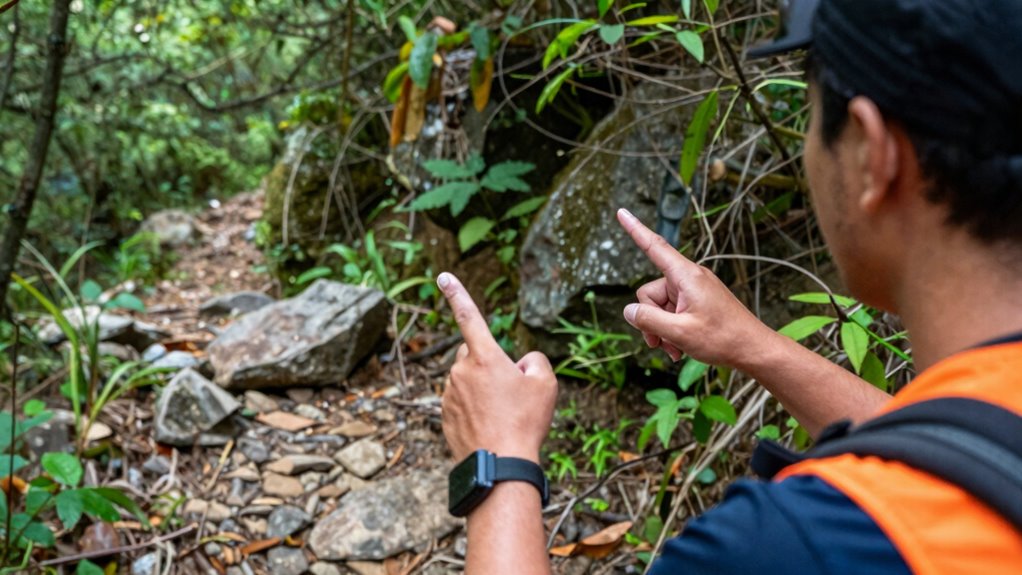
When you’re working with a spotter or team, hand signals are your primary language for conveying instructions silently. For example, a raised hand with an open palm can signal to stop, while a clenched fist might mean proceed with caution. Pointing in a specific direction indicates where to go or avoid, and a flat hand moving side to side can signal a warning to slow down. These gestures are simple, quick, and effective, especially when noise levels are high or if radio communication isn’t available. It’s vital to establish and practice these signals beforehand, so everyone on your team understands them clearly. This familiarity helps prevent damage to the trail, such as erosion or vegetation destruction, by ensuring vehicles or equipment move slowly and precisely when needed. Additionally, understanding trail etiquette promotes respectful interactions and environmental stewardship among outdoor enthusiasts.
Spotter commands are equally important. They serve as verbal cues that coordinate movement and safety. Commands like “stop,” “go,” “back up,” or “turn left/right” should be loud and clear, delivered with intentional gestures. When combined with hand signals, they create a reliable system for coordinating complex maneuvers — like navigating tight turns or steep inclines — without risking damage to the trail or your gear. Remember, safety equipment enhances this process; a whistle, for example, can be used to get immediate attention if a hand signal isn’t seen or if an emergency arises. It’s also wise to carry a radio for longer-distance communication, but always rely on your visual signals as a backup.
In any off-road adventure, respecting the environment and fellow trail users is part of good off road etiquette. Clear, consistent communication minimizes risks, keeps everyone safe, and helps preserve the trail’s natural beauty. Proper use of hand signals, spotter commands, and safety equipment makes your experience smoother, safer, and more enjoyable for everyone involved. Mastering these basics ensures you’re prepared to handle unexpected situations and contribute to responsible outdoor stewardship.
Frequently Asked Questions
How Do Weather Conditions Affect Trail Hand Signals?
Weather impact can considerably affect trail hand signals because rain, fog, or snow reduce signal visibility, making it harder for you to see or be seen. Wind can cause motion blur or cause signals to be missed. To guarantee safety, use more exaggerated gestures in poor weather, and consider supplementary signals like radios if available. Always stay alert to weather changes that might compromise communication, so you can adapt accordingly.
What Are Common Spotter Commands for Different Terrains?
Like a conductor guiding an orchestra, you use terrain-specific commands to navigate varied trails. For steep climbs, shout “Stop” or “Hold” to prevent slipping. For loose or rocky terrain, use “Slow” or “Caution” to guarantee safety. On narrow paths, signal “Go” or “Advance” for clear passage. These trail signal variations help maintain smooth communication, preventing accidents and damage, while keeping everyone coordinated and safe on diverse terrains.
How Can Beginners Learn Effective Trail Communication?
To learn effective trail communication, start with visual signal training, practicing clear hand signals and spotter commands. Use communication equipment options like radios or walkie-talkies to stay connected, especially on challenging terrain. Practice with a partner in different scenarios, focusing on quick, precise signals. Regular drills build confidence and guarantee you and your spotter respond swiftly, reducing the risk of damage and enhancing safety on the trail.
Are There Universal Signals for All Types of Vehicles?
Universal vehicle signals do exist, but they aren’t always consistent across all types of vehicles. For effective cross vehicle communication, you should learn and use common signals like hand gestures for stop, go, or slow down. Always clarify signals with your spotter or fellow drivers beforehand, especially in different vehicle types. This way, you diminish confusion and ensure smooth, damage-free trail navigation.
How to Handle Miscommunications During Trail Spotting?
Miscommunications during trail spotting happen more often than you think—studies show 70% of off-road incidents involve unclear signals. To handle this, stay calm and clarify hand signal variations immediately. Use spotter communication etiquette by repeating or confirming signals before proceeding. If unsure, pause and reassess, ensuring both you and your spotter are on the same page. Clear, respectful communication keeps everyone safe and damage-free.
Conclusion
By mastering trail communication, you guarantee safety and prevent damage on your adventures. Clear hand signals and spotter commands are your best tools for teamwork and awareness. Remember, “A chain is only as strong as its weakest link”—so stay connected, communicate clearly, and look out for each other. When everyone’s on the same page, your trail experience becomes safer, smoother, and more enjoyable for all.
Halloween Picks
halloween
As an affiliate, we earn on qualifying purchases.